

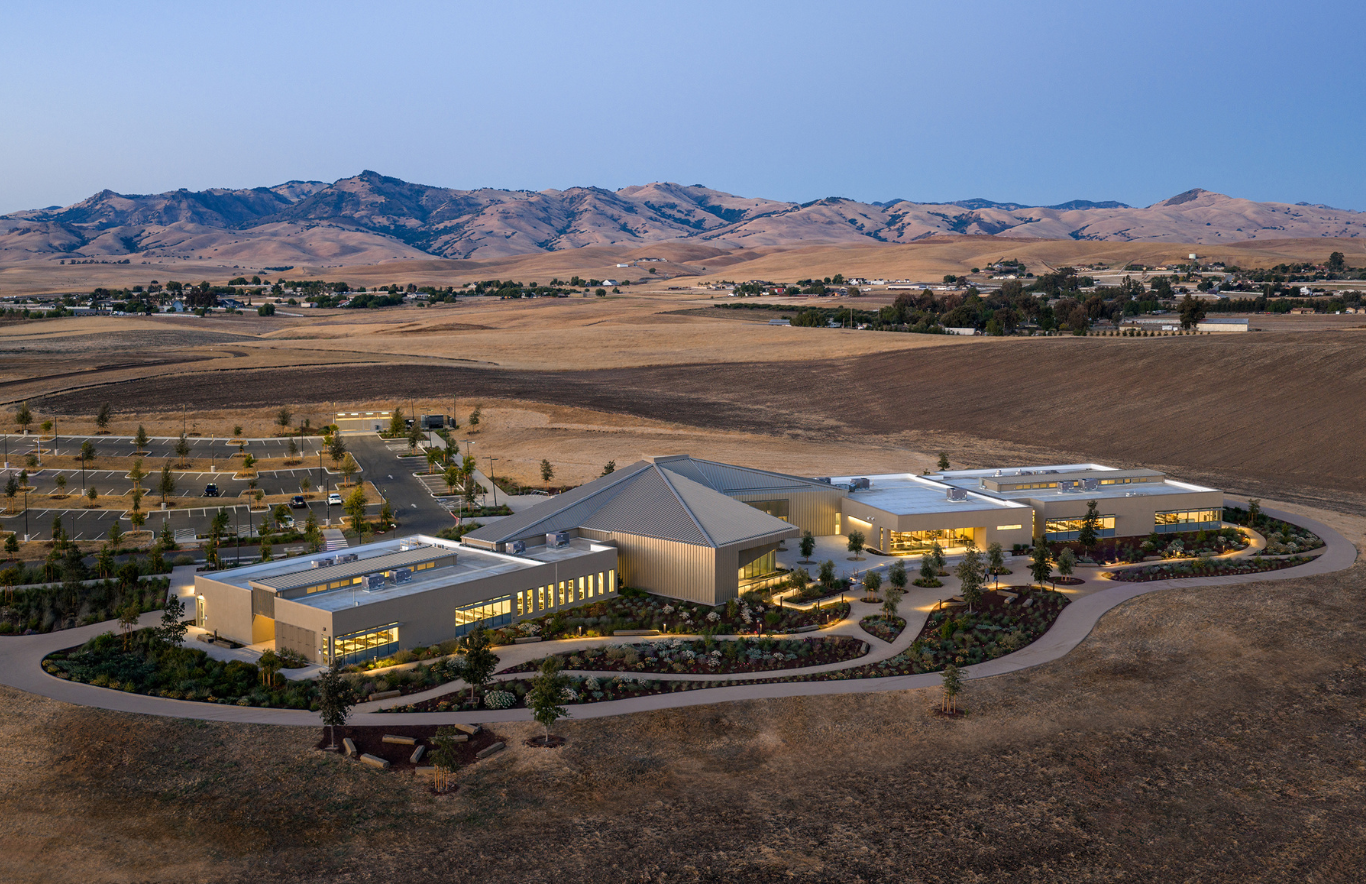
Jobson and QKA contributed to the Gavilan College site master plan. | Photo Credit: Jason O’Rear
By Lindsey Coulter

With more than 20 years of architectural experience, Aaron Jobson, AIA, ALEP, CEO and President at Quattrocchi Kwok Architects (QKA), has worked with numerous school facilities across all grade levels and school types. From facilities master planning and new campus development to building transformations and critical modernizations, Jobson brings a wealth of experience and insight to the School Construction News Editorial Advisory Board.
A founding member of the School Energy Coalition (SEC), Jobson is also a legislative advocate for energy efficiency measures affecting schools and a leading voice on sustainability. He has written about Building Information Modeling, sustainable design, community engagement, designing for wellness, and in 2015 was certified as an Accredited Learning Environments Planner (ALEP) by the Association for Learning Environments (A4LE).
When asked what excites him about the future of K-12 and higher education design, Jobson shared a broad vision of progress. “Teaching is continuing to evolve, and I am excited to see how we can evolve the design of learning environments alongside it,” he said. “At the same time, we are learning more about how the physical environment affects the brain, which will continue to influence design.
Jobson spoke with School Construction News about finding new design strategies to connect classrooms to nature, to support teachers and students’ well-being and mental health, and why he’s expanded his view of design to include advocacy and policy.
SCN: With more than 20 years in practice, what experiences most shaped your path into school design and firm leadership?
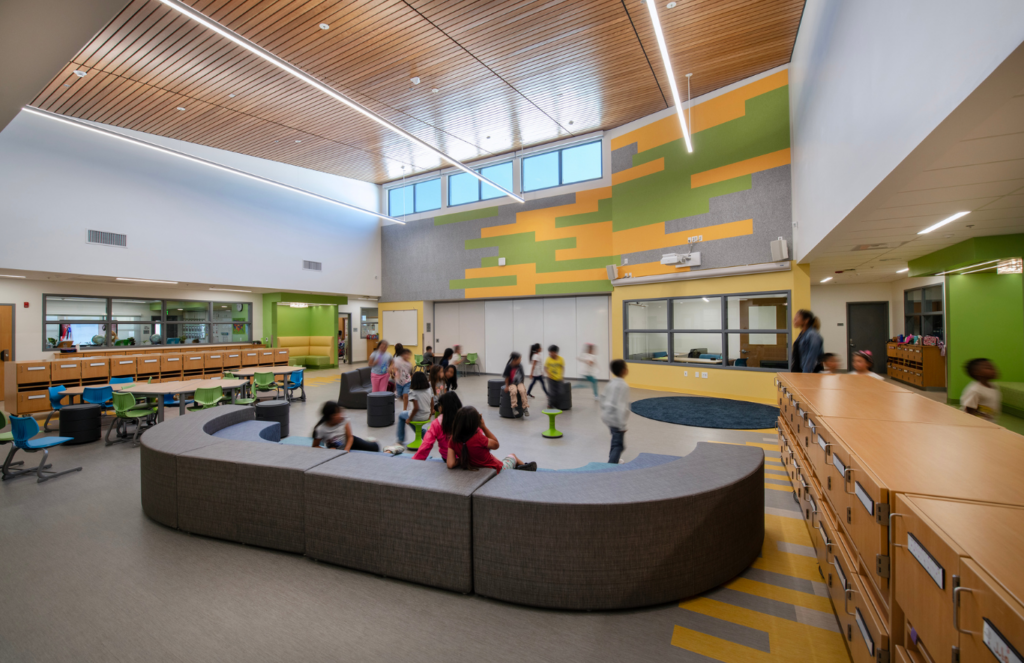
Jobson: My architectural journey has been deeply influenced by engaging with, learning from, and understanding the perspectives of educators, including my wife and many members of my family. Understanding their experiences has shaped how I think to design spaces. Over two decades of collaborating with educators on various projects has provided me with a broad understanding of how learning and facilities interact. Together, these have informed a deep level of empathy, appreciation, and respect for the work these professionals do, which informs how I approach the design of school facilities. Our goal with every project is to help educators better serve their students and communities. Some of my most impactful and rewarding experiences are when we get the opportunity to hear from students and teachers who are using the facilities we designed and how our work has impacted their educational experience.
SCN: How has working across all grade levels—from Pre-K to higher education— influenced your design approach?
Jobson: Working across many grade levels and schools in different communities has provided me with a deep understanding of the breadth of challenges that educators face and how school facilities can support them. This work has helped me understand that each school environment is unique and that the best projects start with actively listening to and learning from teachers and community members.
SCN: As a founding member of the School Energy Coalition, what gaps in policy or practice compelled you to get involved?
Jobson: Schools are a unique set of energy users, differing from residential or commercial users, which have particular challenges and opportunities. Energy laws and programs often failed to address the specific needs and requirements of schools. In part, we started the School Energy Coalition (SEC) to provide a voice for schools and their needs in the California state government.
SCN: How do you see the architect’s role evolving in legislative advocacy for energy efficiency in schools?
Jobson: Architects offer valuable real world examples of energy efficiency policy, including the costs and challenges of implementation. Over the past decade or so, the landscape of sustainable design, energy efficiency and regulation has changed a lot. Many older strategies focused on energy efficiency are being replaced by newer approaches focusing on decarbonization and renewable energy generation and storage. Architects can also help identify regulatory roadblocks that make it harder to implement energy efficiency changes.
SCN: How has your definition of “good school design” evolved over time?
Jobson: In general, my definition of good design has always been spaces that are beautiful and functional. Over time, I have learned more about the technical aspects of how the quality of space impacts learning through factors such as acoustics, air quality, etc. These factors have become an important aspect of how I think about functional design and what makes a well-designed learning environment.