

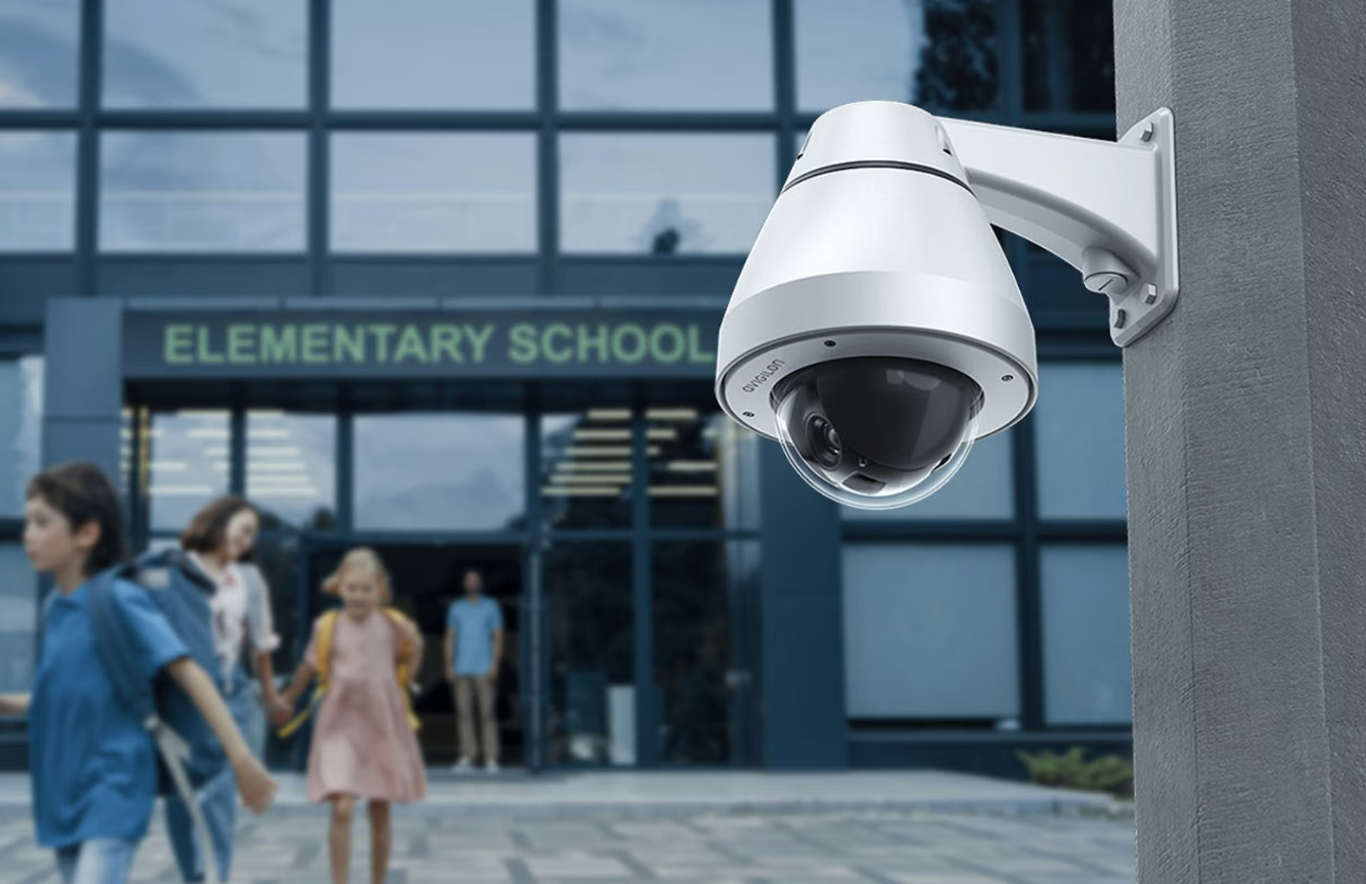
World-class security technology buys school security officers time and awareness to make decisions faster – decisions that could save many lives. | Photo Credit: Avigilon
By Lindsey Coulter
Safety at American schools is a constant talking point but concerns were raised further in 2020. The Government Accountability Office said 54% of schools in America were in “dire need of updates or complete building replacements.” A Centre for American Process (CAP) report followed, claiming $1.1 trillion is needed to modernize and replace America’s schools.
Aging buildings and a high number of violent incidents have rightly given parents many structural and physical concerns about future school constructions. There are many boxes that need ticking. Educators, policy makers, architects and security experts are playing a role in building safer environments for students and staff.
What to expect from the future of American schools
1. Construction
The hazards of poor structural integrity stretch beyond the risk of building collapse. Aging buildings put students at risk of exposure to harmful substances (lead paints, PCBs, dust, etc.), mold spores and poor air quality. COVID-19 added to these structural concerns, as viruses spread faster in poorly ventilated areas. Modern school construction actively addresses these hazards that put students in danger.
Future school builds will include:
- Climate-resistance materials to withstand extreme temperatures
- Smart hallway design to avoid overcrowding and crushing during an emergency
- Storm shelters in large areas such as gyms
- Predictive maintenance sensors to inspect buildings’ structural health
- Buildings designed with a number of evacuation routes.
2. Security systems
America’s appallingly high rate of violence in schools demands nothing less than state-of-the-art security solutions. Security guards need technology to help them detect threats as fast as possible.
Schools are one of the most difficult environments to protect. They are unique, complex buildings filled with thousands of students. In a loud and crowded atmosphere, it’s unrealistic for security guards to detect every security threat. World-class security technology buys security officers time and awareness to make decisions faster – decisions that could save many lives.
Modern school security systems feature:
- Smart security cameras: school security cameras give guards a real-time assessment of crowded environments. Security guards are alerted to weapons, threatening behavior, large crowds, loud noises and loitering. Smart cameras tag people and objects, giving guards a clear view of the events happening on CCTV screens.
- Smart sensors: Today’s smart sensors can detect hazards such as toxic fumes, smoking/vaping loud noises and threatening language.
- Integrated systems: A security response is scuppered if officers need to jump between systems when a threat is detected. Cutting-edge technology products are built to integrate. This is required to keep a real-time view of incidents without losing time switching between security systems.
- Cybersecurity: New schools focus on cybersecurity well before they’re open to students. As entry points, doors and evacuations are part of the Internet of Things (IoT), many steps are taken to prevent cyber attacks.
3. Adaptive environments
Future school construction is taking a proactive approach to account for multiple environmental and physical security threats. From dangerous weather conditions to violent intruders, environments must be built to handle the worst-case scenarios:
- Solar power backups are used to counter any outages caused by extreme weather conditions
- Smart floor maps are activated during emergencies, directing students and staff to safe zones depending on the type of security threat
- Classrooms are changing to manage the threat of violent intruders. Bullet-resistant windows are being installed that double as emergency exits. Whiteboards that double as safe rooms are also installed, giving students a safe place to hide until the security threat is intercepted.
Conclusion
Parents across America are understandably worried about the state of our schools. Security concerns are consistently high in America, but they have been amplified in recent years. An alarming Government report in 2020 stated that 54% of schools were in urgent need of reconstruction. Students and staff are at risk of numerous hazards when buildings deteriorate. Future buildings must address several structural, environmental and physical security concerns to build schools that give students a safe place to learn.