

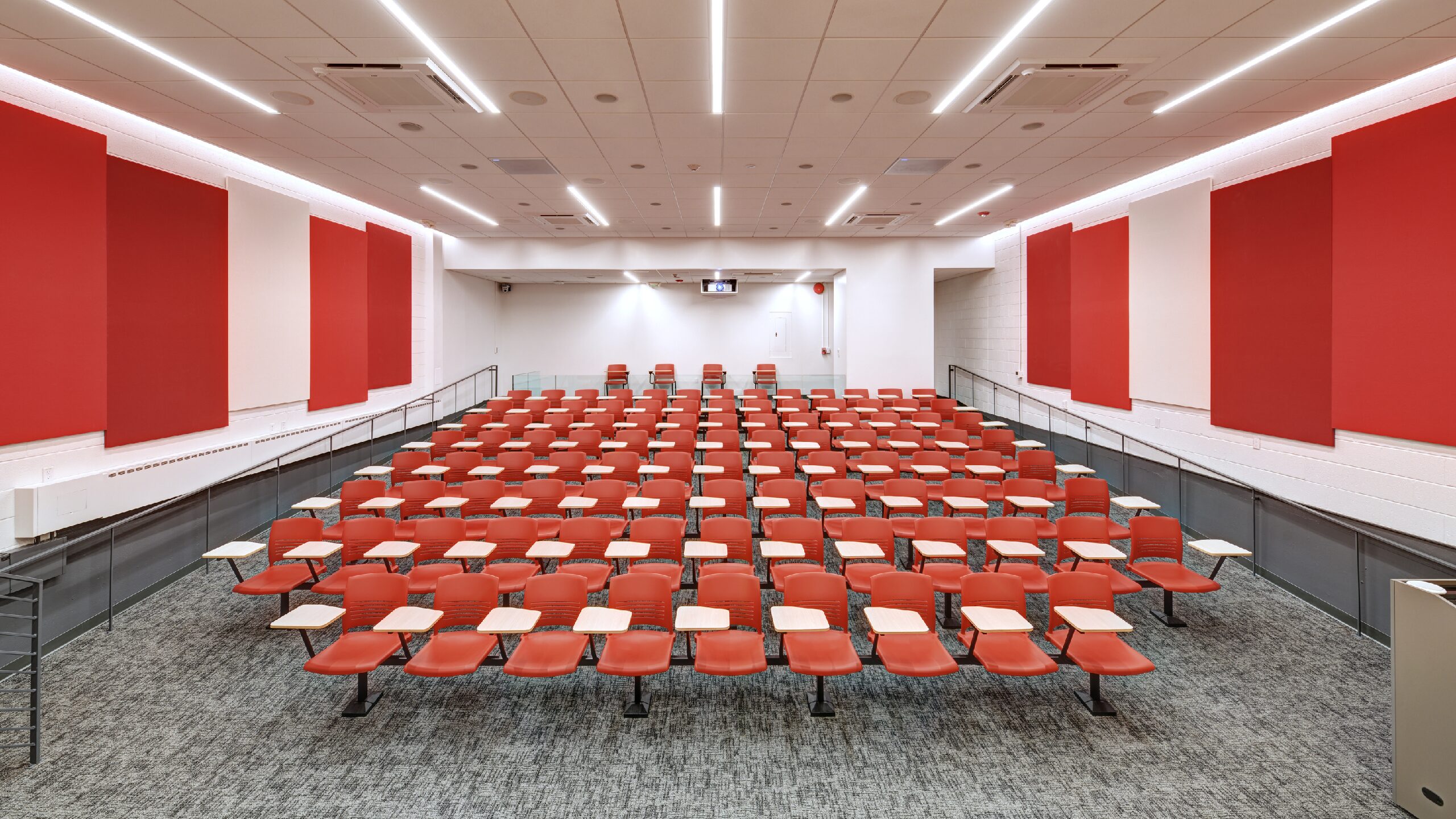
The renovation of a lecture hall on a campus in Northern New Jersey is an example of a modest investment with an outsize impact on the day-to-day experience of campus life. | Photo Credit (all): Michael Slack, Courtesy of JZA+D
by Mark A. Sullivan, AIA, LEED AP
Colleges and universities are used to making hard choices when it comes to campus structures and facilities, but those decisions seem increasingly fraught, thanks primarily to the unpredictability of market forces. Where previously the choice might have been between building a splashy new athletic center or creating an amenity-rich technology hub, now administrators and trustees are frequently deciding to put new construction projects on hold, owing to construction cost escalations and, for some, reductions in annual budgets for capital investment. Instead, more of today’s funding is being directed toward strategic renovations of existing buildings, either to enhance current functions or adapt spaces to new uses.

This trend started a couple years ago and has accelerated since, according to recent education sector research, with experts noting a rebound in investment in existing campus assets over the past several years. As an example, higher education institutions in 2023 saw a 26% increase in this type of investment over the previous year. Until these schools see the economy stabilize and become more predictable, this trend is sure to continue, with larger, more expensive projects on hold at least temporarily.
This is a good thing, arguably. While universities typically lean on big projects as a way to stay competitive for recruitment, existing facilities often languish, sometimes not even receiving necessary maintenance, much less updates. Yet, campus staff, faculty and students interact with these buildings daily, making them critical assets for school performance and student experience. Typically, these structures and spaces require only modest funds and some imagination to realize their value and capture their full potential, and often they are just as visible as the new amenities and offerings universities often want to build and show off. This current era of campus renovations is encouraging high-value, sustainable investment that breathes new life into some forgotten treasures.
Doing More with Less
These days campus planners and facilities directors are looking to architects for help identifying opportunities for value-driven projects. The goal is to generate plans for upgrading or adapting an existing asset in whatever way delivers optimally enhanced per-square-foot value, while expending few precious resources. That value may come from improving basic functionality, extending building use life, or adapting to realize new uses. In many cases, renovation and adaptive reuse deliver the biggest bang for the institution’s buck, especially when the facilities are likely to be viewed by prospective applicants, or are regularly trafficked by current enrollees.
Our architecture firm, based in Princeton, New Jersey, has been involved in a lot of campus renovations lately, and our discussions with facilities leaders suggest there are more on the horizon. The main factor in this market has been a significant hold on capital investment, but there are other factors at play. For example, one historic university here had been aggressively building new projects for years based on annual capital budgets in the billions of dollars, and now reports show that amount for 2025 and 2026 is likely closer to $500 million –- still ample in scale, but a notable cutback nonetheless and prohibitive for most large-scale new construction.
Yet capital improvements on- and off-campus continue apace. Most recently we administered major upgrades to a row of historic townhomes used for faculty and graduate student housing within walking distance from campus. The project included complete interior refreshes and modernization, including kitchen and bath redesigns with new furnishings, fixtures, lighting and appliances throughout. The upgrades to these Tudor Revival-style lodgings are expected to improve the university’s ability to recruit talented professors and researchers.
Read the full article, including how to ensure high impact with low cost and address challenges with older buildings, in the Higher Education edition of School Construction News.
Mark A. Sullivan, AIA, LEED AP, is a partner with JZA+D, an integrated architecture and interior design firm that has completed dozens of educational projects across the Northeastern United States.