

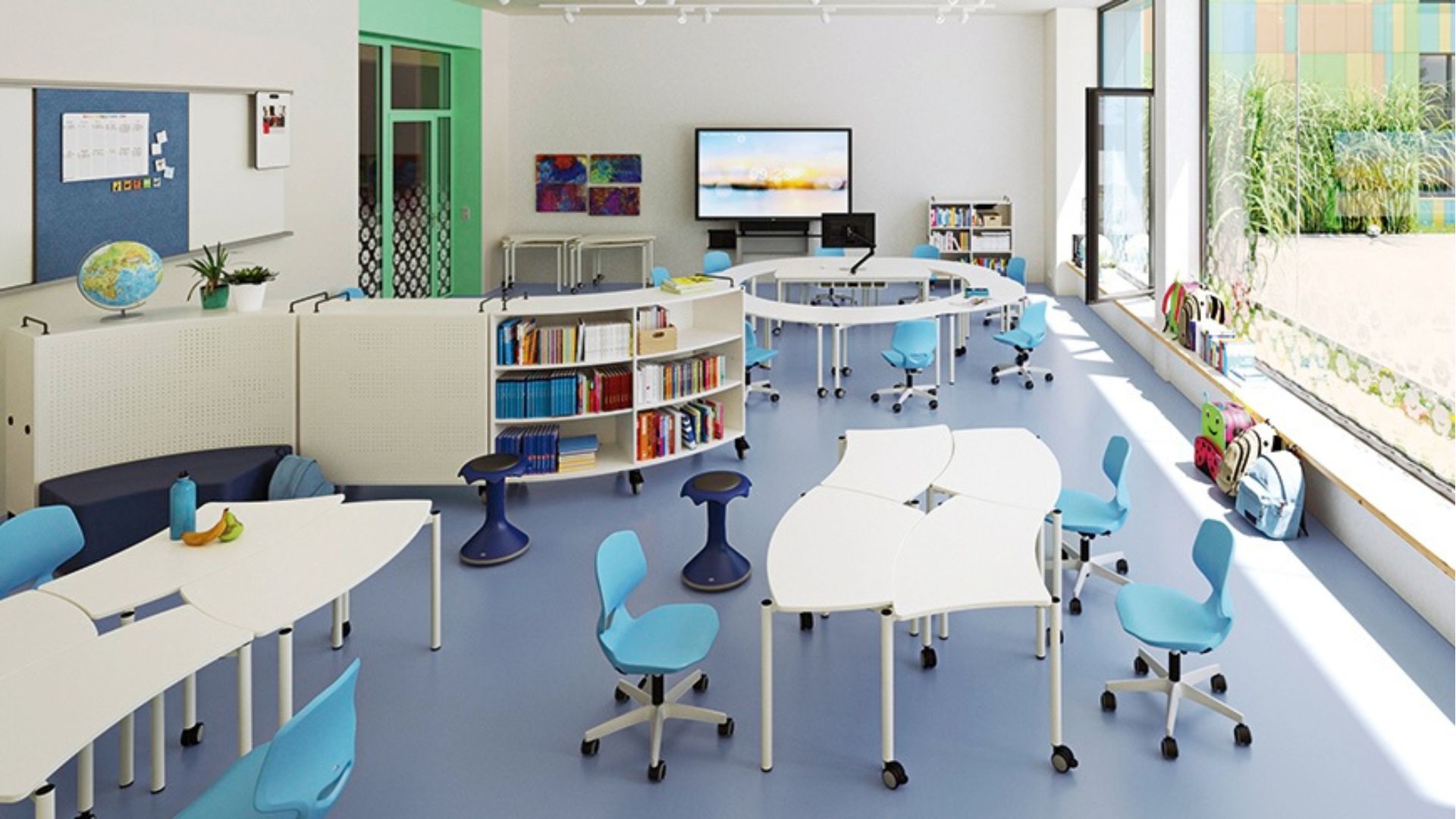
Furniture that is mobile and versatile is a great way to create optimal spatial configurations and to maximize the room that is available. | Photo Credit (all): Courtesy of VS America
By Contributed by VS America
One of the most important strides to have been made in recent educational history is the acknowledgment of different learning styles. Of course, for diverse methods of learning, diverse methods of teaching are required. Distinct physical zones in the classroom can help to create focus and direction for the completion of separate tasks, and can help to establish a clear set of customs for each unique zone. Here are just a few of the types of zones that might be considered for a contemporary classroom space:
- Individual workspace:– Individual does not mean isolated, and this type of space works best when it’s a clearly delineated space that’s not necessarily entirely separate from collective space. Versatility is still key, and it’s important to choose ergonomic school furniture, seating and desk options that are not “one size fits all,” but adapt to students’ different sizes, needs and ways of working.What furnishings work best: For flexible furnishings, a forward-flexing cantilever chair, such as the PantoSwing-LuPo cantilever chair, allows the student to move freely while remaining physically well supported. Not only does this promote proper spinal support and comfortable seating, but it also allows for a greater degree of focus, alertness, and mental agility.
- Group workspaces – Some of the best learning is collaborative, and it’s essential to create fun, flexible and well-designed areas in which authentic group learning can take place. Above all, this means sufficient space in which students can feel free to move and explore, as well as dynamic furniture that opens rather than closes spatial configurations to the entire group.
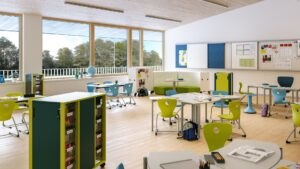
What furnishings work best: For this type of zone, we recommend clustered, mobile and adjustable desks that can be grouped, stacked and moved to fit a variety of arrangements. For seating, the Hokki stool represents an ideal choice, insofar as it is crafted to be comfortable, flexible and allows for a 360-degree range of motion. For modular desks and other ergonomic school furniture, opt for variations that are height-adjustable and pieces that allow for sitting, standing and students’ completely natural physical movements.
- Presentation spaces – Spaces in which students and teachers can share content in a presentation format are essential for contemporary learning spaces. For these types of spaces, especially in settings where limited square footage is a factor, furniture that is mobile and versatile is a great way to create optimal spatial configurations and to maximize the room that is available. Coordinating a variety of furnishing elements with an overall minimalistic aesthetic can help to create space with versatility and ease.What furnishings work best: In presentation zones, auxiliary elements such as mobile whiteboards, media players, and sound equipment should be effectively utilized to direct students’ focus and to present content in engaging new ways. The ideal classroom should also account for ample storage to accommodate these elements, without detracting from the usability of the space as a whole. To deter students from becoming bored or restless, ergonomic school furniture can promote positive attention and alertness, while playfully flexible seating options like Hokki stools allow the student to remain effortlessly engaged.
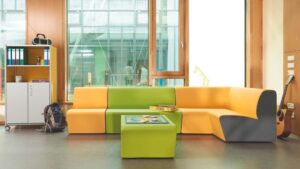
- Quiet retreat spaces – This type of space is a favorite among students of various ages, and includes comfortable, quiet areas for reading or learning individually while coexisting in the presence of others. The key to creating these types of areas is to balance comfort with creativity, so that these zones are at once relaxing and stimulating for students.
What furnishings work best: Whereas desks with private dividers often denoted this type of area in the past, cozier furnishing elements such as sofas and benches represent a more forward-thinking (and enjoyable) alternative for the contemporary classroom. In addition to soft seating elements, designated spaces for book and media storage can help to create an inviting yet studious atmosphere.
About VS America
VS America, Inc. is a leading manufacturer of educational furniture for K-12 schools, colleges and libraries. Focused on best practices for educational facilities worldwide, VS develops adaptable, ergonomic and sustainable furniture solutions which allow for the creation of agile learning environments. For more information, visit http://www.vsamerica.com.