

What You Need to Know
- Washington and Lee University’s Williams School building received LEED Gold certification from the U.S. Green Building Council.
- The facility opened in August 2025 and is the first W&L structure to achieve the LEED Gold level, according to the university.
- The project team pursued strategies tied to energy savings, indoor air quality, sustainable materials and construction waste diversion.
- W&L said the building supports broader campus sustainability goals, including a climate action plan targeting carbon neutrality by 2050.
Learn More
LEXINGTON, Va. — Washington and Lee University’s new $38.3 million Williams School building has been awarded LEED Gold certification, marking the institution’s first structure to reach the rating system’s Gold tier.
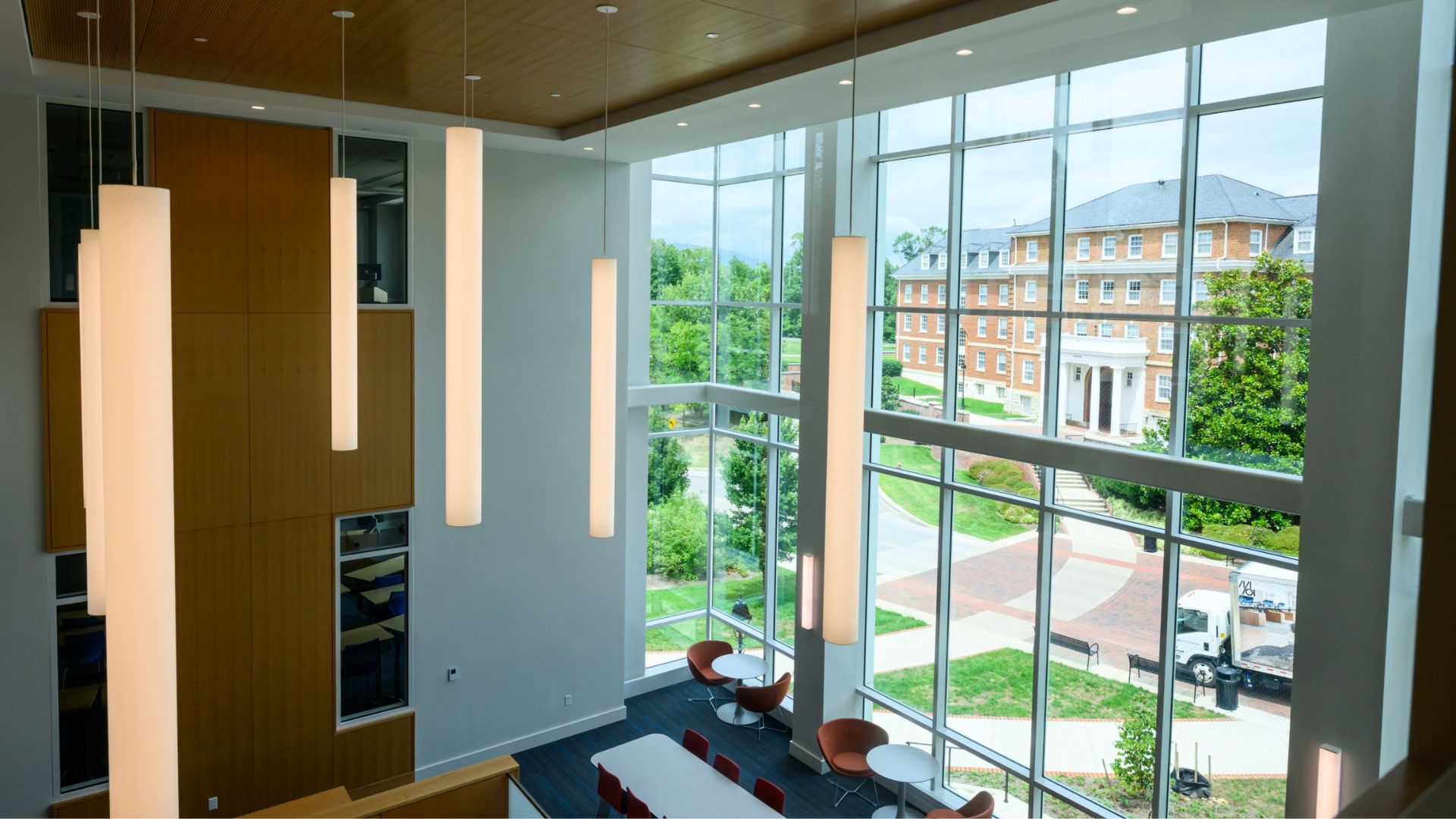
The 44,500-square-foot academic building designed by Boston-based architectural firm Goody Clancy and built by Kjellstrom-Lee Construction, houses the School of Commerce, Economics and Politics. The facility opened at the start of the 2025-26 academic year, according to the university.
LEED (Leadership in Energy and Environmental Design) is administered by the U.S. Green Building Council and evaluates building performance across categories that include energy and water efficiency, materials, indoor environmental quality and innovation. The university said the Williams School building received “100% of the LEED points for which it applied” during the review process.
“LEED Gold certification confirms that in both material quality and operational efficiency, this building meets an incredibly high standard of long-term value,” said Steve McAllister, vice president for finance and treasurer at W&L, according to an article from The Columns.
University Facilities Project Manager Rachel Rowland said sustainability was built into the project from the beginning and reflected the institution’s approach to new construction. “From the outset, the Williams School building was designed with sustainability as a core value,” Rowland said, according to an article from The Columns.
Among the building’s exterior measures, W&L cited adaptive landscaping intended to reduce irrigation needs and chemical inputs, exterior lighting designed to reduce light pollution, and stormwater controls meant to manage runoff and reduce impacts on nearby Woods Creek.
Inside, W&L reported use of a heat recovery chiller and other systems that contributed to a 37% building energy savings over standard code. The university also connected the building’s heating and cooling strategy to a broader campus utility upgrade intended to transition heating resources from natural gas to a low-temperature hot water system.
The university said it prioritized certified wood products and indoor air quality measures, including low- or no-VOC interior paints, entry mats to capture contaminants, and CO2 monitors that increase fresh-air intake when spaces are fully occupied. Additional features cited include low-flow water fixtures, bird-safe glass and centralized waste management systems intended to improve recycling.
During construction, the university reported a 96.5% landfill diversion rate.
W&L said the Williams School is the seventh building on campus to receive LEED recognition, and the university is also pursuing LEED review for the Lindley Center for Student Wellness that opened in August.
This article is based on reporting originally published by The Columns (Washington and Lee University) on Feb. 16, 2026.