
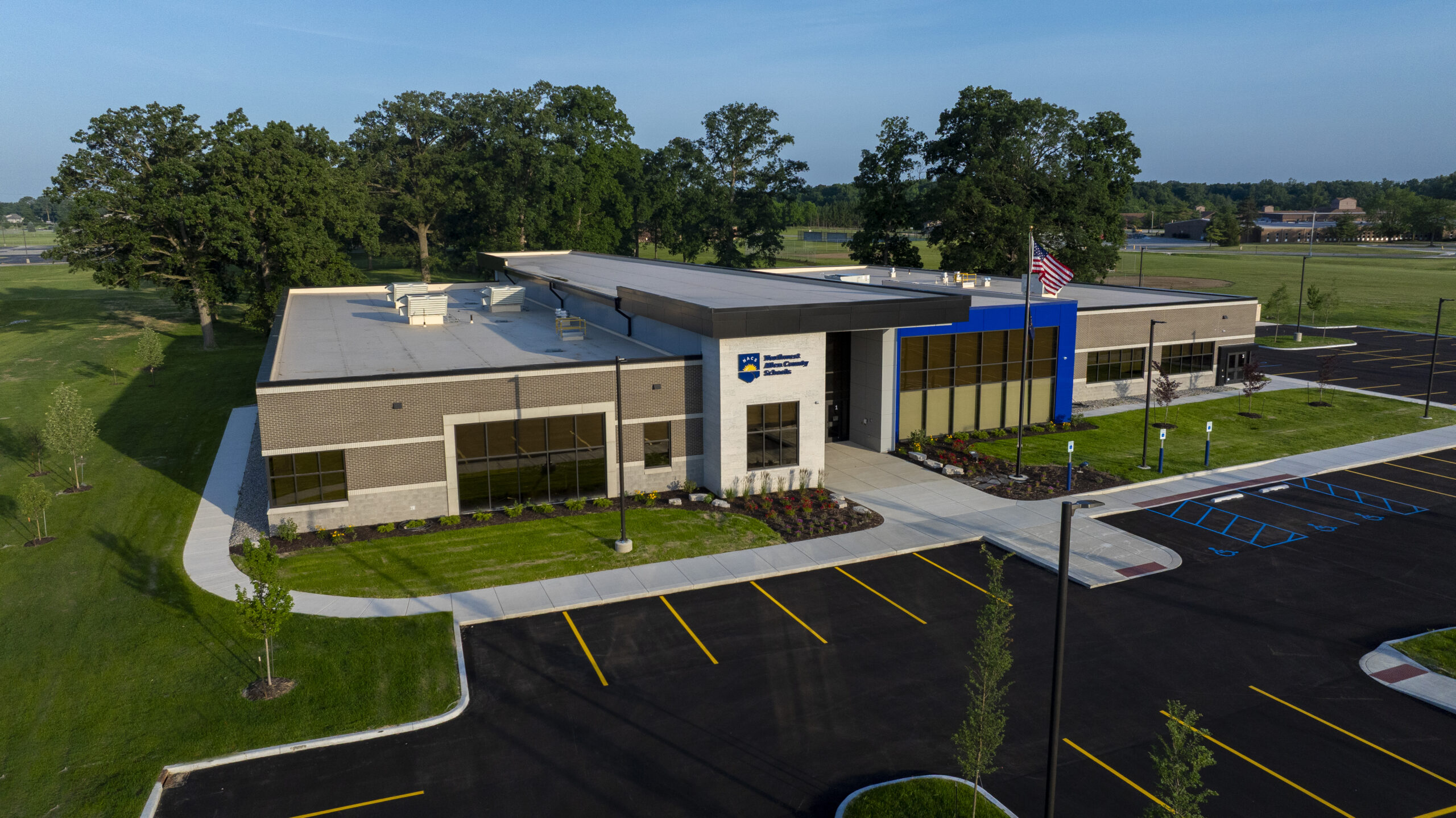
Photo: In May, Northwest Allen County Schools officially opened the brand-new, stand-alone Administration Center — a modern, light-filled facility that signals a fresh chapter for the district. | Photo Credit (all): Tim Brumbeloe, BFA Commercial Photography
By Lindsey Coulter
For 50 years, the Northwest Allen County Schools (NACS) administrative team operated out of repurposed classrooms and storage closets in the back of Perry Hill Elementary School. As the Fort Wayne, Ind., district’s enrollment steadily increased, the makeshift administration space could not keep pace. The lack of flexibility began to strain staff collaboration, morale and operational efficiency.
In May, however, NACS officially opened the brand-new, stand-alone Administration Center — a modern, light-filled facility that signals a fresh chapter for the district. The 32,000-square-foot, $18 million project, described as a “showpiece” by Superintendent Wayne Barker, is a far cry from the cramped offices of the past.
“[Staff members] have done incredible work despite those working conditions,” Barker said during the building’s grand opening. “Today we give the administrative staff a space that truly supports their efforts. We’re excited to bring all those folks here.”
The new Administration Center consolidates key departments that were previously scattered across various school buildings, including Technology, Human Resources, Business, Special Education, Teaching and Learning, Safety and Operations, and the Superintendent’s Office. Additionally, the building offers a multi-use kitchen, recording studio and cubicle work areas. This more centralized and thoughtful approach to operations is already fostering better daily collaboration between staff — improving outcomes for the district’s approximately 8,000 students spread across 11 schools districtwide.
A Space for Purpose and People
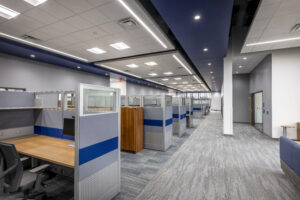
Designed by Elevatus Architecture and built by Weigand Construction (both based in Fort Wayne, Ind.) using a CMC/CMAR delivery method, the facility reflects the district’s emphasis on collaboration, flexibility and transparency. The layout of the building encourages both planned meetings and impromptu conversations through open offices, shared lounges and breakout spaces. These elements support the kind of cross-departmental coordination essential in a growing school district.
Cory Miller, AIA, partner and president of Elevatus Architecture, said that the district’s explosive growth made the project especially important and urgent.
“This district has grown by double digits in recent years, and there are 2,700 new homes planned in the next two years,” Miller said. “The small administrative area in the elementary school just wasn’t sustainable anymore.”
In the previous Perry Hill Elementary location (which was also renovated following the building’s completion), only about 15 or 16 employees could even fit into the administration space. This meant other employees were scattered across the district, often working out of closets or storage spaces in various schools.
“HR was compiled into a small office with people working out of a literal closet,” Miller explained. “Technology staff was also spread out. It was inefficient.”
The new facility, by contrast, is thoughtfully designed to support up to 82 occupants —anticipating a 20% growth beyond current staffing. The new building includes a sleek blend of private offices and open collaboration zones to suit different working styles. Natural light floods the interiors through expansive windows and clerestory glazing, while the materials blend tradition and innovation through material choices that include masonry and metal paneling.
The “Main Street” Corridor
At the heart of the Administration Center is the central corridor, known as “Main Street.” This area serves as the building’s public-facing collaboration space and connects the building’s three primary zones — the Technology department, the superintendent’s office and central leadership, and human resources/business operations.
Board meetings and public gatherings are held in a stunning new boardroom, a highlight of the facility. It features floor-to-ceiling windows that bring in natural light and offer a visible connection with the community. Outfitted with high-end audiovisual technology, the boardroom doubles as a training space and can be divided into smaller meeting rooms when needed.
The architectural inspiration for the building also draws from the district’s history. In the 1960s, two separate township school systems consolidated into what is now NACS. The central entrance — the gateway connecting the different zones of the building — is meant to reflect that union.
“We wanted the structure to honor the district’s past while looking toward the future,” Miller said. “So, we included elements that speak to that merger — bringing people together.”
Supporting Staff and Students

While the facility was designed to support the work of adults, the ultimate goal is student success. By giving administrators the tools, space and environment they need to collaborate and lead, the district hopes to increase its effectiveness, uplifting students and educators across all schools.
“There’s a real sense of pride here,” said Aaron Organ, marketing manager with Elevatus Architecture, who helped document the project. “You can feel it when you walk through the space. It’s a message [to employees] that their work matters.”
That message isn’t just about aesthetics; it’s also about health, productivity and performance. Modern workplace research shows that lighting, acoustics and ergonomic design directly impact staff well-being. As up to 50% of teachers and administrators experience chronic health issues that can be exacerbated by less-than-ideal working conditions, it was important for the team to remember that schools and administration spaces are workplaces, too.
“Most of the administrators here were former teachers or principals,” Miller said. “So, they deeply understand the learning environment. But this time, we had to blend that knowledge with workplace design to make sure everyone had what they needed — from acoustically sound conference rooms to open lounge areas.”
To deliver the best possible design, flexibility of space was key. The building includes a variety of meeting spaces with different configurations — whiteboards, TVs, movable furniture and more — to allow teams and individuals to work as needed.
Learn more about the center’s efficient, future-ready design and how the team integrated safety, technology and transparency in the July/August issue of School Construction News.