

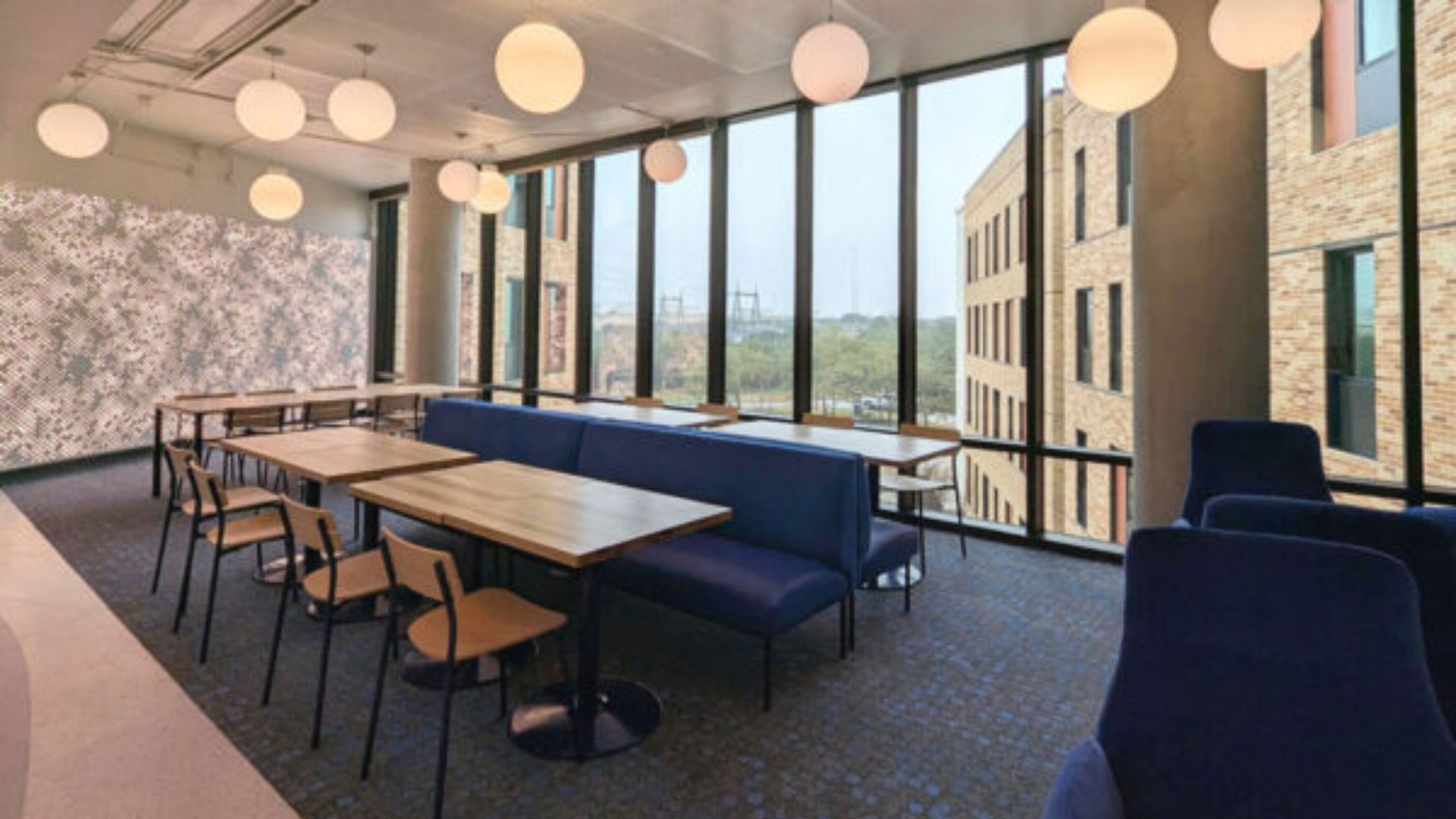
Blanco Hall is welcoming its first students and expanding on-campus housing for first-year students and sophomores. | Photo Credit: UT San Antonio
What You Need to Know:
- University of Texas (UT) San Antonio is advancing five facility projects across its main campus and downtown footprint in 2026.
- The investments include new student housing, a refreshed museum space, expanded downtown academic and business-support locations, and a major new academic building.
- The largest project highlighted is San Pedro II, a $130 million, 180,000-square-foot building tentatively scheduled to open in spring 2026.
- A new $35 million athletics training center is also expected to be completed this fall, with $5 million contributions from both Bexar County and the City of San Antonio.
Read More:
SAN ANTONIO — UT San Antonio is heading into 2026 with a wave of facility investment that adds housing, expands downtown academic and business-support space, and upgrades athletics infrastructure. Five projects — some already in use, others nearing completion — highlight where the university is putting construction dollars to work.
Blanco Hall (Main Campus residence hall)
Blanco Hall is welcoming its first students and expanding on-campus housing for first-year students and sophomores. The 155,000-square-foot residence hall at Barshop Boulevard and Tobin Avenue adds capacity for nearly 600 students and includes communal areas for study and collaborative learning. A dedicated kitchen space is also planned to support dietetics instruction as a shared nutrition research and practice lab.
Institute of Texan Cultures (Frost Tower relocation and refresh)
The Institute of Texan Cultures will reopen in its new home at Frost Tower, 111 W. Houston St., on Thursday, Jan. 29. UT San Antonio staff worked with design and museum partners to “reimagine,” according to an article from UT San Antonio Today, the museum for a more modern, interactive experience in its new setting.
The reopening will feature the main gallery exhibition, “Common Threads,” organized around four themes: home and family life; heritage and traditions; arts and culture; and community.
One Riverwalk Place (downtown footprint expansion)
One Riverwalk Place is becoming a larger hub for UT San Antonio in the city’s urban core. After Spring Break, the Valdez Institute for Economic Development plans to move its operations there, shifting business advising and training services closer to the downtown business community.
In fall 2025, the building also became home to the Klesse College of Engineering and Integrated Design’s School of Architecture and Planning.
San Pedro II (new $130 million academic building)
San Pedro II is tentatively scheduled to open in spring 2026, nearly two-and-a-half years after its groundbreaking. The $130 million, 180,000-square-foot building on Dolorosa Street sits across from San Pedro I along the San Pedro Creek Culture Park and is planned as a business- and innovation-oriented facility.
UT San Antonio says the building will expand immersive experiential learning and professional development opportunities and support training for careers in fields such as cybersecurity, AI, computing and data sciences. Alongside San Pedro I — home to the College of AI, Cyber and Computing and the National Security Collaboration Center — the new facility is intended to strengthen the university’s role in the city’s high-tech corridor and contribute to broader investment in the San Pedro Creek area.
Training Center (new $35 million athletics facility)
On the main campus, a new two-story, $35 million training center is expected to be completed this fall next to the Roadrunner Athletics Center of Excellence. The 53,000-square-foot facility will support daily operations for men’s and women’s basketball and volleyball, while games continue at the Convocation Center.
Plans include two full-sized NCAA practice courts and program-dedicated support areas such as locker rooms, lounges, training and hydrotherapy space, meeting rooms and coaches’ offices. The project is backed by Bexar County and the City of San Antonio, which each invested $5 million.
This article is based on reporting originally published by UT San Antonio Today on Jan. 5, 2026. Original source