
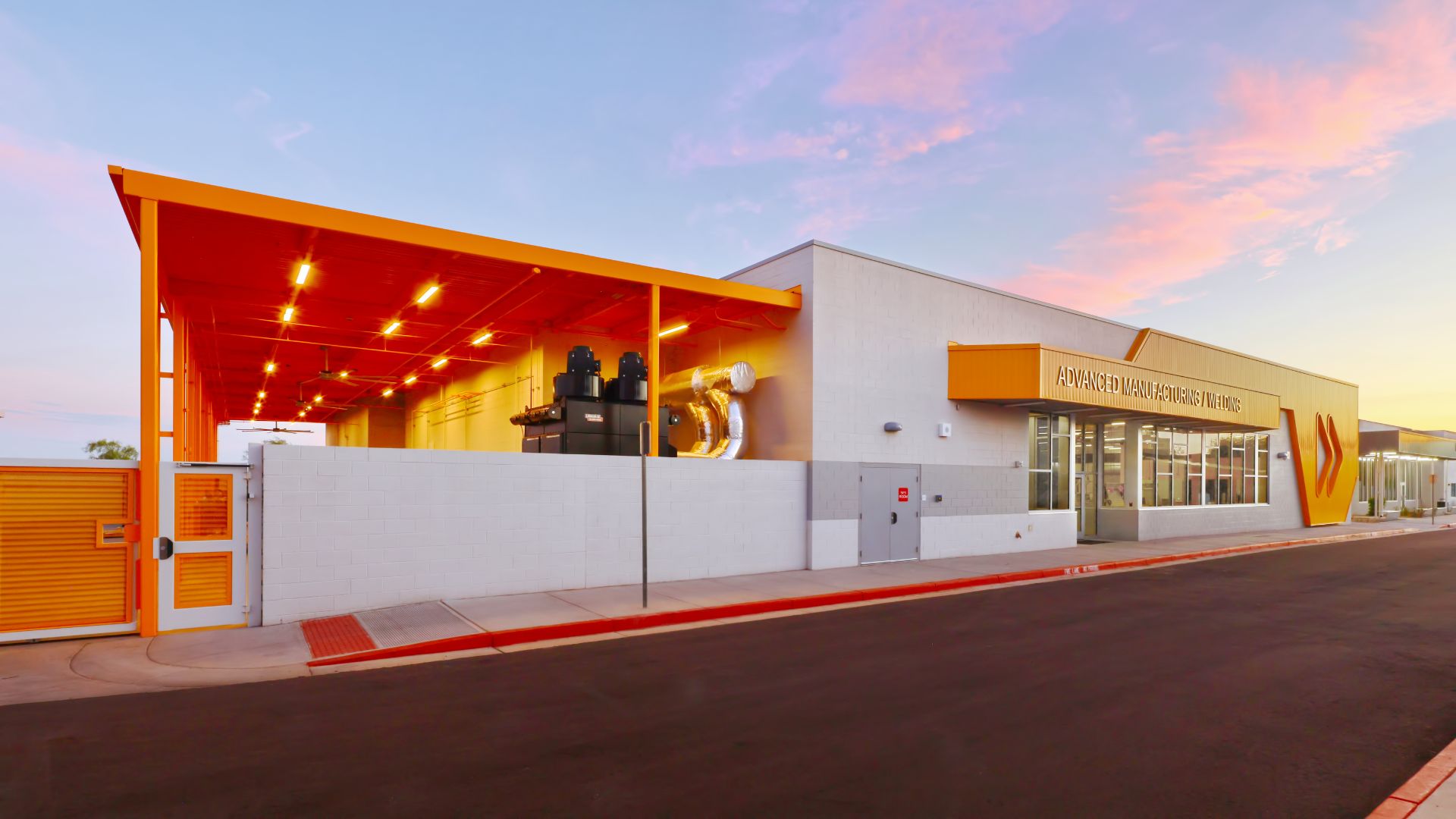
Built at the district’s Northeast Campus, the $13.5 million West MEC totals 16,500 square feet of advanced manufacturing floor space, complete with a clean room and industry-standard equipment. | Photo Credit: Courtesy of McCarthy Building Companies
By Eric Jay Toll
Career readiness education is implemented through multiple methodologies, increasingly adopted by numerous school districts, particularly within states such as Arizona. These approaches may include academies that integrate traditional core curricula with career-oriented instruction, as well as Career and Technical Education (CTE), which deliver specialized technical education and certifications aligned with specific trades or professions. The associated campuses and facilities are purposefully designed to equip students with educational experiences that prepare them for future careers.
Each unique educational setting is customized to align with particular industries, occupations or career trajectories, necessitating facilities that enable educators to effectively prepare students for their intended professions.
“There are more diverse learning pathways available today than ever before,” said Tyler Shupe, senior director of Education Services at McCarthy Building Companies in Phoenix.
Shupe works with school districts on behalf of McCarthy. He sees districts recognizing that career focused education is of growing interest to communities, students and employers. Responding to the call, they are customizing learning spaces, whether by renovating an existing campus, expanding it, or building entirely new facilities.
Shupe has led several of these education projects in the Greater Phoenix area. Two of these include the currently under construction Agua Fria Union High School District’s (AFHSD) new Hilltop School for the Arts and Theater campus in Litchfield Park, Arizona, and the recently completed Northeast Campus expansion of Western Maricopa Education Center, known as West-MEC, in North Phoenix.
Designing Schools to Mirror the Workplace
A career- or arts-focused curriculum changes how the school must be designed compared with a traditional comprehensive high school, according to Shupe. The intention is to create learning spaces that replicate the working environment.
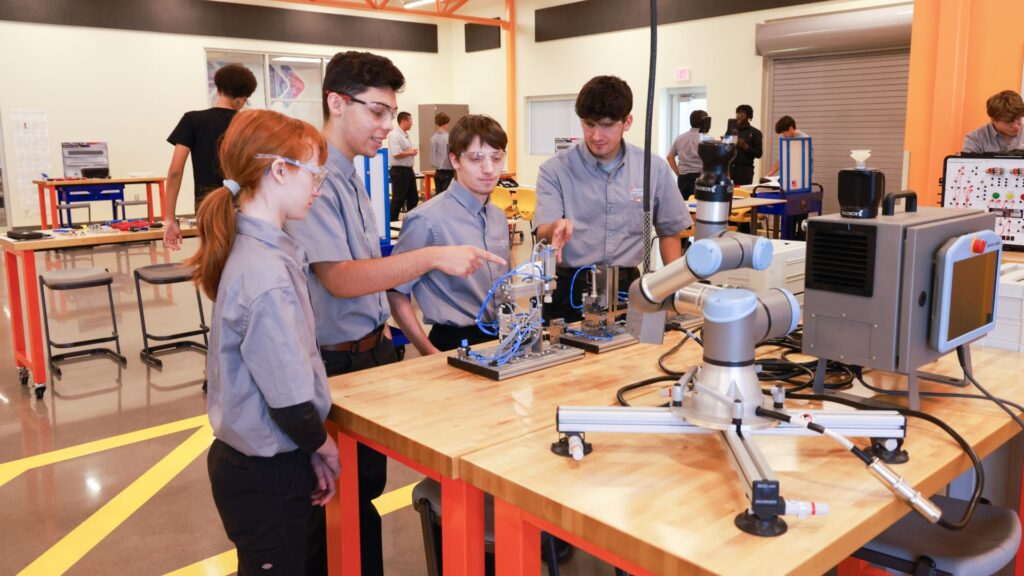
“Most academies and CTE spaces require not only a classroom for learning, but also a hands-on learning space,” Shupe explained. “Students get time in the classroom and time learning by doing, and every program has its own classroom, lab, and space designed just for it.”
In addition to the arts and CTE, academy high schools are being built or expanded to include current technology facilities for technology, manufacturing, healthcare and trades education, and other specialized careers that might not require a four-year college degree for career starts.
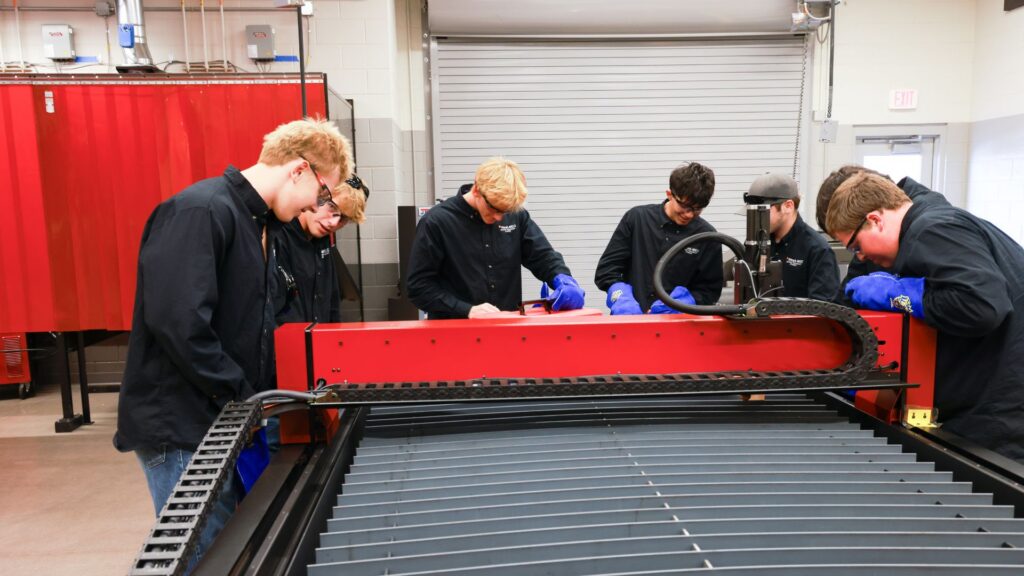
For West-MEC, McCarthy recently expanded its CTE for welding and advanced manufacturing. At Hilltop, the new $75 million campus blends both high-tech high school classrooms with facilities for literary, visual, performing and media/digital arts programs. Undertaking such tasks goes beyond design and building.
“Across our district, I’ve seen how specialty learning environments truly change the way students connect with their education,” said Mark Yslas, Superintendent for AFHSD. “Whether it’s hands-on career programs, advanced academics, or real-world learning experiences, these spaces are built around our students’ interests and goals. By creating environments that reflect industry, innovation, and creativity, we’re helping ensure our students graduate prepared for whatever path they choose.”
Community Partnerships Shape Campus Development
Developing a specialized high school program requires strong collaboration with the community. For AFHSD, the Hilltop project presented challenges, which is common for initiatives that have a focused purpose. The campus is being built on the site of a historic estate, with an application underway for listing on the National Register of Historic Places. As the highest point in the city, The Hilltop is physically prominent and serves as a central feature in the District’s Academies of the Southwest transformation.
“The historic estate residences remain on-site and are in the process of being transformed into museum spaces,” Shupe said, as he numbered off all the stakeholders in this project beyond just the high school district administration, teachers and interested parents. “The property is owned by the City of Litchfield Park and leased to AFHSD, to expand arts opportunities for students and residents alike, an example of strong community partnerships in action.”
Aligning Education with Regional Workforce Demand
West-MEC has an entirely different set of collaborators. The Phoenix area has become the Silicon Desert. Taiwan-based TSMC is building one of the largest chip fabrication plants in the world. With it, Greater Phoenix is seeing extensive industrial development, and electric-vehicle and associated parts manufacturing. With the volume of new businesses, there is an insatiable demand for well-trained future employees.
“West MEC establishes industry advisory committees for each program,” Shupe explained. “These committees guide the district on emerging skills and priorities for student learning. West MEC then equips students with the certifications they need to transition directly into the workforce upon graduation.”
Built at the district’s Northeast Campus, the $13.5 million project totals 16,500 square feet of advanced manufacturing floor space, complete with a clean room and industry-standard equipment. Also included is an electric vehicle bay that they outfitted to create a next-generation teaching facility for EV technology.
“Our programs are built in partnership with the community and industries we serve,” said West-MEC Superintendent Dr. Scott Spurgeon. “That collaboration ensures West-MEC students are trained on current technology and workforce expectations, strengthening both individual career pathways and our regional economy.”
Experience and Coordination Drive Successful Outcomes
CTE curriculum and facilities isn’t something new for McCarthy. Shupe said that the construction company has partnered with West-MEC over the last fifteen years on three other campuses and many other school districts on a variety of other CTE programs and spaces.
“We understand the importance of hearing from industry leaders and working closely with the district and our design partners to provide a highly productive learning environment that’s state-of-the-art,” he said. “We bring our expertise in school construction to these projects and work through a process that incorporates feedback along with best practices to achieve the goals of the district and its stakeholders. We’re all focused on student success, which makes these projects particularly rewarding.”
Building today’s career-oriented learning campuses, renovating or expanding an existing facility requires unique experience, from understanding project objectives and collaborating with the community, to knowing how to build a successful school.
“We learn as much about the project as we can, the needs of the client, and how the building is going to be used,” said Shupe. “Every program is unique, and we start by understanding what needs to go into that space. “The effort involves a higher degree of coordination than what’s needed for conventional construction projects.”
Eric Jay Toll is a freelance writer and Communications Manager for the city of Phoenix Community and Economic Development Department.