
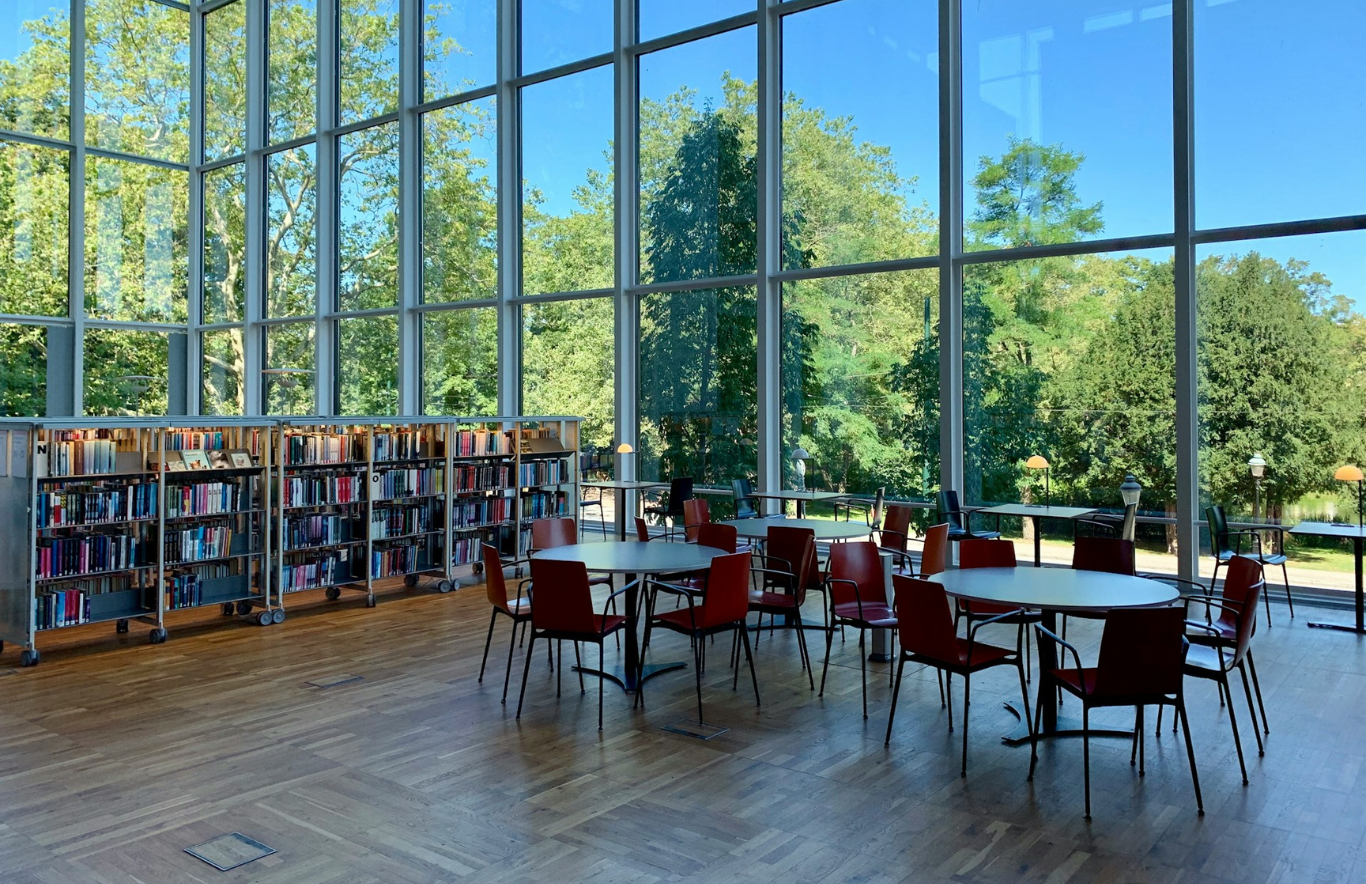
Modern third spaces must serve multiple purposes and ideally connect students to nature. | Photo Credit (all): Unsplash
By Evelyn Long
In modern school design, the most critical spaces for student development may not be classrooms — they may be the areas in between. Third spaces like commons, libraries and even hallways represent an untapped frontier for fostering the youth’s social and mental well-being. They’re crucial for community health, but they are steadily declining. This presents a unique opportunity for educational facilities.
The Disappearing Third Space and Its Toll on Student Wellness

Third spaces are informal and voluntary gathering places, unlike the first and second spaces — the home and work or school. However, third spaces like malls, local parks and other traditional community hubs are gradually eroding after the COVID-19 pandemic and rise of digital platforms and online communities. This reduces the number of venues and opportunities for low-stakes social interactions that children and young adults especially need.
“We need intimate, close relationships,” Japonica Brown-Saracino, a sociology professor at Boston University, said. “But casual relationships serve a purpose as well, and many of those can be cultivated in a third place.”
Around 17% to 21% of people between the ages of 13 and 29 report feeling lonely. Teenagers have the highest rates, and those experiencing this isolation are 22% more likely to earn lower grades. These statistics are alarming, as loneliness can harm both physical and mental health and diminish life expectancy.
Within academic institutions, third spaces are where students choose to be, without a formal agenda. Students are actively seeking out these places when they’re at school. For example, many Gen Z students prefer to spend time in settings with third-space qualities when they’re not in class. The challenge for designers is how to bring those qualities inside school walls.
From Concept to Construction — How to Build a Third Space
While the sociological need for third spaces is compelling, the “how” is where design and construction experts can translate an abstract concept into a functional reality. Here are design strategies and ideas that can transform underutilized areas into vibrant hubs for student life.
Implement Flexible and Biophilic Design
Modern third spaces must serve multiple purposes and ideally connect students to nature. Consider these ideas:
- Use modular seating, movable partitions and varied furniture to create distinct zones for quiet study, social interaction and collaborative work within a single open area.
- Go beyond potted plants by incorporating living walls, wood-paneled accents and large windows to maximize natural light.
- Choose carpets, textiles or acoustic panels that feature patterns inspired by nature to create a subtle connection to the natural world.
Adopt a “Resimercial” Approach to Materials and Comfort
Blending the comfort of home with the durability of commercial environments is possible with particular strategies:
- Use durable but comfortable materials like cleanable fabrics, warm-toned flooring and area rugs to dampen sound and define spaces.
- Install a long, recessed electric fireplace in communal spaces to create a powerful sense of warmth and gathering.
- Designate wall spaces for framing systems that display rotating student artwork to highlight the school’s community.
Ensure Accessibility and Code Compliance
Compliance with codes and regulations, from ADA requirements to advanced security systems, is also nonnegotiable. Professionals must go beyond meeting the minimum requirements of the Americans with Disabilities Act to ensure accessibility:
- Create clear, intuitive pathways free of obstacles, with good lighting and clear wayfinding signage to assist neurodiverse students or those with low vision.
- Provide a variety of seating options, including chairs with and without armrests and couches at different heights.
- Design for various sensory needs, which may include using acoustic paneling to dampen noise in “quiet zones” and providing areas with lower levels of stimulation.
Leverage Smart Technology for Efficient Environments
Smart technology will be part of an estimated 103.15 million homes in America by 2028. This widespread adoption means that many students and their parents increasingly see responsive features as a standard.
- Implement a zoned, smart HVAC system to keep different zones within a third space cool or heated simultaneously based on occupancy and need.
- Install motorized shades that are programmed to automatically lower during peak sun hours to reduce solar heat gain.
- Ensure the smart features are well-integrated to reduce energy consumption by 15% to 25% and gain significant savings.
Provide Pervasive and Accessible Technology
Beyond smart automation, third spaces must always provide the fundamental technological infrastructure students need.
- Integrate power outlets and USB charging ports directly into couches, tables, benches and other furniture.
- Ensure the third space has a blanket coverage wireless network with sufficient density of wireless access points to handle hundreds of simultaneous connections without lag or dead zones.
- Create dedicated huddle stations for small group work, equipped with a monitor with screen-sharing capabilities and mobile whiteboards that can be moved to different locations as needed.
The Future of School as a Community Anchor
Third spaces are a proven sociological concept that provides the informal, voluntary social connection that today’s adolescents are actively seeking. The goal is to intentionally design these spaces into the school environment, rather than leaving them to chance. Combine flexible, human-centered architectural planning and strategically integrate smart technology. Aim to become builders of the infrastructure that supports a healthier and more connected generation.
Evelyn Long is a commercial interior design writer with specialized expertise in accessible, ADA-friendly spaces and designing environments that support mental health and inclusivity.