
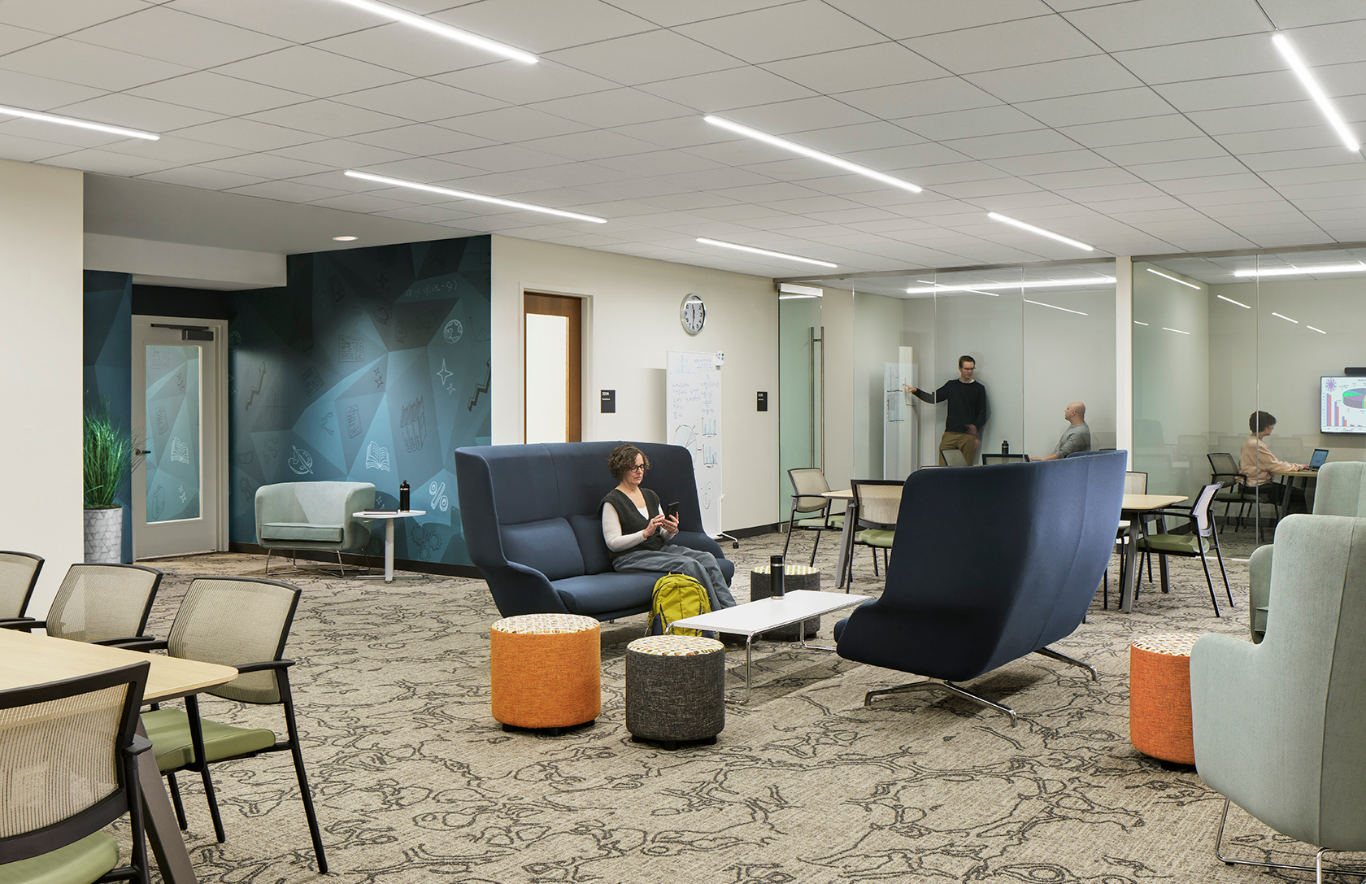
Adjustable lighting, zoned temperature control and a range of seating are critical. | Photo Credit: Craig Dugan Photography
By Carol Stolt
Higher education is changing fast, and learning spaces must keep pace. As technology, pedagogy and mental health awareness reshape how students learn, designing for neurodiversity has become essential—not optional. The question is no longer whether to accommodate different needs, but how to create environments where every student can thrive.
Many institutions are finding that what supports neurodiverse learners—adaptable lighting, varied seating and better acoustics—improves learning for everyone. By combining empathy, flexibility and technology, colleges can strengthen equity, comfort and belonging while preparing for what’s next.
From Accommodation to Empowerment
Traditional classrooms were built for uniformity: fixed layouts, identical desks and one teaching model for everyone. But learning has never been one-size-fits-all. Neurodiverse students—including those with ADHD, autism, dyslexia and anxiety—process information differently, and designing for that range benefits all learners.
Empathetic design starts with listening. Understanding how students respond to light, sound, temperature and space helps create environments that support focus and calm. Even small shifts—such as dimmable lighting, localized temperature control or seating that allows movement or enclosure—can significantly improve engagement. What once required “special accommodations” becomes a shared benefit that reinforces a sense of belonging.
When designers collaborate closely with faculty and students, empathy yields practical solutions that elevate access to empowerment.
Designing for Diverse Needs Without One-Size-Fits-All Solutions
The first challenge is flexibility. What supports one learner may distract another, so the goal is to provide choices. Adjustable lighting, zoned temperature control and a range of seating—from firm and soft to standing-height—help students find what best supports focus. Soft, enveloping seating can also improve comfort and attention for some learners.
Acoustics matter just as much. Thoughtful use of microphones, speakers and sound-absorbing materials ensures everyone—onsite or online—can participate fully. The best solutions feel seamless: inclusive by design, not added later.
Still, physical comfort and flexibility are only part of the equation. Technology now plays an equally important role in shaping inclusive learning experiences.
Supporting the Integration of Emerging Technologies
Artificial intelligence (AI), immersive learning, and hybrid teaching are reshaping the academic experience, making technology integration foundational. AI can personalize instruction, offering meaningful support for neurodiverse students who may be less comfortable speaking up in class.
Designers can prepare with resilient infrastructure—ample power, flexible desk space, and modular layouts—along with cameras, monitors, and innovative AV systems that support hybrid learning and keep remote students engaged.
Just as important, technology should strengthen human connection, not replace it. The best classrooms pair digital capability with people-centered design, supporting focus, comfort and belonging as tools evolve.
Breaking Down Stigma and Building Belonging
Design is as psychological as it is physical. Spaces that normalize difference reduce stigma and strengthen community. Circadian-rhythm lighting can support mood and well-being, especially for students with anxiety or sensory sensitivities. Acoustic zoning reduces distractions, and shaded windows help limit glare that disrupts focus.
These strategies support both student well-being and recruitment. Today’s learners expect responsive, inclusive environments, and institutions that fall behind risk losing them to those that invest. More campuses are measuring success not only by outcomes, but by belonging—recognizing that inclusive design improves engagement, retention, and mental health.
But inclusion alone isn’t enough; higher education must also keep pace with the rapid changes reshaping how students learn.
Keeping Pace with Rapid Change
Technology moves fast—and so do expectations. Today’s students are digitally native and expect connectivity, adaptability and seamless hybrid learning. At the same time, new teaching models demand spaces that can shift quickly from collaboration to immersive, hands-on work without disruption.
To stay ahead, institutions must plan five to ten years forward, investing in flexible infrastructure that can absorb change. Classrooms designed to adapt can integrate emerging tools—like augmented reality and AI tutors—without costly renovations.
The urgency is apparent: universities that fail to modernize risk outdated facilities and reduced appeal to a generation seeking connection, purpose and innovation.
Key Takeaways
- Flexibility first. Varied furniture, adjustable lighting and thermal control empower focus and comfort.
- Technology ready. AI-driven personalization and immersive tools demand robust, adaptable infrastructure.
- Empathy matters. Design that listens and removes barriers fosters dignity and belonging.
- Future-proof now. Investing in adaptable frameworks protects against obsolescence.
- Well-being wins. Environments that support calm and connection improve retention and mental health.
A New Standard for Learning
The future of higher education depends on spaces as dynamic as the students who use them. Designing with neurodiversity in mind isn’t accommodation—it’s a commitment to equity, innovation and growth. The best classrooms will balance technology with humanity, using AI to personalize learning while design supports comfort and belonging.
With modest upgrades—dimmable LEDs, flexible furniture and acoustic balance—colleges can transform traditional rooms into inclusive, future-ready environments. As leaders plan campus investments, the message is clear: designing for inclusion is designing for the future.
In an era of rapid change, the institutions that lead will be those that treat inclusive design not as a checkbox, but as the standard for how learning should feel—adaptive, empowering and for everyone.
Carol Stolt, Allied ASID, WELL AP, is Design Principal with FGM Architects. She can be reached at 630.574.8701 or [email protected].