
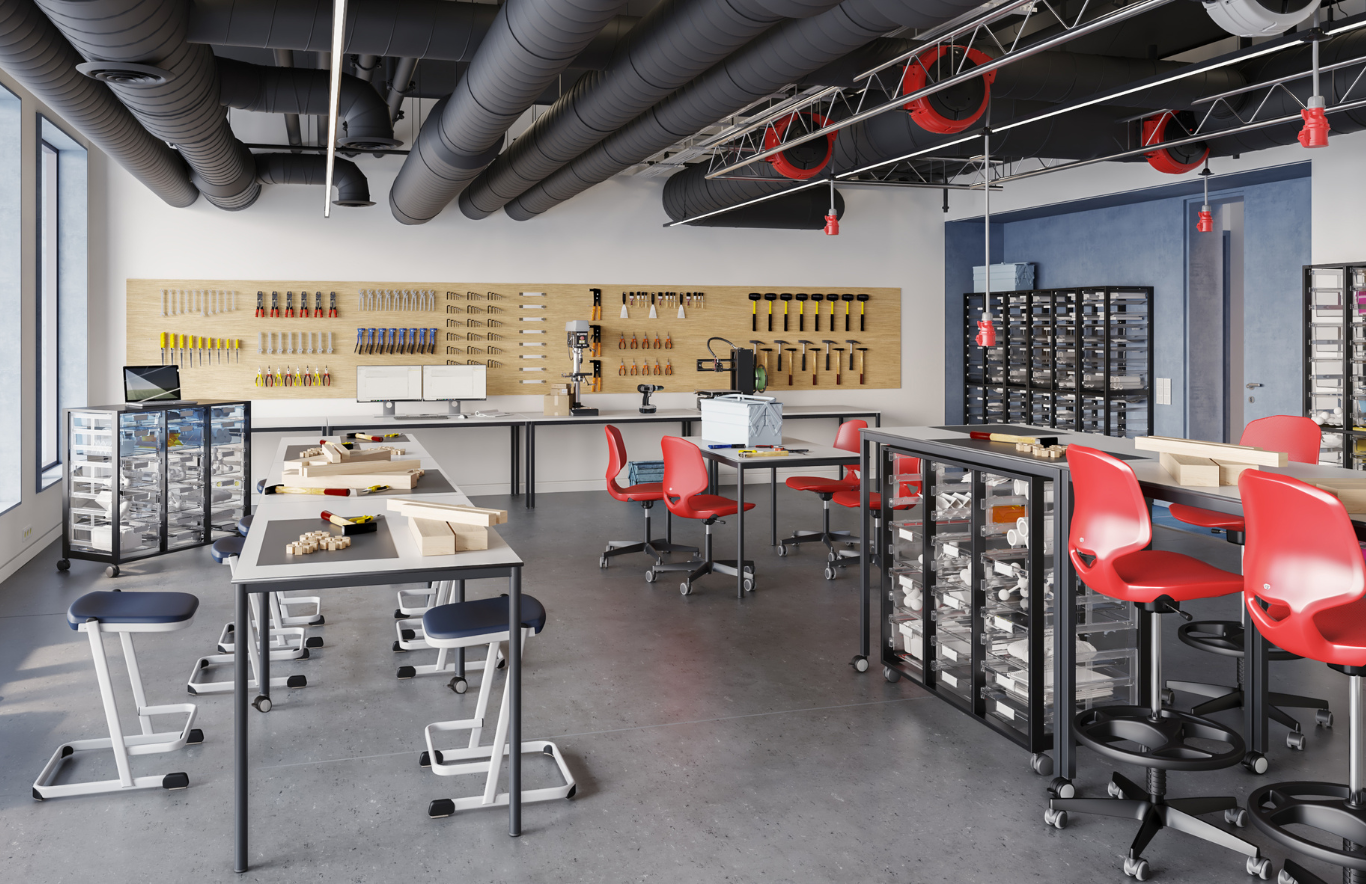
A key purpose of student leadership spaces is to foster personal development, academic learning, and career preparation, supporting overall student growth. | Photo Credit (all): VS America
By VS America
Career and Technical Education (CTE) programs build connections between academic coursework and real-world application, providing some of the most meaningful elements of career exploration.
Team-based, project-oriented approaches supported by flexible classroom designs are transforming both CTE and STEM learning environments. Agile furniture plays a pivotal role in creating adaptive spaces that can be easily reconfigured to support hands-on learning, collaboration and evolving instructional needs.
According to the Internation Journal of STEM Education: “The flexibility of a learning environment is directly proportional to the creativity it fosters.”
Work-Based Learning
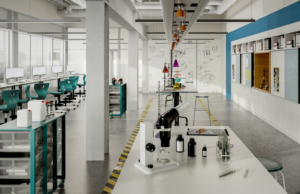
Work-based learning integrates academic learning with practical, real-world experience to prepare students for future careers. By aligning classroom instruction with hands-on activities, students gain a deeper understanding of their chosen fields and develop essential technical and employability skills.
Partnerships with local businesses provide opportunities for internships, apprenticeships, and real-world projects, enabling students to apply theoretical knowledge in practical settings. This experiential learning enhances technical proficiency and cultivates critical thinking, adaptability and collaboration skills — all vital for success in today’s dynamic job market.
Planning Tip: Designate collaborative areas with large tables, comfortable seating, and writable surfaces like whiteboards or glass boards. These spaces should encourage group discussions, brainstorming, and teamwork, fostering peer interaction and developing essential communication and collaboration skills.
Student Leadership
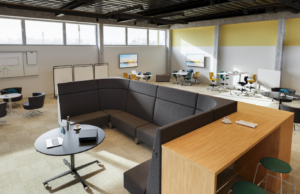
A key purpose of student leadership spaces is to foster personal development, academic learning, and career preparation, supporting overall student growth. Student leadership is transformative as it ignites potential, fosters initiative, and hones problem-solving and decision-making skills. By taking on leadership roles, students lead projects, collaborate, and tackle real-world challenges, building confidence for future careers. These roles instill a deep sense of responsibility and ownership, fueling commitment to their educational and career aspirations.
Planning Tip: Design student leadership and apprenticeship spaces with versatile, multipurpose furniture to support a variety of learning and professional development activities. Ensure these spaces align with career pathways and postsecondary education, fostering environments that promote hands-on learning, collaboration, and interactions with industry professionals.
Laboratory Learning
Laboratory learning spaces should align with local labor market needs, ensuring the curriculum prepares students for careers in their community by supporting work that mirrors real-life scenarios. This approach enhances student engagement through project-based learning and helps build strong business and community partnerships. Sourcing projects from online communities or creating a makerspace within the lab can provide diverse learning experiences, while integrating relevant technologies and equipment into lesson plans ensures students are prepared for modern workplaces.
Planning Tip: The appropriate furniture solutions – such as movable lab benches, adjustable workstations, effective storage, and versatile seating – support the dynamic use of space and allow for quick reconfiguration to accommodate various activities and instructional methods.
Classroom Instruction
The design of CTE and STEM classrooms is crucial because it directly influences the quality and effectiveness of student learning experiences. These classrooms should be designed to be flexible and adaptable, allowing for easy reconfiguration to accommodate a variety of teaching methods and learning activities. By creating well-organized, adaptable, and resource-rich environments, CTE and STEM classrooms effectively prepare students for the demands of modern careers, equipping them with the skills and knowledge necessary to excel in a rapidly evolving technological landscape.
Planning Tip: Design CTE and STEM classrooms with flexible and movable furniture to create versatile zones for group work and individual study, ensuring adaptability to various teaching methods and evolving educational needs.
Why the Physical Learning Environment Matters
Agile furniture in CTE and STEM learning environments goes beyond mere aesthetics. As a study in the Journal of Science Education and Technology states, “The physical classroom environment significantly influences students’ collaboration and engagement in STEM activities.” This underscores the need for furniture that is adaptable and can be reconfigured to suit various learning and teaching styles.
Explore more STEM, maker, and CTE room concepts at https://www.vsamerica.com/en_US/concepts-stem.