
By Petra Sucher
For school districts across the country, summer signals the beginning of the busiest season for capital planning and construction. As students leave campus, crews mobilize to complete renovations, infrastructure improvements and new construction projects, many of which are made possible through voter-approved bond referendums. Understanding where districts are in the funding pipeline — and where the next opportunities are emerging — has become increasingly important for architects, engineers, contractors, manufacturers and service providers looking to support K-12 capital programs. By tracking bond activity from the earliest planning stages through election outcomes, SchoolBondFinder provides a real-time view of how districts are prioritizing facility investments and where the market is headed.
SchoolBondFinder specializes in tracking K-12 capital project bonds across the nation. The platform monitors school district bond initiatives across key stages, providing stakeholders with crucial data on project scope, financing, and voter outcomes.
- Watch List: Districts may be added to this list following initial activities such as a facilities study, demographic study, capital improvement plans review or a feasibility survey.
- Proposed List: A bond is moved to this list once a school board officially approves a referendum for a vote. At this point, the vote date, official ballot language, use and amount are finalized.
- Passed/Failed List: Updates on school bond referendum votes — both passed and failed — are typically available on the platform within 24 to 72 hours of the official results being released.
Quarter 2 (April 1-June 30):
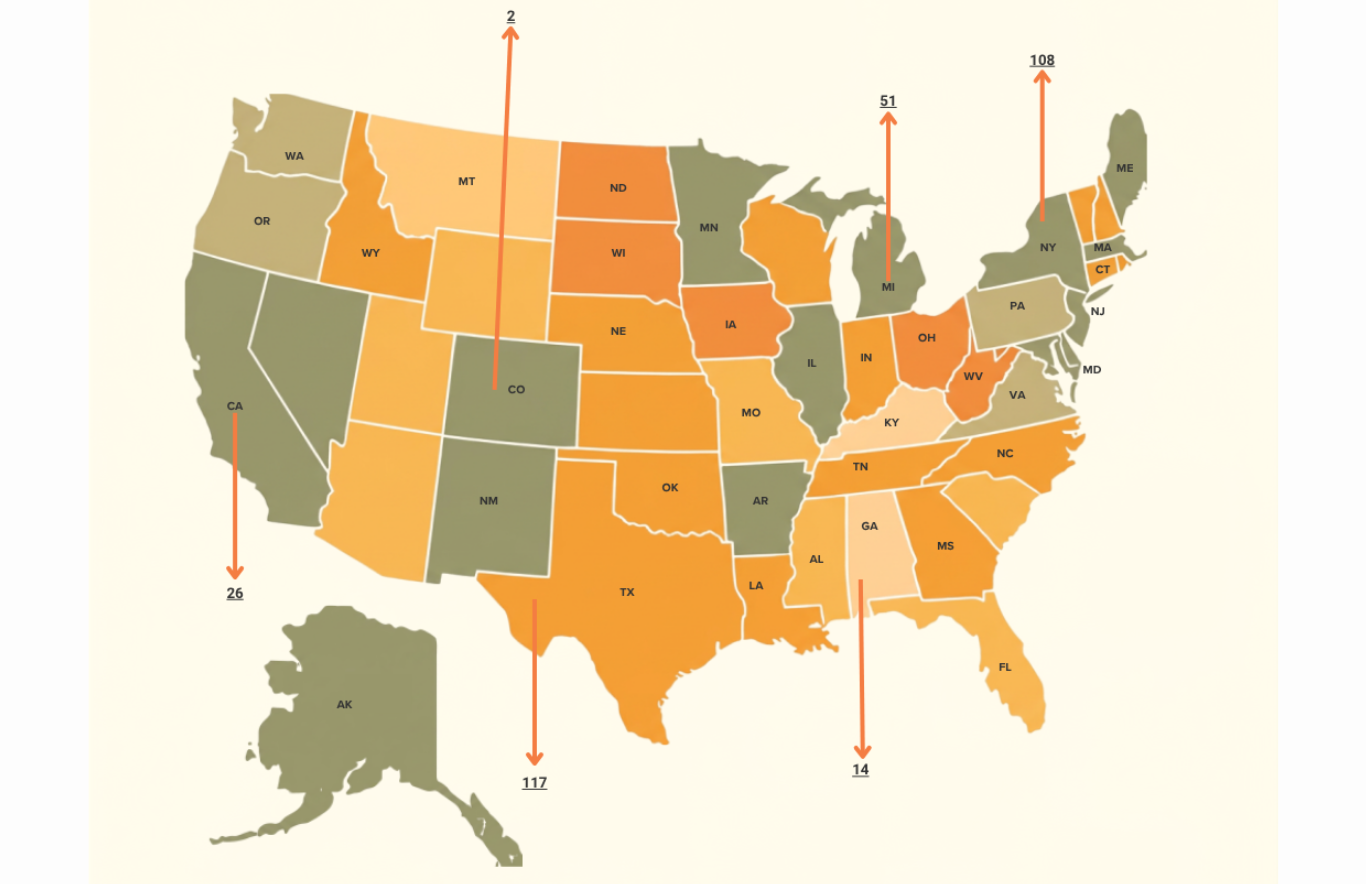
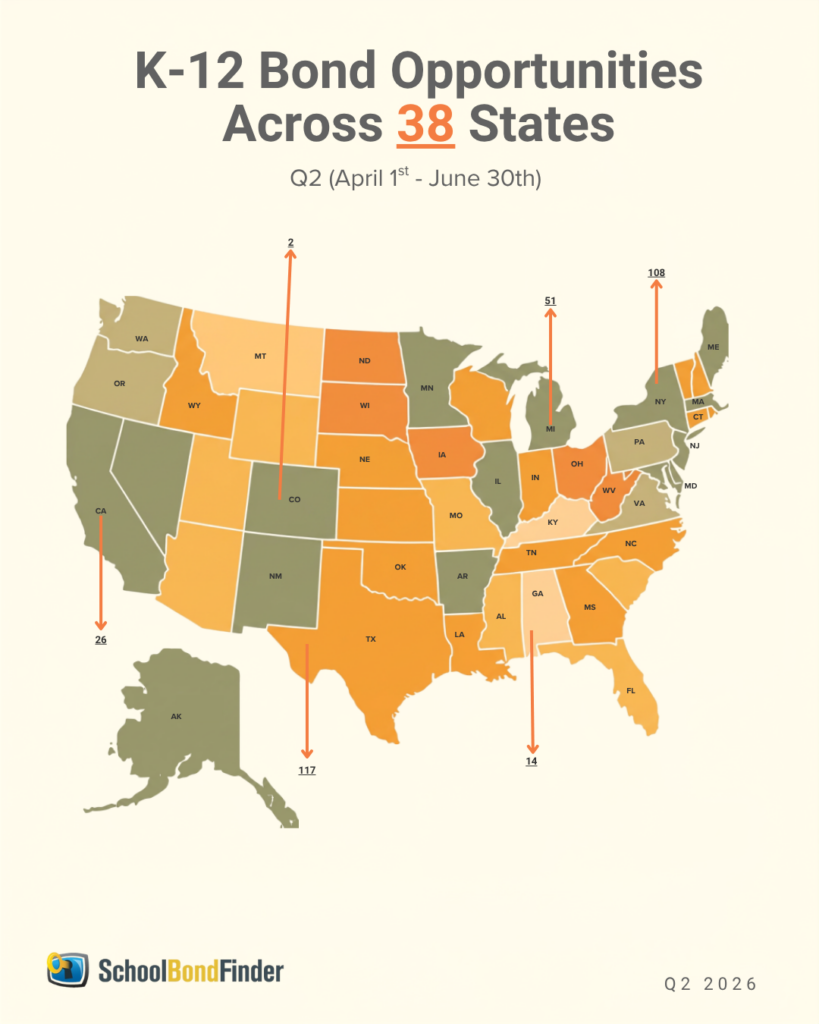
For the second quarter, $22.6 billion in referendums have been approved as of June 15. There are currently 10 voting opportunities remaining through the end of June, with an estimated value of $632 Million. To date, June elections have passed 25 bonds and 13 have failed, resulting in a 52% pass rate. Currently there is a strong support and focus on bonds that address physical facility needs and safety upgrades.
One pattern emerging is that school districts are combining physical infrastructure and safety upgrades into single, comprehensive bond packages rather than funding them separately. Approximately 47% of passed bonds for Q2 focused on allocated funds for safety and security upgrades. Examples of safety and security enhancements are installing secure entrances, security cameras and alarm systems.
Top 3 States for Q2 Bond Measures:
- Texas: $11 billion across 92 measures
- Georgia: $1 billion across 13 measures
- Michigan: $1 billion across 33 measures
The Start of the Fiscal Year
The K-12 education funding cycle begins on July 1 and concludes on June 30 for 46 states. This period serves as “go time” for school districts, as they activate new funding streams, issue bonds and authorize summer capital construction projects. The end of the school year provides an ideal window for infrastructure work, such as roof replacements and HVAC upgrades, to begin.
The timing is critical because many local school boards submit architectural plans to state education agencies before the July 1 deadline to secure early approval for both plans and funding. To effectively capture capital projects and bond opportunities, education companies must prioritize early engagement with school boards and districts before the new fiscal year begins. It is critical for firms to establish themselves as a trusted, value-add partner and to ensure their offerings align with specific district needs.
Upcoming Elections and Events
Currently SchoolBondFinder is tracking $50 billion in opportunities for 2026, with many watchlist items with no funds attached yet. August elections are around the corner with 28 bonds on the proposed list. These elections will primarily take place in Oklahoma and Michigan.
On Aug. 5, SchoolBondFinder will be in Denver presenting at the School Construction News Design & Construction Symposium. Experts will be talking about 2026 State of School Tax Elections: Outcomes & Outlooks. This informative session will review the current K-12 school referendum landscape in the U.S., including total funding and approved opportunities, trends in capital projects and spending, and forecasts for the rest of 2026 into 2027. Register today.
With nearly $50 billion in tracked opportunities already on the horizon for 2026—and many additional projects still in the planning stages before funding amounts are determined — the K-12 capital market continues to present significant opportunities for industry partners. For firms serving the education sector, success depends not only on monitoring election results but on understanding where districts are in the planning process and engaging well before projects reach the construction phase. As the new fiscal year begins and districts move from planning to procurement, those that establish themselves as trusted resources early will be best positioned to support the next generation of school facilities. SchoolBondFinder will continue to monitor these trends throughout the year, providing timely data and insights into the evolving landscape of school funding, capital investment and construction nationwide.