
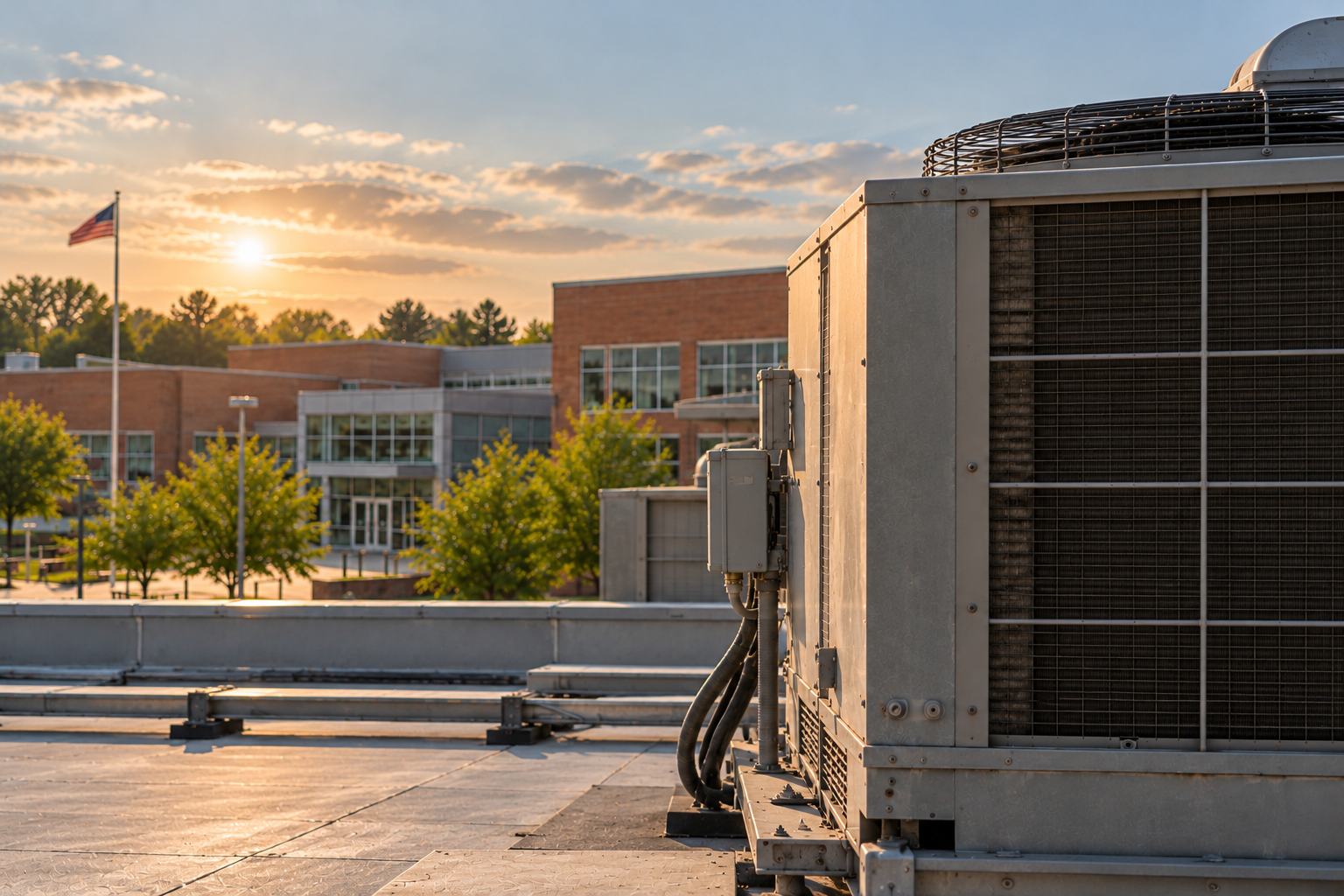
As extreme heat and declining air quality threaten school operations, modern HVAC systems, improved filtration and real-time air quality monitoring are becoming essential to creating safer, healthier and more climate-resilient learning environments. | Photo Credit: Generated using OpenAI (ChatGPT)
By Tony Abate
Climate change is no longer just a lesson plan in schools. It is heating our classrooms and endangering the health and wellness of teachers, staff and students.
For years, we’ve talked about preparing the next generation for a changing climate. But it’s time — now — to start thinking about how to make our school buildings more resilient to the threat. We have high-tech solutions. It’s time to implement them.
School districts are facing a problem that can no longer be dismissed. Extreme heat, an increasing number of wildfires and aging school infrastructure are converging, and too many schools aren’t equipped for these challenges.
The consequences are real and dangerous. The Government Accountability Office has reported that nearly one in five school districts canceled classes during the 2024–25 school year because of facility problems. Among the problems: extreme classroom temperatures, with one school reportedly reaching 110 degrees.
A classroom shouldn’t become an unbearable oven before we decide to invest in and install effective air conditioning (HVAC) technologies. Yet that is essentially what we’re allowing to happen in too many places.
When Outdoor Threats Become Indoor Problems
Many school buildings were built decades ago, when extreme heat was less frequent and wildfire smoke was a rarity. Some lack adequate cooling. Others have aging HVAC systems that struggle to maintain comfortable temperatures. And even buildings with air conditioning may not be prepared for increasingly poor outdoor air quality.
This last point is especially important. The traditional advice to “open the windows and get some fresh air” suddenly becomes terrible advice when a community is threatened by wildfires. The air outside is filled with contaminants and dangerous to breathe.
Schools need to know what is happening inside their buildings — and they need to know before conditions become dangerous and threatening
That means taking indoor air quality seriously, and not an afterthought. It means adding high-tech real-time air quality monitoring and ventilation technologies that deter airborne pollutants. It means making sure HVAC systems can handle the conditions they are increasingly being asked to handle. And it means having a plan for extreme heat and wildfire smoke before the emergency arrives. It’s about making school buildings more resilient and keeping those inside safer.
Bridging the School Infrastructure Gap
Equally as important, all school systems should appoint an indoor air quality (IAQ) manager who can use real time data and make necessary adjustments to building operations to optimize IAQ. This is a critical function, as oftentimes action taking may fall into gaps between different responsibilities.
Teachers can’t teach and students cannot learn effectively if they’re sitting in classrooms that are excessively hot. And school administrators shouldn’t have to scramble to decide whether to close a building when the temperature or air quality becomes unacceptable.
Then there’s another reality: Not every school district has the same funding and resources to address these issues. Some districts can afford modern HVAC systems, upgraded filtration and sophisticated monitoring. Others are dealing with buildings that desperately need basic repairs.
We routinely debate whether schools have the latest technology for students. We should also be asking whether the buildings themselves have the basic infrastructure needed for students to safely learn.
We don’t need to rebuild every school tomorrow. But we do need to stop treating climate-related disruptions as isolated emergencies.
Planning Today for Tomorrow’s Climate Challenges
School districts should be assessing their buildings now: Which schools lack adequate cooling? Which HVAC systems are outdated? Where are filtration and ventilation inadequate? What happens when wildfire smoke arrives? Do administrators have real-time information about conditions inside the building?
Those questions should be part of school planning and capital budgets — not emergency meetings after temperatures hit 100 degrees.
Climate change isn’t waiting for school districts and boards to catch up. Neither should we.
Tony Abate is Vice President and Chief Technology Officer at AtmosAir Solutions and a member of the American Society of Heating, Refrigerating and Air-Conditioning Engineers (ASHRAE) Standards Committee that helped craft ASHRAE Standard 241, which sets requirements for the control of infectious aerosols in buildings.