
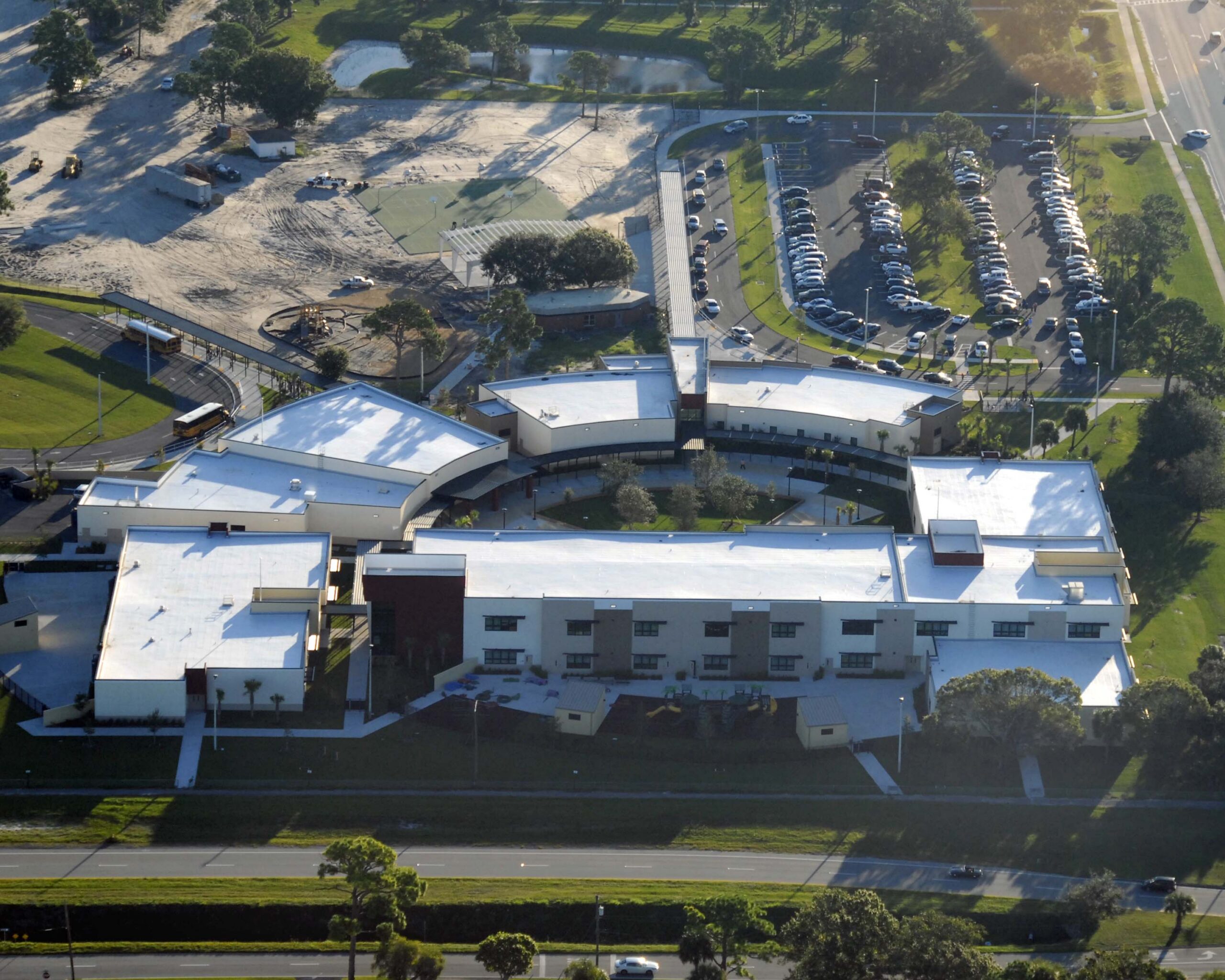
Roofs are a critical element of the building envelope for school buildings, and for school administrators and decision-makers, knowing how to best estimate service life can be critically important. | Photo Credit (all): FiberTite Roof Systems
By Todd Hyams
When making decisions about the district’s facilities, school administrators must balance short-term requirements with long-term investment needs. A school’s roof system often falls within these consideration parameters.
A new roof is a significant, long-term financial commitment. Ideally, it should provide many years of reliable protection without the need for excessive maintenance and repair over the course of its life. It should be something administrators don’t have to think very much about.
When comparing roof systems, decision-makers often look at two things: initial investment and the length of their warranties. But these don’t always fully depict the total cost of ownership and long-term performance under real-world conditions and common stressors. In this article, we’ll explore how school administrators can better predict the lifetime performance of their roof systems.
Warranty Periods vs. Expected Roof Life
Many commercial low-slope roof systems are expected to last approximately 20 years with regular inspection and maintenance, and their warranties tend to reflect that figure.
But a warranty doesn’t guarantee a roof will perform reliably throughout the coverage period, nor does it require that a replacement roof be installed when it expires. Rather, it defines the manufacturer’s obligations under specific circumstances.
Warranty coverage also varies by manufacturer and roof system. Depending on its terms, coverage may be limited to certain material defects or leaks resulting from specified causes. Damage associated with severe weather, improper maintenance, rooftop equipment or other external factors may be excluded. For example, some warranties exclude damage associated with standing water that accumulates when roof drainage is inadequate, while others may exclude damage resulting from severe winds.
Even when repairs are covered, a warranty cannot eliminate the operational disruptions or potential interior damage caused by a roof leak. For these reasons, school administrators should look beyond warranty duration when evaluating the long-term value of a roofing investment. Membrane durability, resistance to environmental stressors, quality of installation and ongoing maintenance all influence how well a roof performs over time.
Beyond warranty coverage, independently verified product information can offer additional insight into a roof’s expected service life. For example, some roof membranes may have an environmental product declaration (EPD), an independently verified document that provides quantifiable data about the environmental impact of a product throughout its life cycle. Some EPDs include a reference service life (RSL), an estimate of how long a product is expected to perform under defined conditions. Some commercial roofing membranes have a 40-year RSL, which can give decision-makers greater confidence when evaluating roof systems.
How Maintenance Impacts Roof Longevity
Regular maintenance is often required to retain warranty coverage. It can also extend a roof’s service life, helping schools avoid premature replacement and unexpected costs.
Manufacturers typically recommend that schools schedule inspections twice a year, after major weather events or following any service-related activities on the roof. Inspections should identify punctures, damaged seams, loose flashing, blocked drains, debris buildup and other conditions that could lead to leaks or premature deterioration. If any of these conditions are identified, they should be addressed quickly.
Not all roofing membrane types are equally susceptible to damage. Selection of products and technology, the maintenance requirements and repair needs contribute significantly to the overall lifetime costs of ownership.
Thermoplastic polyolefin (TPO) roofing is often selected for its lower upfront cost. However, some TPO membranes may be more vulnerable to everyday stress from sources that one might not always think about. These include prolonged sun exposure, rooftop foot traffic associated with system maintenance and exposure to certain chemicals and oils from exhaust vented to the roof from the cafeteria.
These expenses contribute to a roof’s total cost of ownership, which includes the initial investment and maintenance, repair and replacement costs over time. For example, a roof that requires frequent repairs and replacement after 20 years may ultimately cost more than a higher-priced system that requires fewer repairs and lasts 30 years or longer.
School administrators should look beyond warranty terms and upfront price when selecting new roof systems for facilities within their districts. Selecting high-performance roof systems and following maintenance best practices can help schools avoid premature roof failure, protect capital budgets and maintain safe learning environments.
Todd Hyams is a Senior Sales Representative for FiberTite Roof Systems and a Registered Roof Observer (RRO) credentialed by the International Institute of Building Enclosure Consultants (IIBEC).