
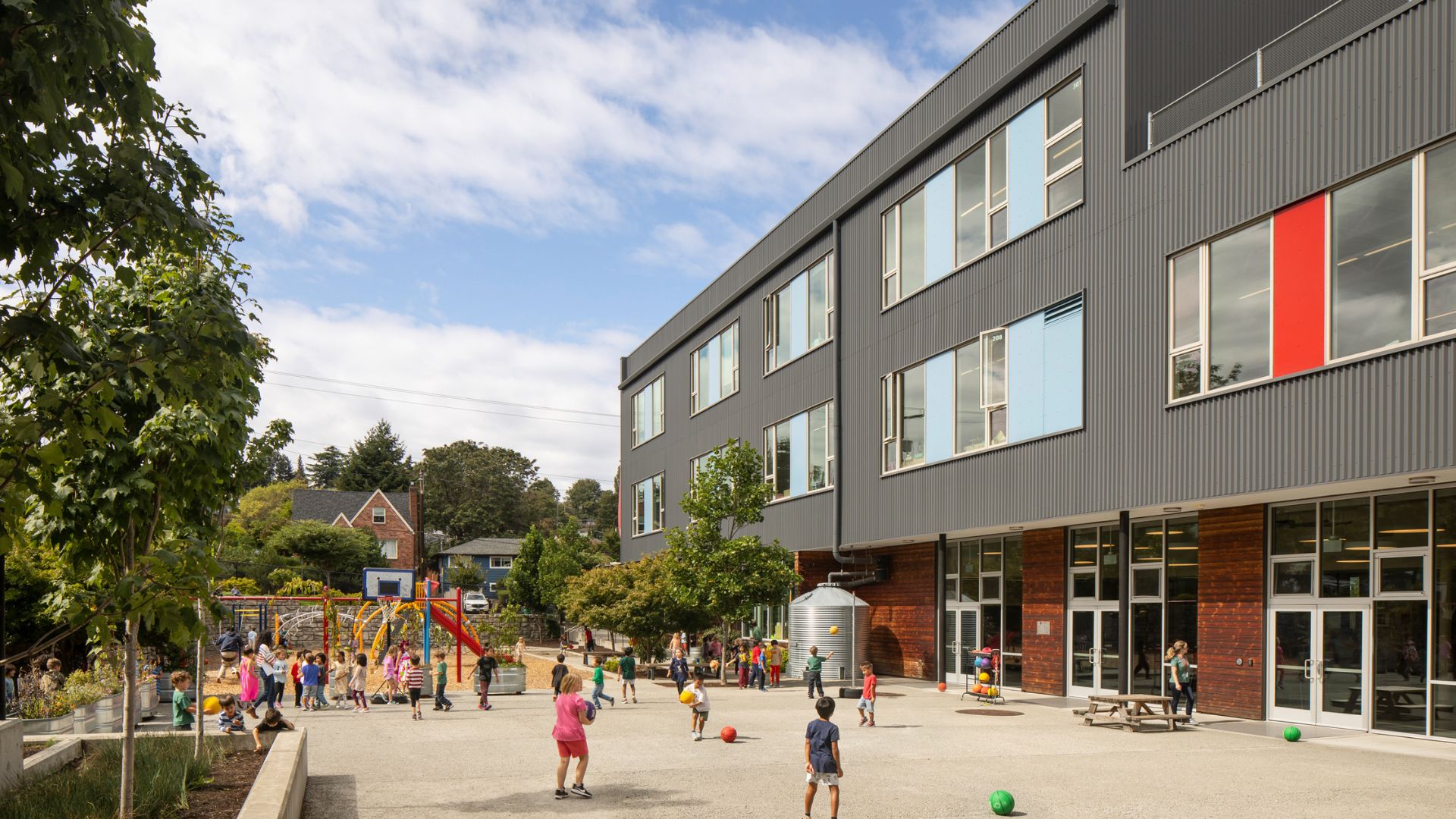
From the outset, the design and construction process focused on how architecture could reinforce educational goals while responding to neighborhood scale, sustainability priorities and long-term adaptability. | Photo Credit (all): Lara Swimmer
By Lindsey Coulter
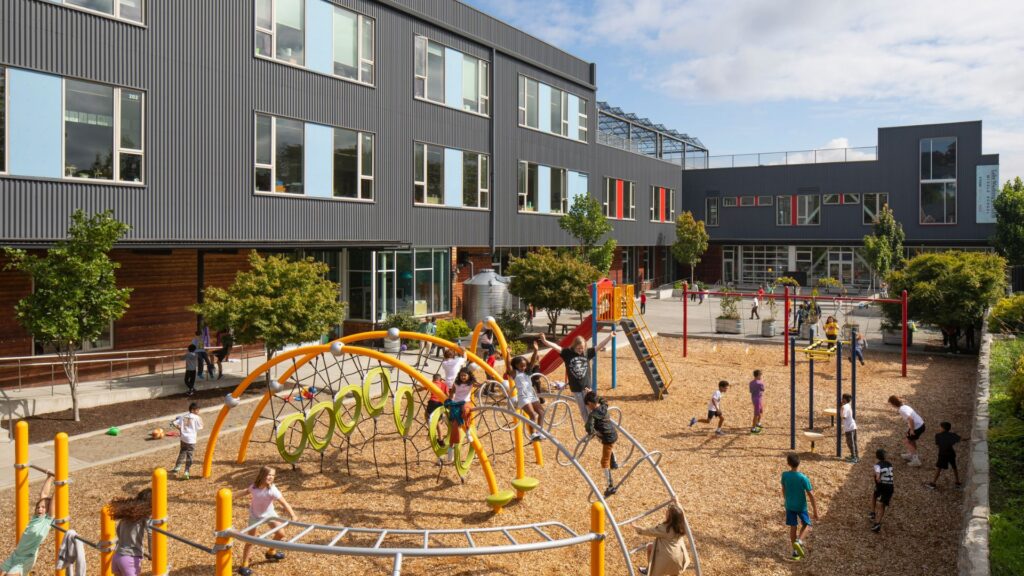
The Giddens School and Lake Washington Girls Middle School complex brings two independent schools together on a single urban campus, balancing shared resources with distinct identities in a tightly programmed, three-story building between Seattle’s Beacon Hill and Central District neighborhoods.
Designed by Graham Baba Architects (architecture and interior design) in collaboration with Anjali Grant Design (educational consultant and collaborating architect), the campus is located on a constrained site with significant grade change, the 52,500-square-foot project was designed to support co-location without compromise. While Giddens serves a coeducational pre-K through fifth-grade population and Lake Washington Girls Middle School educates girls in grades six through eight, both schools share a pedagogical emphasis on inquiry-based learning, flexibility and community connection.
From the outset, the design and construction process focused on how architecture could reinforce educational goals while responding to neighborhood scale, sustainability priorities and long-term adaptability.
Planning a Shared but Distinct Educational Model
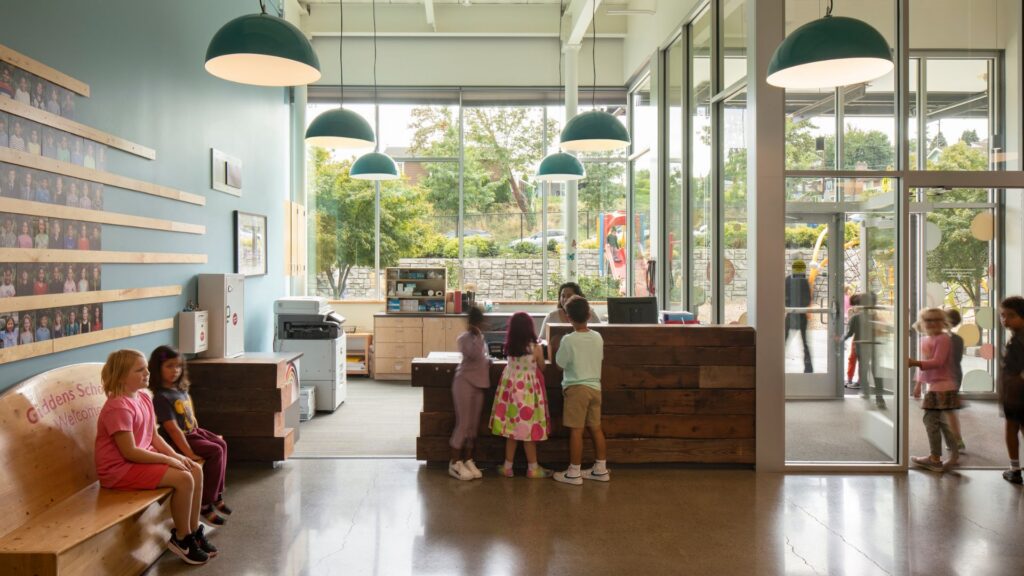
Co-locating two independent schools offered operational efficiencies but required careful planning to preserve each school’s culture and daily rhythms. Each school has its own entry sequence, circulation patterns and clustered academic spaces, while shared program areas are located at the center of the building.
Giddens’ program includes 12 classrooms, early childhood and elementary playgrounds, and a makerspace supporting science, art and social studies. Pre-K classrooms are grouped near the school’s entry, while elementary classrooms and administrative areas are stacked on two levels running east to west. The school serves approximately 240 students.
Lake Washington Girls Middle School accommodates about 110 students. Its classrooms and administrative spaces are stacked above a dedicated entry and organized north to south. The two schools connect through shared spaces including a gym and performance hall, library, commons and dining areas.
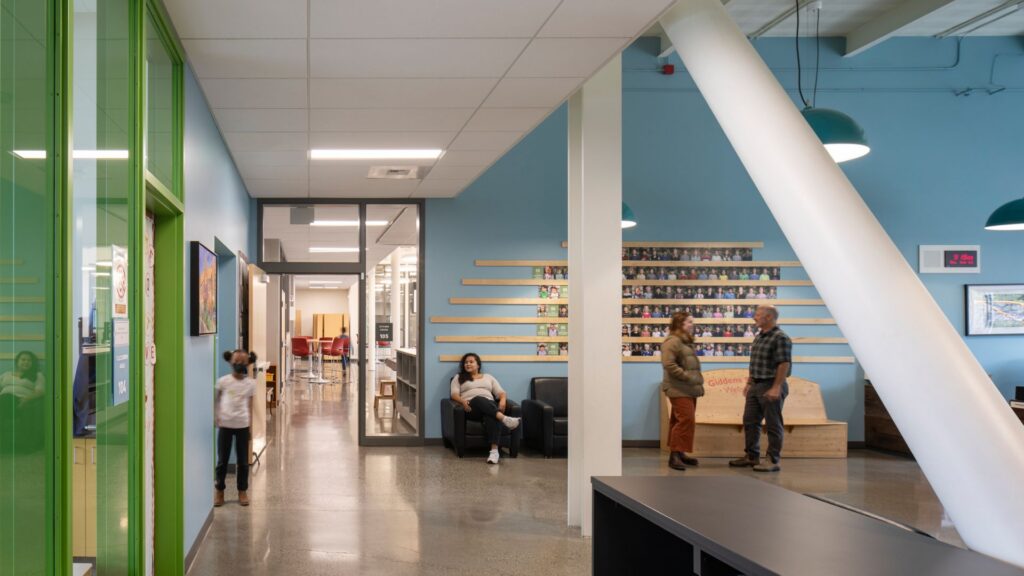
“The biggest challenge in terms of school identity was the entries,” the design team noted. Each entry needed to be welcoming and legible for families while maintaining a balanced presence on the site. Color, materials and subtle shifts in form were used to distinguish the schools without creating visual competition.
Flexible Spaces Designed to Evolve
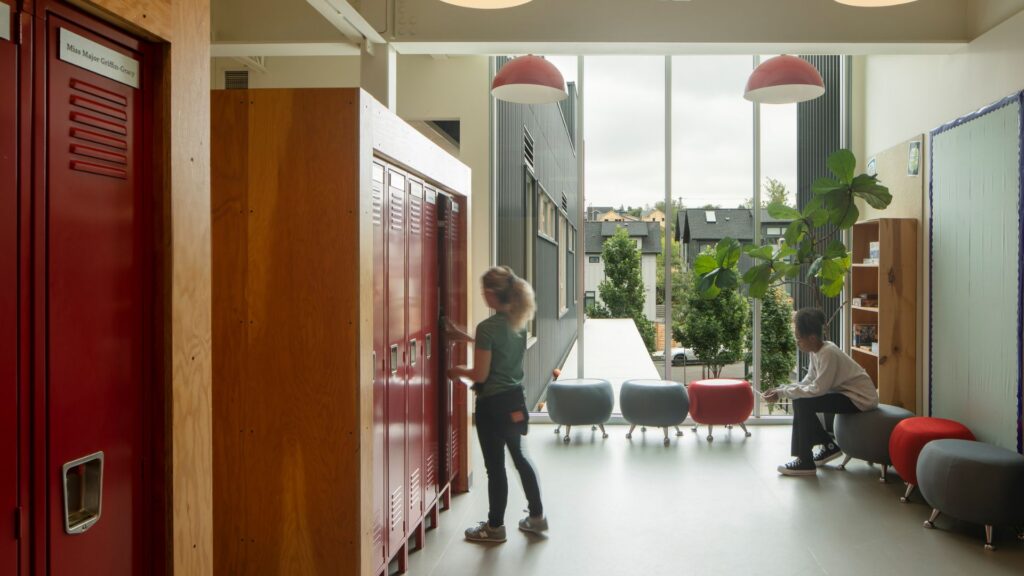
Flexibility guided both spatial planning and interior detailing. Classrooms were designed to accommodate multiple age groups, subjects and teaching styles, with adaptability over time considered a core requirement.
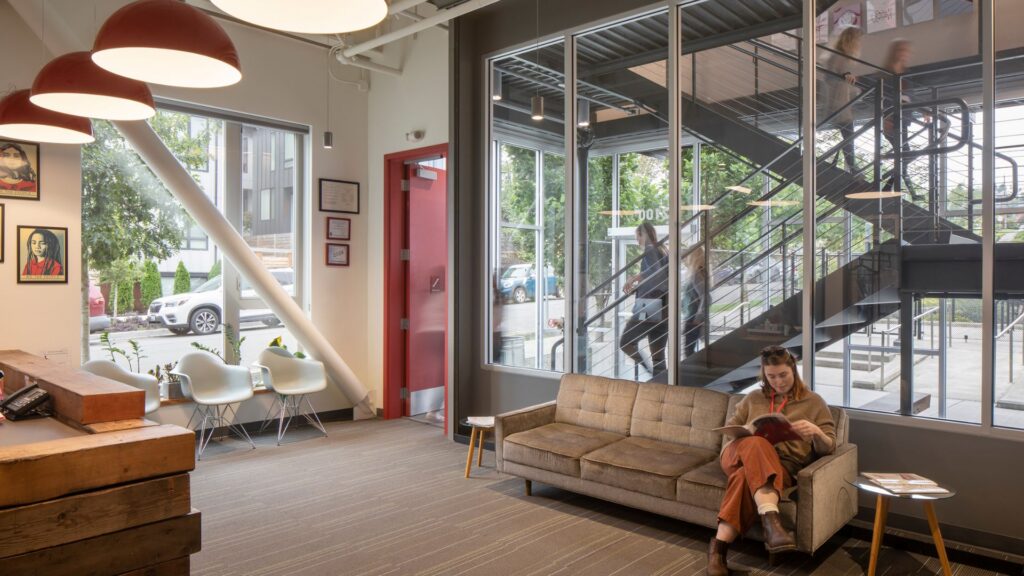
The project includes preschool classrooms with direct outdoor access and dedicated restrooms, elementary classrooms, middle school classrooms, and a range of specialty spaces for art, science, STEAM and performance. Operable walls—often clad in whiteboard material—allow rooms to expand or contract. Minimal built-ins, high ceilings with exposed structure and neutral finishes give teachers latitude to configure spaces as needed.
Hallways incorporate interior windows into classrooms, visually connecting learning spaces and increasing access to daylight. Breakout areas at multiple scales support small-group instruction and informal collaboration.
The gymnasium doubles as a performance space, with a stage and fold-out seating. An operable wall allows the stage to function daily as a music and theater classroom serving both schools.
Responding to Neighborhood and Site Constraints
The L-shaped building opens to the south, forming a protected outdoor play and gathering space that takes advantage of solar exposure. This configuration shields the campus from more industrial contexts to the north and east while creating a softer edge toward adjacent residential streets.
Topography played a significant role in massing decisions. With approximately 20 feet of elevation change across the site, portions of the building read as two stories from the neighborhood side, while larger-volume spaces such as the gym, storage, mechanical rooms and some parking tuck beneath the main level.
Outdoor space within the “L” functions as both a daily play area and an exterior performance venue. On the third level, Giddens occupies the west side of the floor, while Lake Washington Girls Middle School accesses a fenced rooftop playfield with expansive urban views.
These strategies helped balance density with neighborhood compatibility while maximizing usable outdoor space on a small urban site.
Sustainability as Curriculum
Sustainable systems were intentionally made visible and accessible as teaching tools. A cistern and underground tank collect rainwater used to flush toilets, with signage in restrooms explaining the system. Solar panels form the entry canopy at Giddens and are supplemented by an additional rooftop array.
Bio-retention gardens throughout the site filter stormwater, while a rain gauge connected to the cistern allows students to track water collection. Educational signage, developed pro bono by the design team, is displayed in shared areas such as the commons.
Teachers have incorporated these systems into coursework and have invited architects to speak with students about environmental responsibility and building performance.
Materials, Health and Long-Term Performance
Material selection focused on durability, low toxicity and ease of maintenance. The team developed a sustainability matrix informed by established frameworks to identify strategies with the greatest impact.
Flooring includes low- and zero-VOC materials such as linoleum, rubber and polished concrete. Casework is formaldehyde-free, and coatings throughout the building meet low-emissions standards. These decisions support indoor air quality and long-term resilience in high-use educational spaces.
Lessons for Future Urban Campuses
The project reinforced several strategies applicable to future urban K–8 and middle school campuses: early and ongoing engagement with teachers and students; advance scheduling for shared spaces; careful program stacking on tight sites; and deliberate planning of entries and circulation for multiple user groups.
Equally important were generous daylighting, visual connections between spaces and flexible shared areas that encourage interaction while supporting separation when needed.
Designed for adaptability and longevity, the campus reflects how thoughtful design and construction can support evolving educational models in dense urban contexts.
Project Team
- Graham Baba Architects (architecture and interior design)
- Anjali Grant Design (educational consultant and collaborating architect)
- Costigan Integrated (project manager)
- Cascade Design Collaborative (landscape architect)
- KPFF (civil and structural engineer)
- GeoEngineers (geotechnical engineer)
- Heffron Transportation Inc. (traffic consultant)
- Ecotope (mechanical engineer)
- Rushing (electrical engineer)
- Exxel Pacific (general contractor)
- A3 Acoustics (acoustical consultant)
- Dark Light (lighting designer)
- JRS Engineering (building envelope consultant)
- Emerald Aire (mechanical contractor)
- Holaday-Parks (plumbing contractor)
- Johnson Electric (electrical contractor)
Materials & Products
- Wood siding: Kebony
- Metal siding: AEP Span (Mini-V-Beam and Prestige profiles)
- Windows: VPI Quality Windows (vinyl)
- Storefront: Arcadia
- Roofing: Soprema
- Gym flooring: Robbins Sports Surfaces Bio-Cushion Classic
- Tile: Daltile
- Carpeting: Shaw Contract