
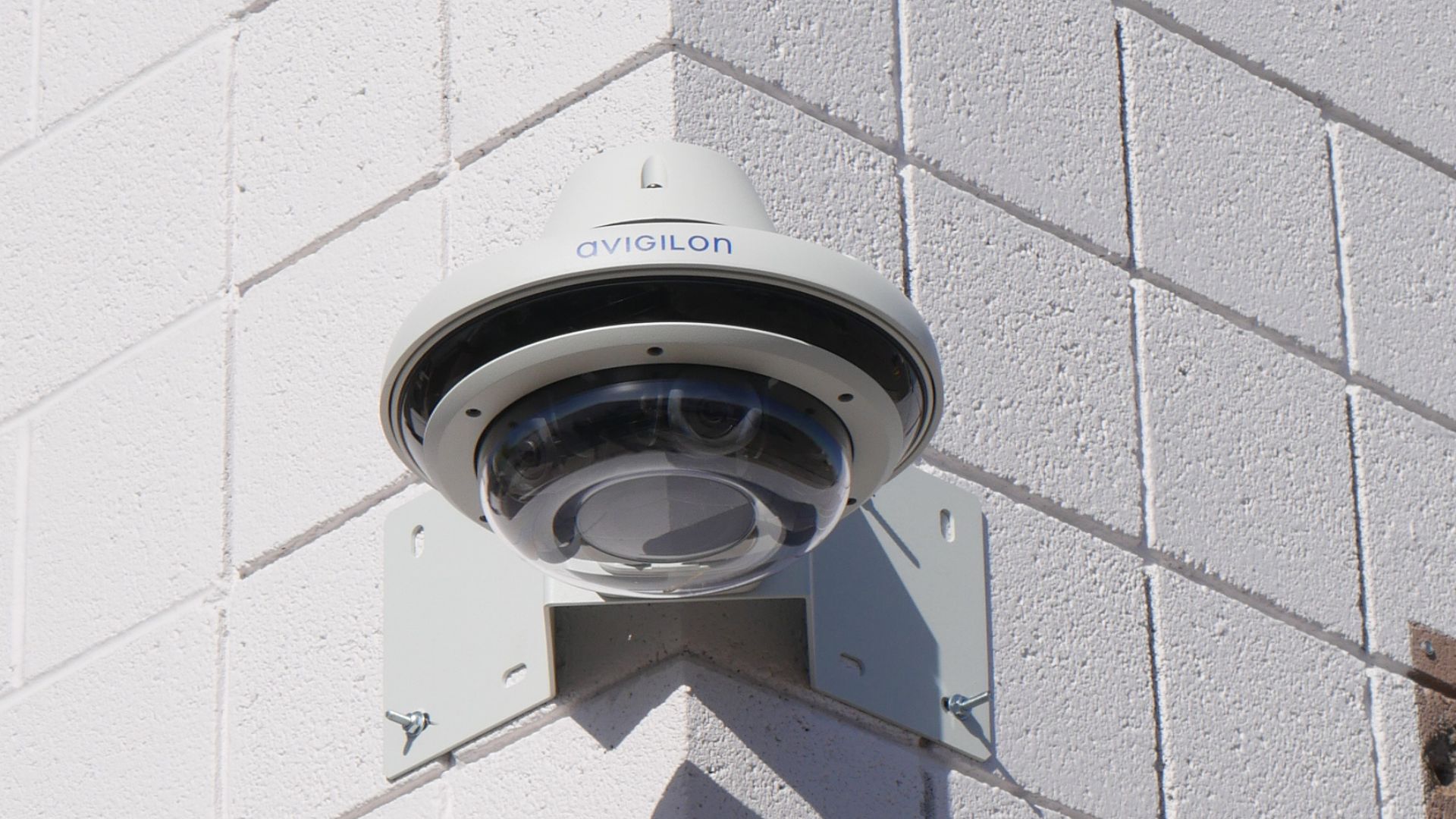
Owners want fewer platforms to manage, faster response times, and clearer proof of compliance — especially in schools, healthcare and multi-site enterprises. | Photo Credit: Courtesy of Benson Systems
By Eric Benson
Commercial buildings are entering a new era in which safety systems can’t afford to operate separately. Security, fire and life safety, and building automation are increasingly merging into one connected ecosystem. Owners want fewer platforms to manage, faster response times, and clearer proof of compliance — especially in schools, healthcare and multi-site enterprises. What’s new is how quickly AI is accelerating integration, and how much smarter building safety is about to get.
Watch for these trends that are already shaping what smart, secure buildings will look like in 2026.
One Integrated Safety Platform Becomes the Standard
Buildings used to run video, access control, intrusion detection and fire alarms on separate systems. That model is disappearing. By 2026, owners will expect a unified platform; a single dashboard where all safety data lives together and can connect to Building Automation System and Internet of Things (BAS/IoT) networks when needed.
Why does it matter? Faster decisions can be made because operators see everything in one place, and consistent standards can be enforced and applied across multiple sites. This approach also requires less training and creates fewer “blind spots” between systems
In education facilities, this is already happening at scale. Benson Systems recently delivered a five-year rollout of Avigilon cameras across 40 Gilbert Public Schools campuses in Gilbert, Ariz. One consistent system means the district can apply the same workflow everywhere, instead of treating each school like a separate project.
AI “At the Edge” Becomes the Practical Win
By 2026, the most valuable AI won’t live in the cloud; it will live on the devices themselves. On-camera analytics and controller-level machines will spot unusual activity in real time, cut down false alarms, and automatically label events so teams know what matters first.
This will show up fastest in K-12 schools through detecting entry violations, restricted-area movement or unusual crowding. It will also become prevalent in healthcare with the monitoring of sensitive zones and reducing alarm fatigue. In logistics and industrial sites, it will help in quickly identifying perimeter issues or unsafe patterns.
The key to doing it right by pairing edge AI with privacy-by-design, clear data-retention rules and transparent policies so customers stay compliant while getting the safety benefits.
Zero-Trust Identity Reaches the Front Door
Zero-trust isn’t staying in cybersecurity. It’s showing up at doors. Expect mobile credentials, multi-factor authentication for sensitive spaces, and automated provisioning ties to HR or identity systems to become the standard for new builds or major retrofits.
The reason is simple: physical access is part of overall risk management now. When a badge is lost, a contractor’s assignment ends, or a staff member changes roles, access needs to update automatically, without manual reprogramming.
We’ve already seen clients gravitate to unified workflows that cover visitors, employees and vendors in one system. At NextCare Urgent Care, for example, video analytics and access control are being installed together and fully integrated, so staff gain both security and operational simplicity across multiple doors and clinical zones.
Compliance Goes Digital — and Remote Service Grows
Compliance is moving from clipboards to dashboards. National Fire Protection Association (NFPA) and the International Code Council (ICC) testing will increasingly use sensor-verified inspections, digital certificates and remote diagnostics tied to central monitoring.
For building owners, the upside is huge: cleaner audit trails, faster proof of compliance, and fewer emergency calls. For integrators, it means higher uptime expectations and more proactive maintenance contracts.
At Rio Rico High School in Arizona’s Santa Cruz Valley Unified School District, Benson Systems upgraded the school’s legacy fire alarms to a modern Gamewell voice-evacuation system; exactly the kind of platform designed for digital testing and clean reporting. By 2026, closeout won’t be a binder; it will be living compliance data.
Global Security Operations Centers and Safety Data Ops Mature
Enterprises are centralizing safety operations into Global Security Operations Centers (GSOCs). These aren’t just video walls; they’re playbook-driven environments that coordinate alarms, video verification, access events and service tickets in one operational chain.
The next evolution is measurement. Owners want key performance indicators that prove risk reduction: response times, false-alarm trends, incident frequencies and maintenance performance. When convergence and AI are in place, those metrics become easier to collect and more trustworthy, turning safety from a cost center into a measurable operational advantage.
Read more in the Technology issue of School Construction News.
Eric Benson is the CEO of security and fire protection solutions company Benson Systems. Learn more at www.benson-inc.com.