
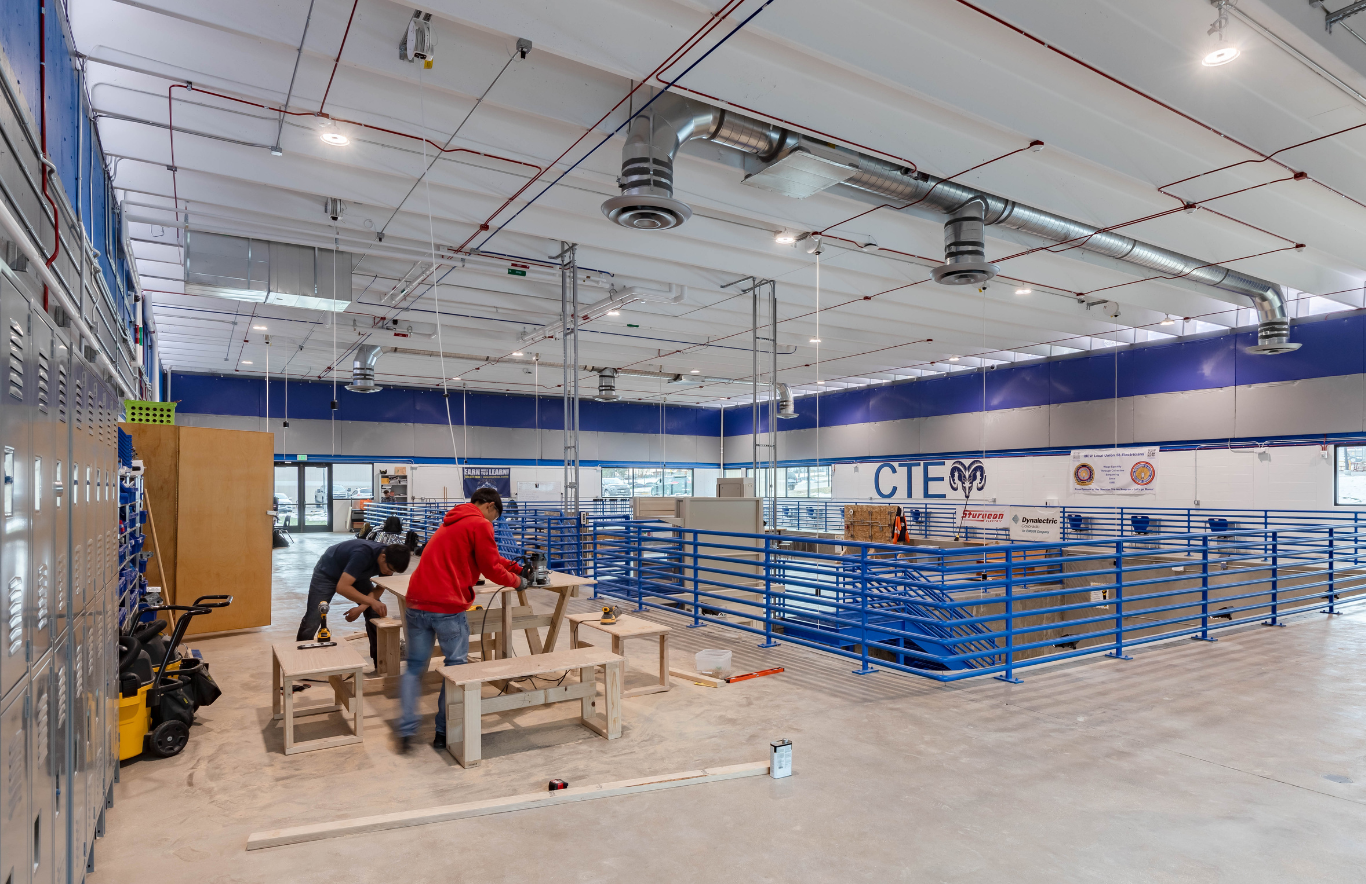
At Sheridan High School, the design team revitalized an abandoned pool building into a trades skills workshop where students could work alongside trade professionals to develop hands-on skills in carpentry, plumbing, electrical and HVAC systems. | Photo Credit (all): Courtesy of Wold Architects & Engineers
By Greg Cromer
Public school systems across the country are entering a period of sustained enrollment decline, driven by a convergence of demographic and behavioral shifts, particularly evident along Colorado’s Front Range. As explained in Part I of this article, Colorado is projected to lose more than 15,000 children ages 0–17 over the next five years, due to factors such as persistently low birth rates, high housing costs, an aging population and slower immigration.
Online programs, private schools or homeschooling offer further competition for public schools across the country, helping to accelerate enrollment losses that exceeded 10,000 students this year alone, the largest drop since COVID-19.
Part I of this article discussed how declining enrollment across the nation is forcing leaders to consider consolidation, closures and replacement. However, this shift is also creating opportunities to modernize aging facilities and rethink how space supports evolving educational models, from flexible, data-informed facility plans to right-sizing school capacity through consolidation and reconfiguration. Read further recommendations here:
Establish Shared Understanding to Align Community and System Needs
Engaging communities in school closures or consolidation is one of the most challenging responsibilities for school boards because it sits at the intersection of personal impact and systemwide necessity. Families often focus on identity, commute changes and neighborhood stability, while districts must address enrollment decline, underused facilities, financial pressure and equity. Bridging this gap requires transparent, data-driven storytelling that connects individual decisions to broader trends while also acknowledging the real loss communities feel—an essential step in maintaining trust.
These decisions also require courage from district leaders, as delays or inaction can deepen inequities and strain limited resources. The transition also offers a powerful opportunity for community renewal by reimagining school identity through a new name, mascot, colors or symbols, which allows architectural teams to embed that identity into the built environment and shape a unifying community asset.
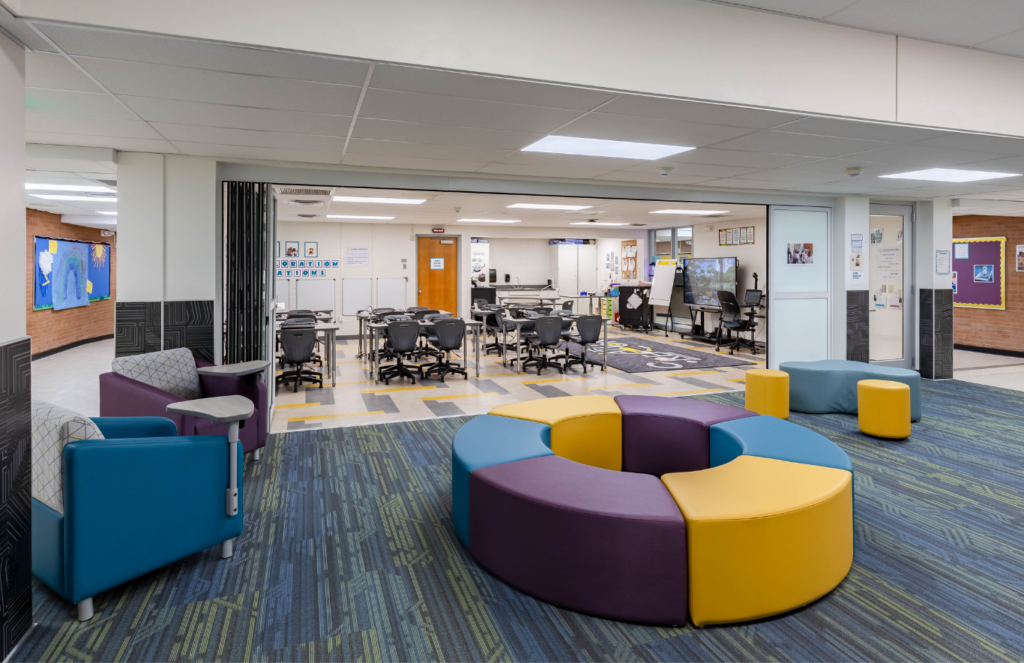
Additionally, districts are increasingly designing schools for flexibility from the outset by positioning facilities as civic assets. Through adaptable layouts and coordinated shared-use spaces like flexible commons, gyms or auditoriums, schools can better serve both students and communities year-round, maximizing public investment and long-term value. This approach positions facilities not as static assets, but as adaptable infrastructure and dynamic tools that can continue to deliver student success and community buy-in.
Unlock Value in Existing Assets
Reframing existing school assets is a key strategy for districts facing enrollment decline and uneven utilization, shifting underused schools from excess capacity to flexible hubs that can be repurposed to meet emerging needs. Converting space for early childhood education, expanding special education or alternative programs, co-locating community services and even exploring workforce housing to support educator recruitment and retention can make an impact. Alongside physical reuse, specialized models such as STEM, Career and Technical Education (CTE) or arts-focused programs can also re-energize underenrolled facilities by drawing students across traditional boundaries.
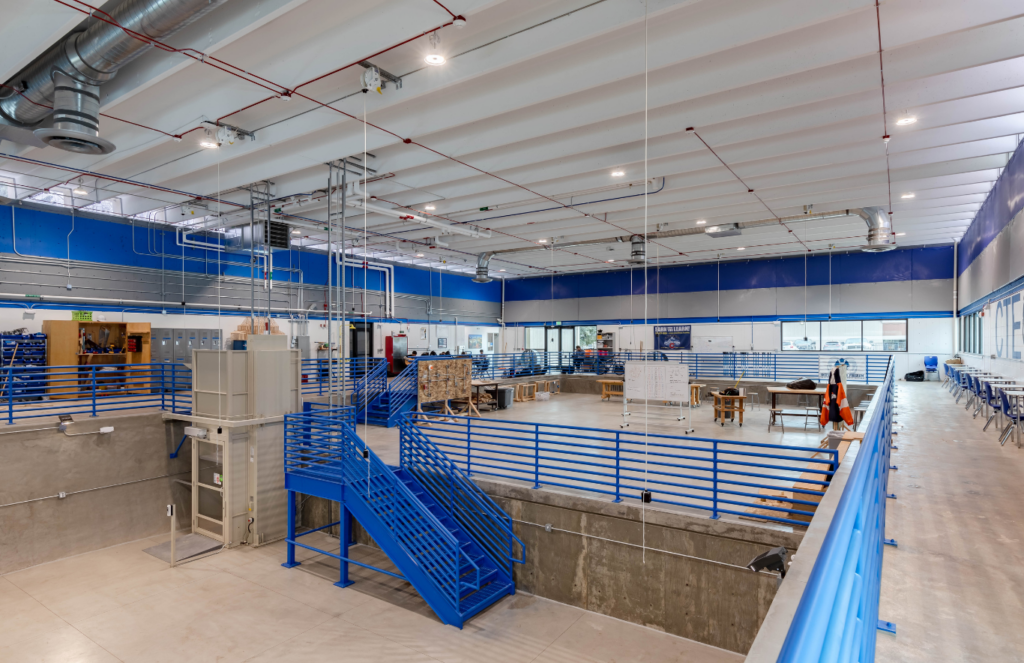
Partnering with architecture and design firms can help reimagine and maximize the value of existing assets. Consider repurposing underutilized wings into collaboration zones, student services or community spaces. At Sheridan High School, the design team revitalized an abandoned pool building into a trades skills workshop where students could work alongside trade professionals to develop hands-on skills in carpentry, plumbing, electrical and HVAC systems.
Districts such as Aurora Public Schools are leaning into programmatic strategies to attract and retain students in a competitive enrollment landscape. As choice expands and demographic pressures intensify, districts are moving beyond boundary-based enrollment to emphasize what makes each school distinct. This includes developing and branding focus-based schools built around themes, specialized programming or community partnerships to create a clear value proposition for families. For example, in response to shifting enrollment patterns, the Clara Brown Entrepreneurial Academy leaned into its identity rooted in entrepreneurship and innovation, using its programmatic focus to differentiate itself and re-engage families.
Designing for consolidation and future repurposing is essential to creating resilient school environments that attract and retain students. Flexibility helps future-proof facilities against demographic shifts, funding changes and broader disruptions, enabling districts to respond to enrollment changes without stranded assets and keeping buildings relevant and impactful over time.
Greg Cromer is an education practice leader at Wold Architects and Engineers with more than 40 years of experience designing K–12 learning environments. He can be reached via email at [email protected].
Get more weekly reports and timely updates by subscribing for free at schoolconstructionnews.com/subscribe.