
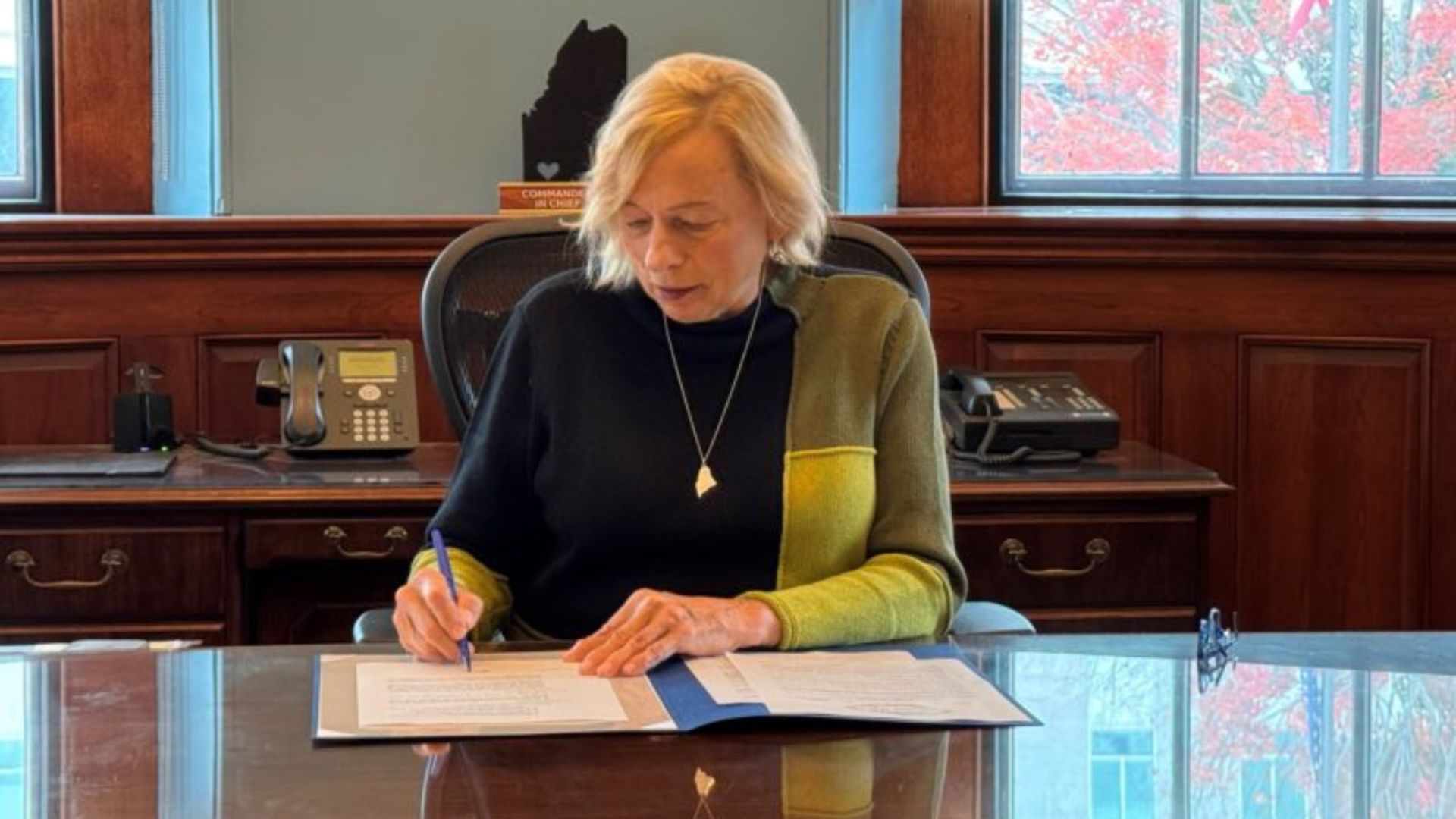
Gov. Janet Mills signed an Executive Order in October 2024 establishing a commission to conduct a comprehensive review of school construction and renovation financing in Maine. | Photo Credit: Maine Office of the Governor
What You Need to Know
- Maine’s Governor’s Commission on School Construction is urging changes to how projects are planned, prioritized and funded, citing rising costs and a growing backlog.
- The commission estimates the state may need roughly $11 billion over 20 years to repair or replace aging school buildings; Maine has nearly 600 public schools with an average building age of 54 years.
- Recommendations include addressing deferred maintenance earlier, using prototype designs, building a statewide facilities master plan and reducing red tape that can extend project timelines.
- The report also recommends creating a quasi-independent Intergovernmental Office of School Infrastructure and calls for a short-term working group to draft legislation and implementation details.
Learn More
AUGUSTA, Maine — Maine’s Governor’s Commission on School Construction is calling for a broad overhaul of the state’s school construction pipeline, arguing that the current approach cannot keep pace with aging buildings, rising costs and long waitlists for state support.
The commission’s final report lays out a long-term roadmap for planning, funding and delivering capital projects statewide — while local districts such as RSU 23 in Old Orchard Beach point to immediate building-system and accessibility issues as they wait for upgrades.
According to reporting by WGME/CBS13’s I-Team and a follow-up summary by Construction Owners Club, the commission estimates Maine could need roughly $11 billion over the next 20 years to repair or replace hundreds of aging school buildings. The sources note Maine has nearly 600 public schools and an average building age of 54 years.
The impact is visible in districts already queued for state assistance. RSU 23 is seeking to replace Loranger Memorial School, described as a 90-year-old facility whose infrastructure and learning spaces no longer meet modern expectations. The district is currently at the front of the line for state funding, but Loranger’s placement on the priority list underscores how demand is outpacing available bond capacity.
Commission Chair Valerie Landry said the scale of need requires a shift in strategy, with the report organizing its recommendations around four goals: reducing construction costs, maximizing existing resources, diversifying and increasing funding, and using data more strategically.
The commission recommends addressing deferred maintenance earlier to avoid costlier replacements later, encouraging school consolidation where it makes sense, developing prototype or model school designs to reduce upfront design costs, and creating a statewide facilities master plan to guide long-term investment.
Process reform is also a central theme. The report calls for reducing the layers of requirements districts must navigate after a project is approved—such as permitting, engineering studies, design requirements and acquisitions—because those steps can stretch schedules for years and delay when students and staff see a new or renovated building.
Even if the state streamlines the process, the commission cautions that financing remains the key constraint. The report discusses options such as raising the bond cap, capturing unused debt-service capacity for maintenance projects, exploring dedicated revenue streams and examining public-private partnership models used in other states.
One of the commission’s most significant recommendations is creating a small, quasi-independent Intergovernmental Office of School Infrastructure to coordinate planning, data analysis and funding strategies across state and local government. The commission notes establishing the office would require legislative approval and urges state leaders to form a short-term working group to draft legislation and implementation details.
This article is based on reporting originally published by WGME/CBS13 I-Team on Feb. 26, 2026, and a related summary published by Construction Owners Club on March 2, 2026.