
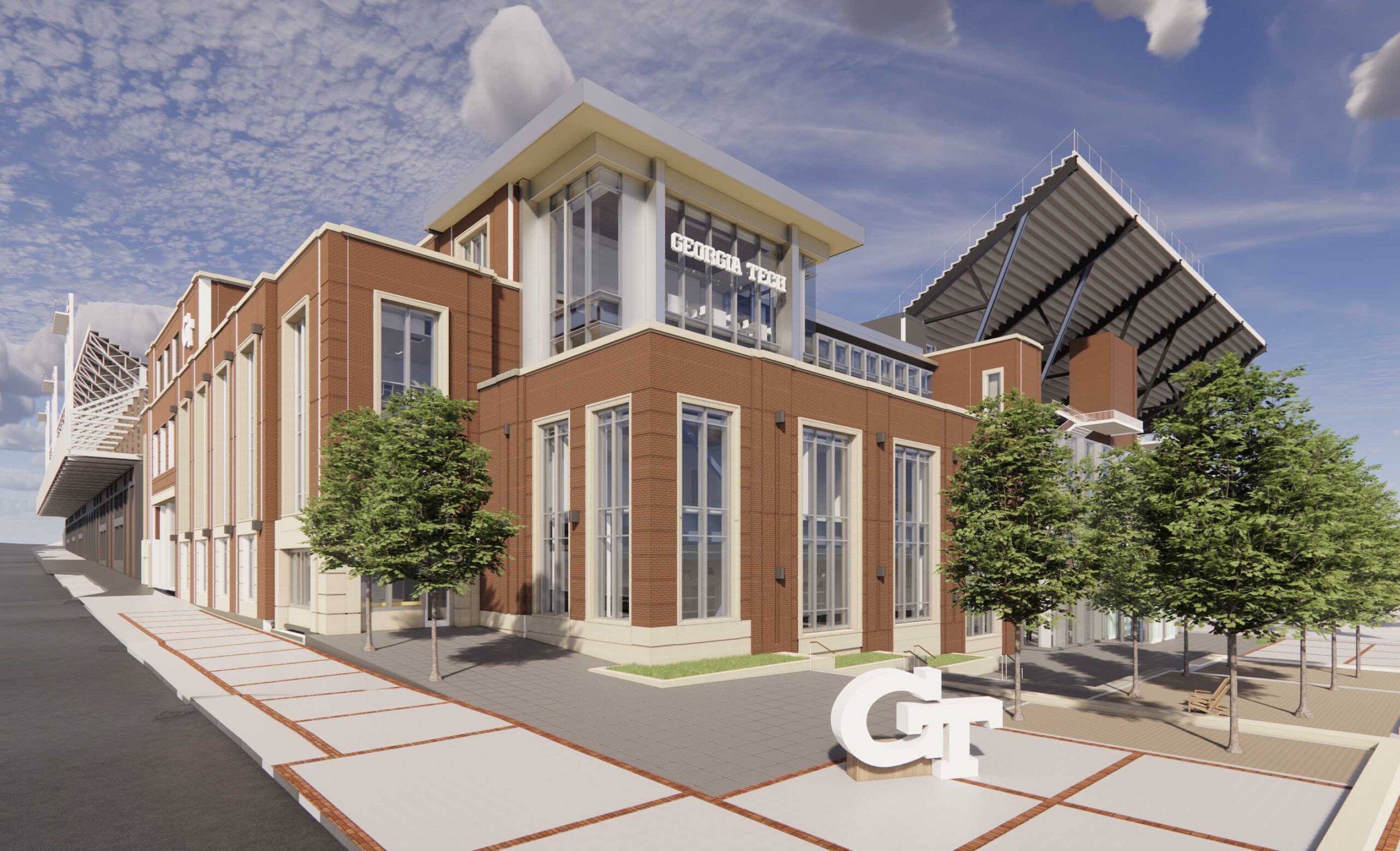
When complete, the newly renovated and expanded Fanning Center at the Georgia Institute of Technology will offer strength and conditioning and sports medicine facilities as well as a sports science lab, nutrition services, and meeting and office spaces. | Photo Credit: S/L/A/M Collaborative
- Gordian’s 13th annual State of Facilities in Higher Education report puts the deferred capital renewal backlog at $156 per gross square foot, up 8% over the past year.
- The report says capital investment funding for existing buildings is 73.5% of what’s needed to prevent further backlog growth, with operating budgets 18.5% below target.
- Staffing pressure is also rising: the report says custodial coverage responsibilities are up 27% since 2007, with public institutions seeing steeper increases than private institutions.
- Gordian points to strategic reinvestment, benchmarking and proactive maintenance as levers to stabilize backlogs and support long-term planning.
GREENVILLE, S.C. — Deferred capital renewal needs at North American colleges and universities climbed to $156 per gross square foot, an 8% year-over-year increase, according to Gordian’s latest State of Facilities in Higher Education report.
The Greenville, S.C.-headquartered company said the data underscores continued underinvestment in existing buildings and warned that, without meaningful reinvestment, deferred needs are likely to continue rising.
Gordian’s 13th annual report frames the sector’s growing backlog as the result of persistent funding gaps colliding with institutional change. The company said capital investment funding for existing buildings is at 73.5% of what is required to keep deferred needs from expanding, and that operating budgets remain 18.5% below target levels.
“This year’s findings reinforce what we hear daily from leaders across the higher education sector: without sustained and strategic reinvestment, institutions risk deeper operational challenges,” said Arul Elumalai, President of Gordian, in a statement. “Our goal with this report is to equip campus decision-makers with the clear, data-driven insights they need to prioritize the right actions now.”
Gordian said the analysis draws on its database of 43,000 campus buildings representing 1.1 billion gross square feet of space, which it uses to benchmark facilities conditions and spending patterns across North American higher education.
Alongside capital constraints, the report also points to workforce strain. Gordian said the amount of space each custodian is responsible for has increased 27% since 2007, with larger jumps reported at public institutions compared with private ones.
The report’s findings also highlight how structural underinvestment and rising deferred maintenance can restrict campus flexibility and push institutions toward reactive—often costlier—facility management, Gordian said. As a path forward, the company said campuses can use data-driven benchmarking, proactive maintenance practices and strategic reinvestment to help stabilize backlog growth and support long-term decision-making.
“While campuses face continued pressure, there is genuine opportunity ahead,” said Pete Zuraw, Vice President of Market Strategy and Development for Gordian, in a statement. “With reliable data and guidance from trusted industry partners, institutional leaders can make informed decisions that strengthen their facilities and position them for long-term resilience.”
Gordian said it has published the report for more than a decade and collaborates with higher education societies including APPA, NACUBO and SCUP, adding that the report includes survey data and commentary from higher education leaders.
This article is based on reporting originally published by Gordian on April 8, 2026.