
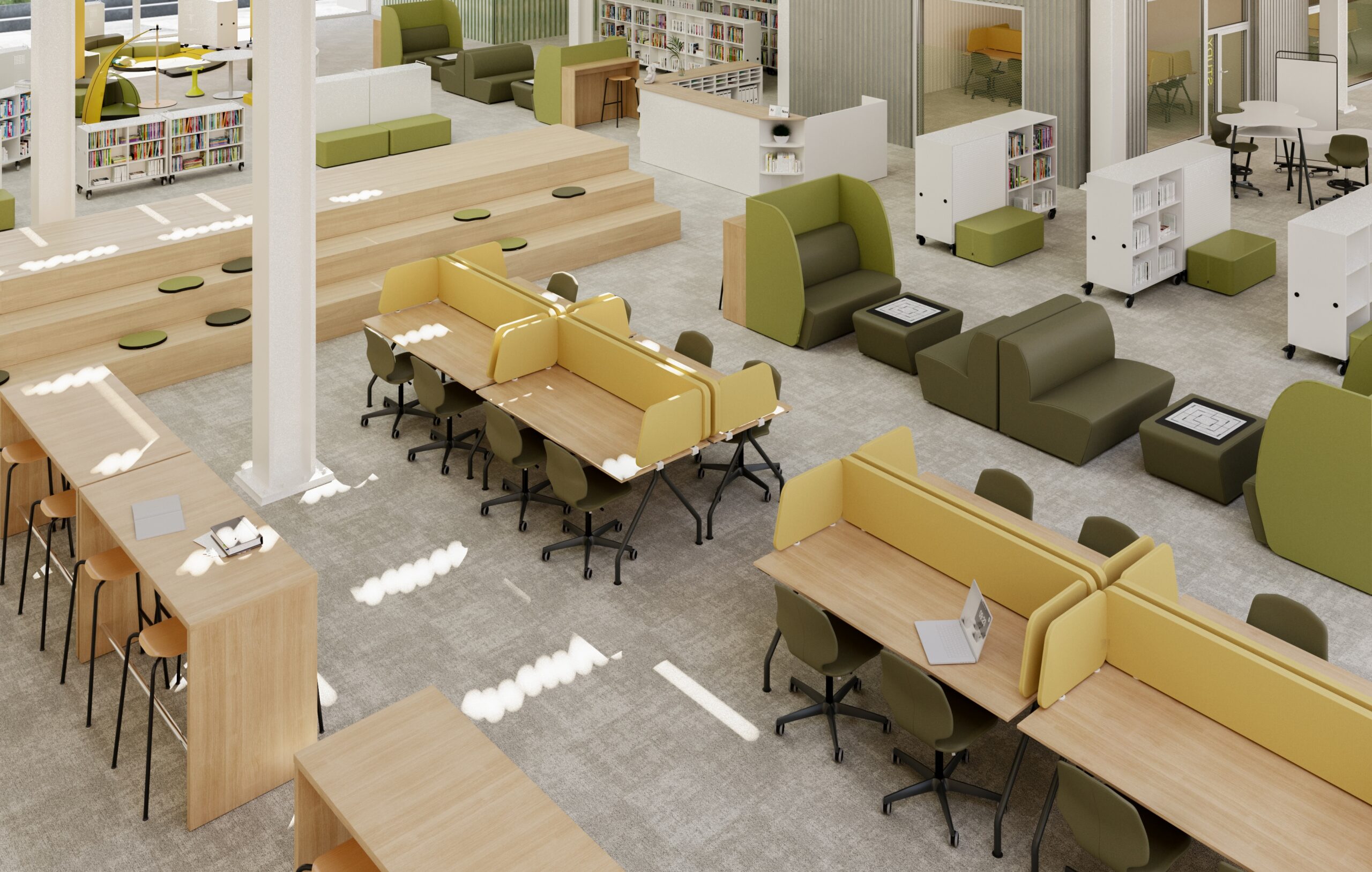
Inclusive environments support different postures, preferences and ways of learning so that everyone feels comfortable and supported. | Photo Credit: VS America
By VS America
Today’s libraries, media centers and learning commons support research, instruction, collaboration, creation, reflection and connection — often within the same shared space.
That means the physical environment has to do more, too. A successful library should support multiple ways of learning at once while remaining adaptable, welcoming and easy to navigate.
Here are seven important considerations when designing libraries for how learning happens today.
1. Make Information Easy to Access
Learners must be able to move freely, find resources easily and engage independently. Open shelving, clear pathways and intuitive layouts make information visible and accessible, removing barriers to learning.
Resources are integrated throughout the space, supporting both structured instruction and spontaneous discovery. Mobile storage and flexible shelving allow materials to shift with learning, keeping resources within reach as needs change throughout the day.
2. Create Space for Learning Together
People gather to discuss ideas, solve problems and build understanding together. Flexible tables, mobile seating and shared surfaces support conversation and movement, allowing multiple groups to work at once without disruption.
As the heartbeat of the learning community, libraries support collaboration and communication. This means deliberately designing spaces where people can engage with one another, exchange ideas and learn through shared experience.
3. Support Creation, Not Just Consumption
Today’s learners don’t just access information, they create it.
Libraries encourage hands-on learning, from STEM exploration to prototyping and design. These environments must allow for experimentation, movement and iteration without becoming restrictive.
When the environment supports making, the library becomes a place where ideas can move from research and discussion into something tangible.
4. Integrate Digital Learning Naturally
Students move fluidly between physical and digital resources, often working quickly and independently. Whether it’s charging a device over lunch or taking a deep dive into database research, spaces that support short-duration work, device use and media interaction are essential.
Access to technology, power and flexible work surfaces allows students to research, produce and interact with information in ways that reflect how learning happens today.
5. Make Room for Quiet Study and Reflection
Reading, research and reflection often require settings that support concentration and reduce interruptions. These spaces must feel calm, comfortable and separate, while still connected to the larger environment.
Thoughtful layouts, softened acoustics and intentional zoning help create environments where people can focus without distraction and engage in deeper thinking.
6. Design for Choice, Comfort and Inclusion
Everyone learns in different ways, at different paces and with different needs. Providing a range of spaces, with seating and tables that adjust to accommodate everybody and can be easily rearranged to create clear, open pathways for movement allows each learner to find a place that works for them.
7. Plan for Community
From daily use to larger gatherings, these spaces support a wide range of activities, serving individuals, groups and the broader community. They must adapt easily between focused work, informal interaction and shared experiences.
Open layouts and flexible furniture allow spaces to shift throughout the day, supporting both individual use and group engagement. Areas can accommodate presentations, collaborative work or community events without requiring permanent changes to the space.
At VS, we design furniture that helps libraries create purposeful spaces, where each area supports a different way of learning.
This article was sponsored by VS America, Inc., a manufacturer of educational furniture for K-12 schools, colleges and libraries. Focused on best practices for educational facilities worldwide, VS develops adaptable, ergonomic and sustainable furniture solutions which allow for the creation of agile learning environments. For more information, visit www.vsamerica.com.