
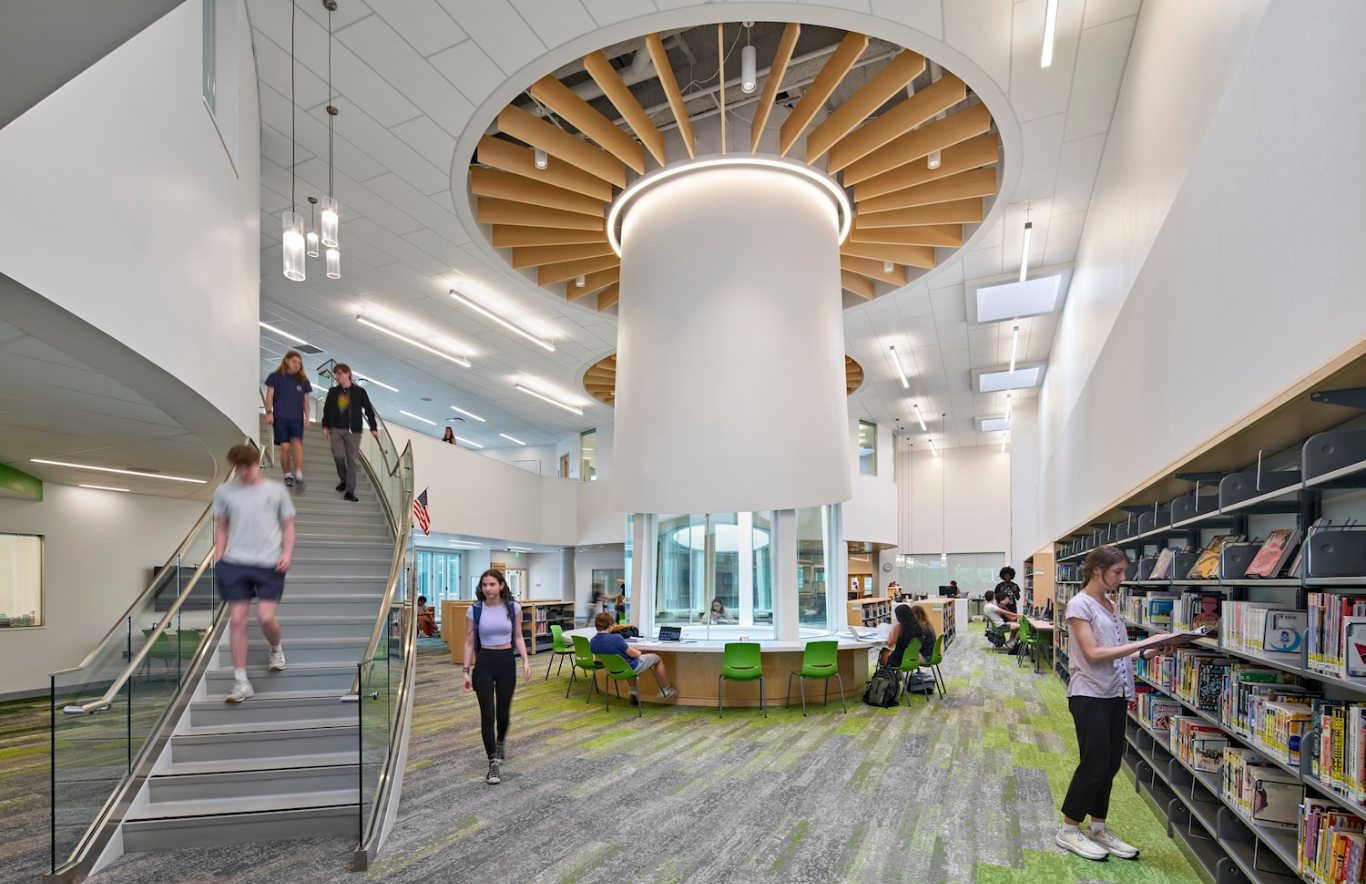
Murray was excited to see Arlington High School in Massachusetts, a Skanska project, come to fruition in 2025.| Photo Credit: Robert Benson Photography
By Lindsey Coulter

School Construction News (SCN) was excited to welcome Tieg Murray to the 2026 Editorial Advisory Board. As Vice President of Market Strategy and Creative Services for Skanska USA Building, Murray leads strategic planning to strengthen market differentiation across core sectors, including education. Over the last 19 years at Skanska, Murray has advanced from Marketing Coordinator to senior leadership roles, driving growth strategies for higher education, K-12, science and technology.
In her time at Skanska, Murray has seen a lot of evolution across the education and research world — and believes that higher education is in a moment of real transformation.
“Students’ needs are shifting, and breakthroughs in science, medicine and technology are happening faster than ever,” Murray said. “Being part of a team that helps campuses adapt to those changes has made the work deeply meaningful for me. We’re not just constructing buildings. We’re shaping environments that will support the next generation of students, researchers and innovators.”
SCN spoke with Murry about the evolution of science and research facilities, future trends and big projects on the horizon.
SCN: What first drew you to the education sector, and what’s kept you invested over time?
Murray: I’m drawn to university projects and their ability to shape the student experience and influence the future. That interest has grown into a real passion for university science facilities — their complexity, precision and the incredible innovation that happens within those spaces — make them my favorite project type that Skanska delivers. Higher ed campuses have a unique energy. They’re places where ideas take shape and communities thrive. Knowing Skanska is trusted to build spaces that will directly support the next generation of researchers, educators and students is what keeps me invested and inspired in the work every day.
SCN: Science and research environments have evolved rapidly in recent years. What’s been the most significant shift since you began working in this space?
One of the biggest shifts is the evolution of science and research environments. Labs were traditionally built around a single discipline with very defined boundaries. Today … science buildings are intentionally interdisciplinary, more technologically driven and built with flexibility at their core. They’re designed to support rapid change, encourage collaboration and adapt to research needs we can’t even predict. Watching this evolution makes the work more exciting and more challenging. It’s reinforced just how critical thoughtful planning and true industry expertise have become.
SCN: Looking ahead, how do you see education environments — particularly science and STEM spaces — needing to adapt?
Over the next five to 10 years, science and STEM environments will need to become even more flexible and forward-looking. Research is evolving too quickly for buildings to be tied to a single purpose, which makes adaptability essential. We’re seeing a strong shift toward spaces that can be reconfigured with ease, support emerging technologies and encourage collaboration across disciplines. Open labs, shared equipment and purpose-built collaboration areas are no longer “nice to have” features. They’re becoming fundamental to how innovation and learning take place on campuses.
At the same time, institutions are facing increasing pressure to operate more efficiently and more responsibly. Sustainability, resilience, and performance are now central considerations in planning and delivering new facilities. Universities are working hard to reduce energy use and manage long-term operating costs, all while supporting highly complex research programs. Skanska is helping campuses meet these demands by delivering high-performing, resilient facilities that support cutting-edge research while lowering energy consumption and lifecycle costs.
SCN: What projects are you excited to see come to fruition?
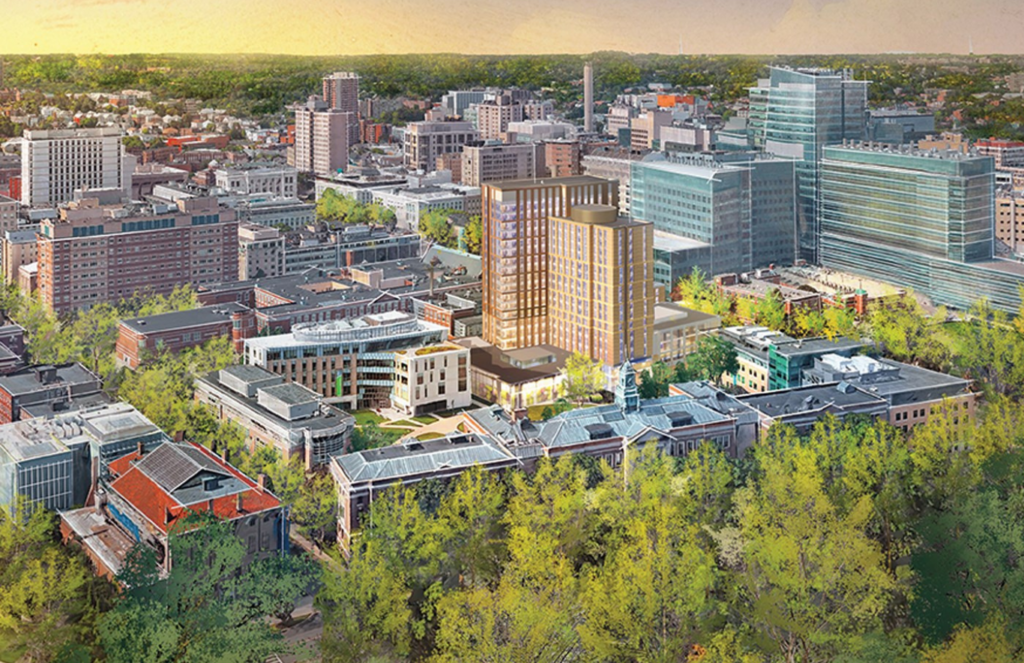
On the East Coast, I’m proud of what’s ahead for Simmons University with the new Living Learning Center in Boston and at the University of Virginia with the Paul and Diane Manning Institute of Biotechnology in Charlottesville. These are the kinds of facilities that will open doors for students and create richer learning experiences, while giving researchers the spaces they need to push discovery forward.
On the West Coast, in Seattle, the University of Washington’s Magnuson Health Sciences T-Wing Renovation is a great example of how we’re helping institutions breathe new life into older facilities so they can keep pace with rapidly evolving scientific needs. Seeing an aging building transformed into a place that supports modern research is exciting and rewarding.
In the K-12 world, projects like the Beaverton High School Modernization in Oregon, Rye Ranch Elementary in Florida, and the new Arlington High School in Massachusetts, remind me why this work matters so much. These schools will shape the daily experience of younger students, giving them safe, inspiring, future ready spaces where they can learn and grow.
Ultimately, across all these regions and project types, what excites me most is how each facility will directly support student success, research advancement, and community impact, and how Skanska continues to be a trusted partner in shaping the future of education.
Watch for more insights from Murray and other Editorial Advisory Board members throughout the year.