
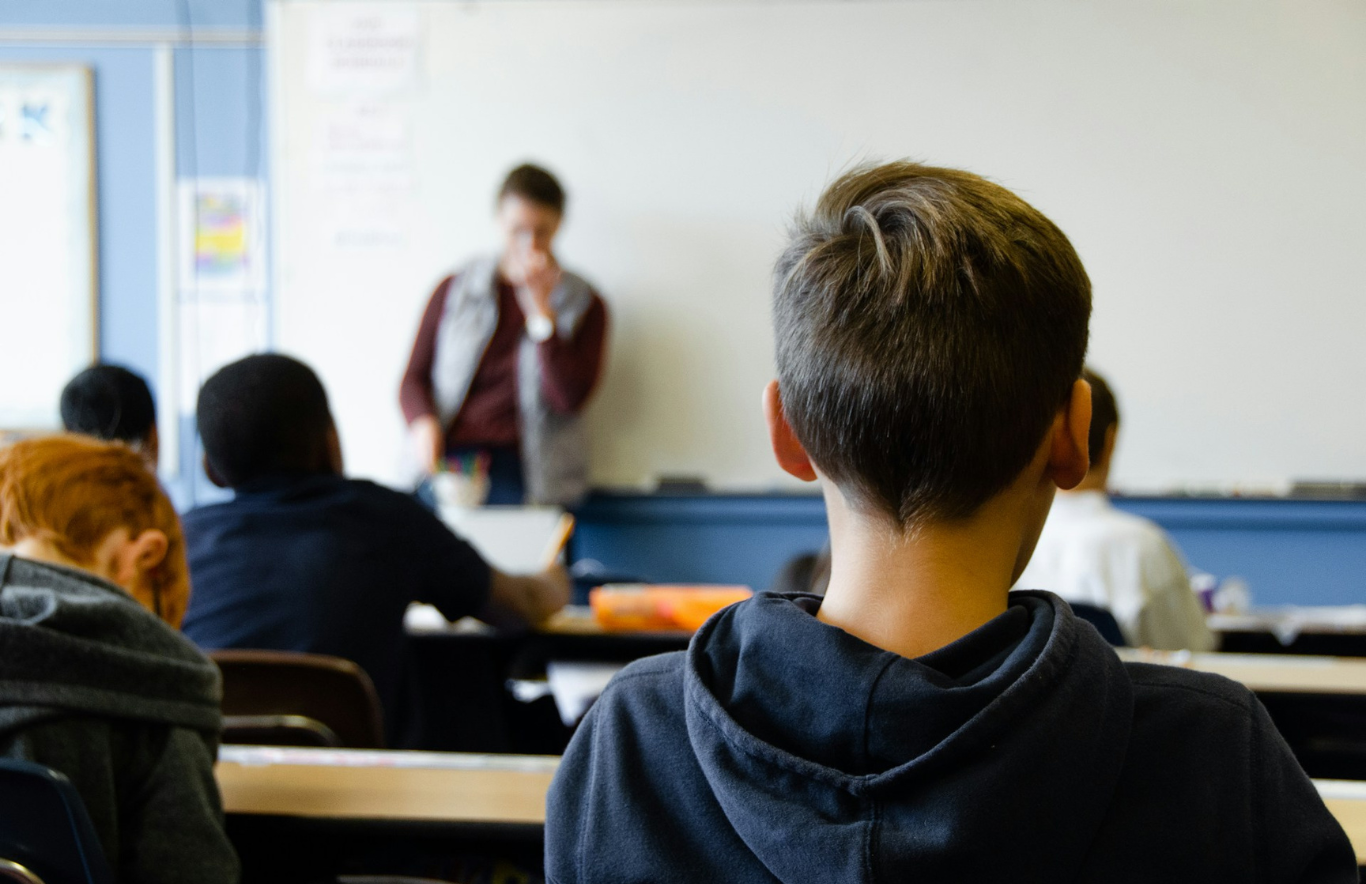
Sherrill proposes a record breaking $12.4 billion for K-12 schools in FY 2027, the largest amount in state history and a $370 million increase over last year’s funding. | Photo Credit: Unsplash
TRENTON, N.J. — New Jersey Gov. Mikie Sherrill delivered her inaugural budget address earlier this month, outlining her administration’s plan to protect children’s futures through a $12.4 billion investment in K-12 schools for FY 2027.
“My budget is focused on ensuring kids in New Jersey have access to the best education and brightest possible future,” said Sherrill. “The budget includes a record level of K-12 school funding, while acknowledging that much more work is needed to make sure students and taxpayers get the best return on our investment. It lays the foundation for future improvements – like stronger academic and mental health outcomes, shared services, and more efficient spending – to better support children from birth through graduation and strengthen schools statewide.”
The $60.7 billion budget includes a proposed surplus of $5.4 billion, while redirecting over 74 percent of the total budget back into New Jersey communities in the form of grants-in-aid for property tax relief, social services, and higher education, as well as state aid to schools, municipalities, and counties.
Among plans to increase affordability and increase government accountability, the budget prioritizes investing in education. Sherrill proposes a record breaking $12.4 billion for K-12 schools in FY 2027, the largest amount in state history and a $370 million increase over last year’s funding. The budget also includes a record $1.4 billion for Preschool Education Aid. Sherrill added that she looks forward to working with the Legislature to modernize and stabilize the school funding formula.
In preparation for New Jersey’s first cell phone-free school year this fall, the proposal includes $125,000 for the new Office of Youth Online Mental Health Safety and Awareness in the Department of Health. The office will research and make recommendations to guide responsible use of social media platforms among youth. The budget also includes $500,000 for a new Social Media Research Center at one of New Jersey’s higher education institutions.
An allocation of $15 million for high-impact tutoring — double the amount of FY 2026 m— would help nearly 100 more districts and 13,500 more students, with the goal to accelerate learning and address academic achievement gaps spurred by the pandemic. The budget would also provide 21,000 schoolchildren with free meals through the Working-Class Families Anti-Hunger Act.
The announcement reflects a continuation of policy choices aligned with Sherrill’s goals to modernize and stabilize the School Funding Reform Act, which provide the blueprint for New Jersey’s state aid formula. The budget limits reductions in state aid to no more than 3 percent, which will prevent the loss of an additional $188.4 million for school districts. Without a limit to cuts, some districts have faced losses of up to 60 percent of their state aid in recent years. These limits on reductions are offset by a 6 percent limit on state aid increases, ensuring overall stability while recognizing the need for annual adjustments.
The New Jersey Department of Education will use a three-year average when determining local fair share, which is the amount of funding a local school district is expected to contribute toward its own budget based on its property wealth and income. Using a multi-year average minimizes year-to-year fluctuations.
To ensure state aid reflects the real needs of districts, the NJDOE will use actual special education enrollment numbers to determine funding levels, instead of the approach used in years past of relying on a statewide average for all districts. State aid allocations are available on NJDOE’s School Finance webpage.