
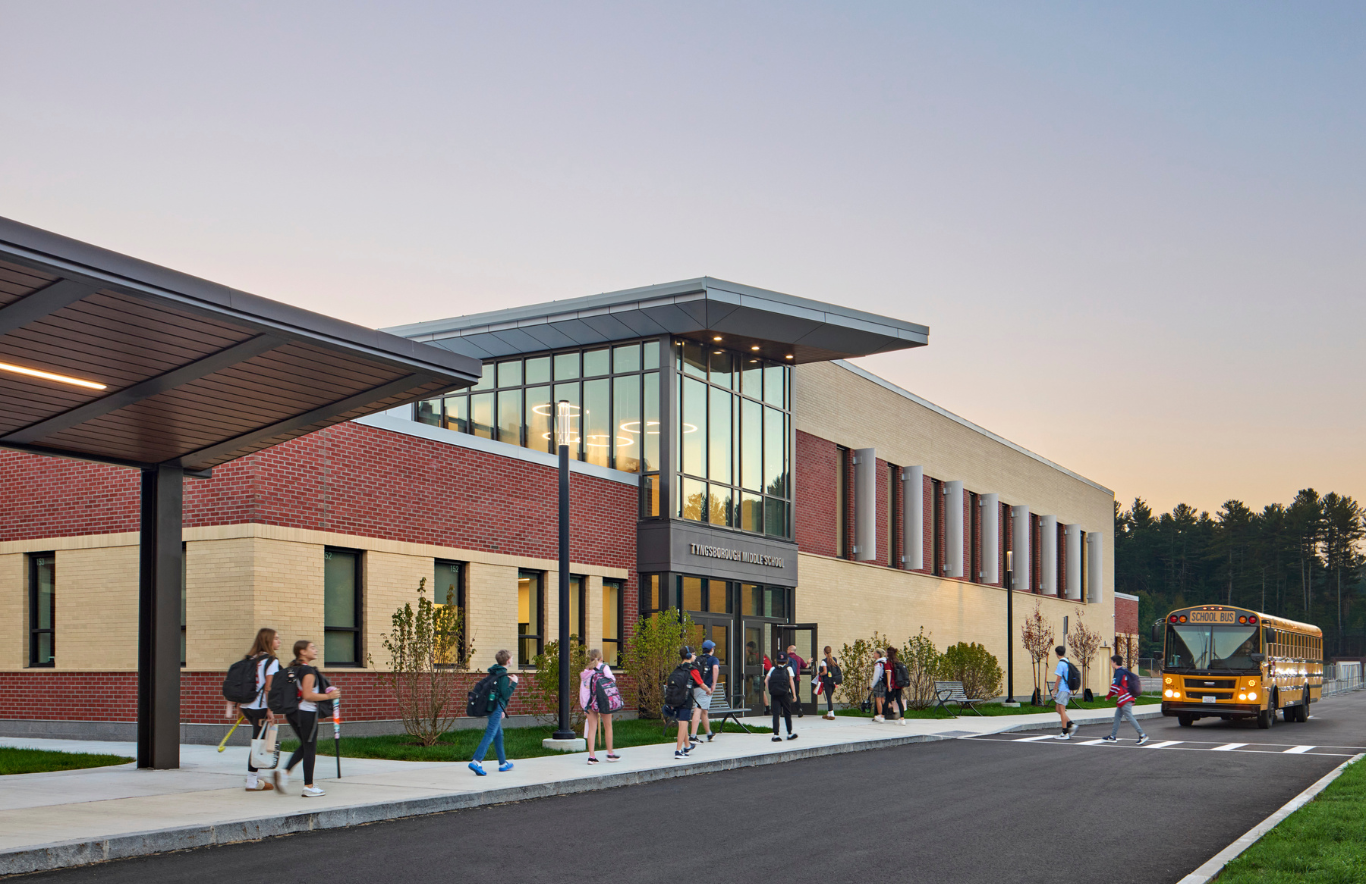
Located in Massachusetts, Tyngsborough Middle School provides a compelling example of a successful feasibility study-backed project execution. | Photo Credit: Robert Benson Photography
By Douglas Roberts, AIA, LEED AP
In an era of projects that face delays or increasing challenges around securing funding approvals, it’s never been more critical to apply strategic thinking and creative approaches to problem solving in order to steer educational projects through to completion. Feasibility studies prove to be a useful tool both internally and externally, delivering relevant data and information to project teams while informing stakeholders at every level of the why behind each decision. These essential undertakings provide a deep dive to define a program, evaluate existing facilities, and build public consensus on a project.
The importance of a development’s relationship with the public cannot be overstated, particularly when it comes to education. These projects are typically publicly funded and largely depend on approval by local voters to bring these initiatives to fruition. With the importance of providing value to the community and demonstrating prudent stewardship of financial resources, designers and project managers take on the unique role of educating the community, pulling the curtain back to walk these audiences through the logic behind the development of feasibility options including the educational value, cost implications and schedule impacts. The use of feasibility studies clarifies this important context, evaluating critical components of a project and delivering this information through data-backed decision-making.
Located in Massachusetts, Tyngsborough Middle School provides a compelling example of a successful feasibility study-backed project execution. Developed in tandem with the Town of Tyngsborough and Tyngsborough Public Schools, the study informed the decision-making process for the new school while facilitating an informative dialogue with the community.
Overview of Feasibility Study Process
In addition to local processes, the project first had to navigate the rigorous requirements of the Massachusetts School Building Authority (MSBA), a quasi-independent government authority that collaborates with local communities to help to elevate delivery of educational services. The organization’s prescriptive process promotes equitable distribution of tax dollars and prioritizes educational outcomes throughout the Commonwealth. MSBA independently evaluates the school district’s defined needs of a school through the educational program. The educational program focuses on the delivery of education which can result in design solutions that range from code upgrades, additions, and renovations to ground-up facilities.
Project teams are engaged to conduct feasibility studies that evaluate options for an educational environment that meets the district’s needs and is cost effective, safe, sustainable and energy efficient. Using MSBA’s guidelines to chart a reasonable path forward for the development, the study must be factual, creating context for dialogue without advocating for a single solution. A successful study and subsequent project relies on the close collaboration of a “three-headed team”: the school district (via its School Building Committee), the owner’s project manager (OPM), and the design team. Additionally, having strong community advocates, like school administrators and building committee chairs, can make a big difference in successfully navigating the process and garnering support throughout a community.
Built in 1967, the original Tyngsborough Middle School building had been renovated but not expanded, raising concerns that ranged from antiquated systems and aging FF&E to space limitations and impact on adoption of current instructional models. After consideration of multiple design options from the study, the Town elected to pursue a new construction option based on its needs.
Relationship to Public
The community’s demands, priorities, and feedback are essential throughout the feasibility study and project planning. It’s not a one-size-fits-all situation; to build trust and support from stakeholders, education projects must be catered to the area. This requires a variety of considerations: is there a focus on sports and recreation, or the arts? Are there certain programs that draw more community participation than others? For Tyngsborough, this meant investing in a state-of-the-art softball field and a flexible performance space to support existing, high-value theater programs shared by the middle and high school. The community recognized the benefit of the project through the successful vote approving the project funding.
These studies are also critical for educating the public on hidden infrastructure needs, such as outdated MEP systems, and building consensus. If voters don’t comprehend demands that aren’t visually apparent, a project could fail, which can result in years-long delayed funding and increased costs. Clear and direct communication is key to relaying these messages; this can be accomplished through in-person and digital forums, attending Parent Teacher Organization (PTO) meetings, or even visiting local senior centers for those with limited mobility. Streamlining this dialogue through direct action is the most effective way to keep communities knowledgeable and satisfied, resulting in more positive project outcomes for every stakeholder.
Conclusion/Outlook
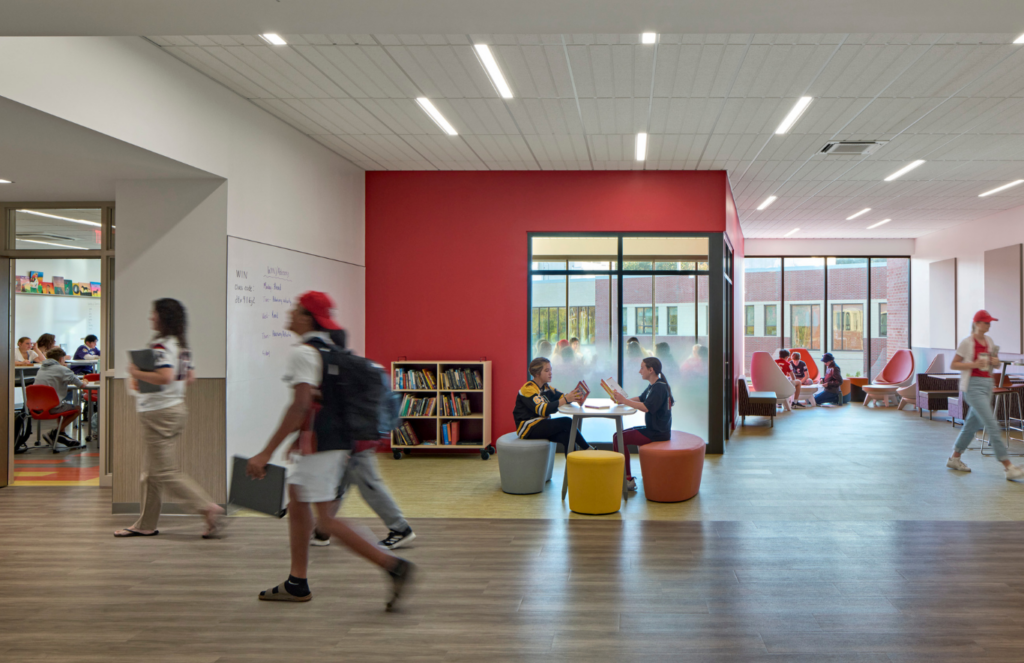
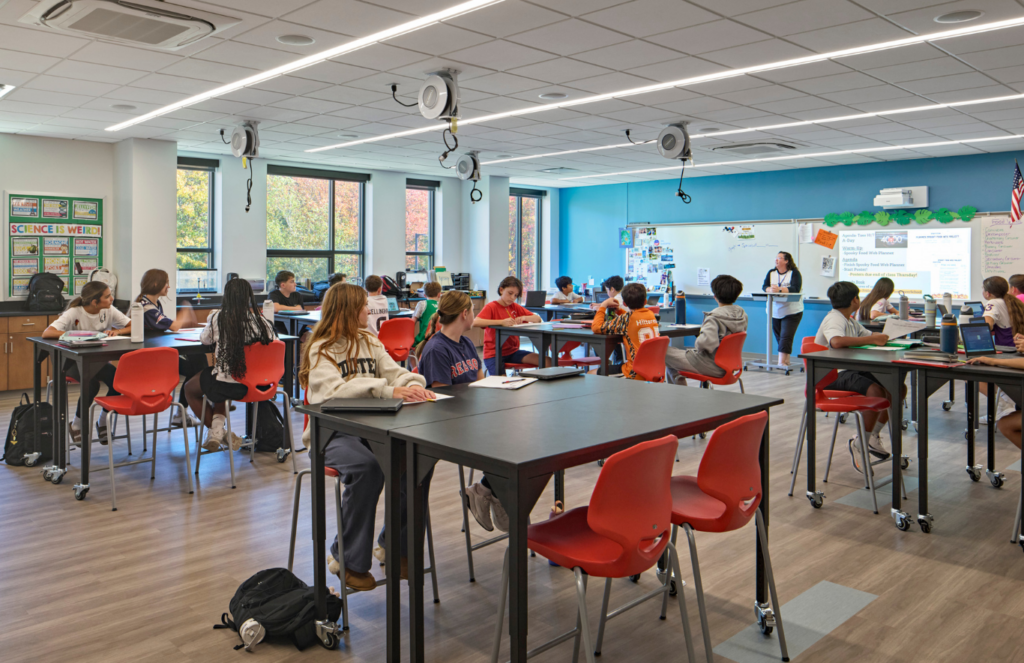
For Tyngsborough, pursuing a ground-up structure allowed the school to provide the infrastructure and spatial requirements for flexible, project-based learning and co-teaching methodologies. The brand new two-story, 112,784 square foot facility is adaptable for current and future pedagogy, incorporating state-of-the-art spaces for STEM/STEAM and performing arts, community access and resources, and sustainability integrations that keep the new school adaptable for generations to come.
As school districts and organizations like MSBA continue to evaluate needs as learning environments and technology evolves, these feasibility-informed decisions chart a well-rounded path forward for students, educators, and communities. Creating unique education design solutions tailored to a community’s long-term vision and needs, not just its current state, is made possible through this process—embracing the future while honoring the present.
Douglas Roberts, AIA, LEED AP, is Principal at JCJ Architecture.