
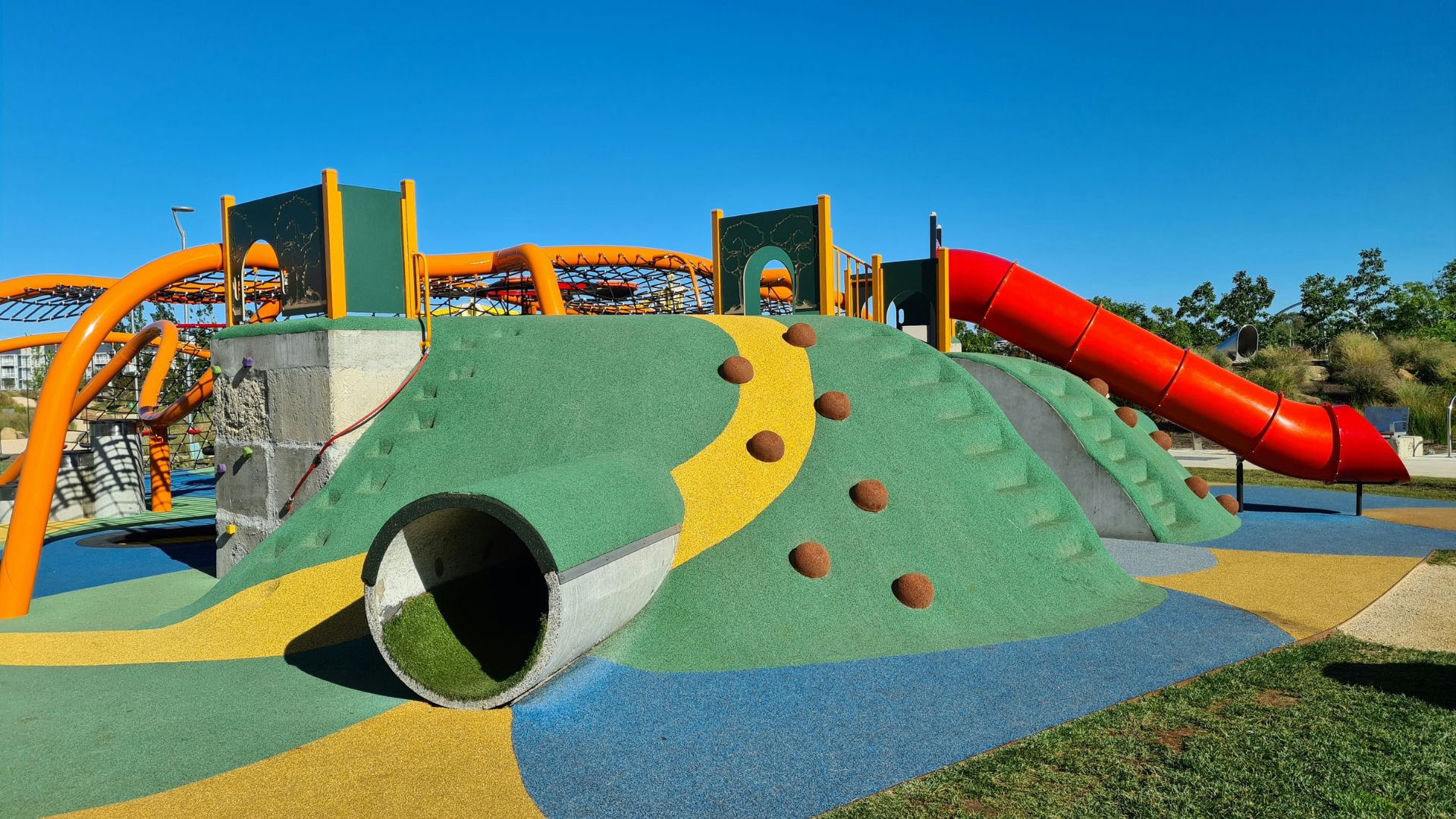
Selecting playground equipment that promotes physical development starts with variety. | Photo Credit: Nico Smit
By Evelyn Long
Playground design has evolved beyond swings and slides. For architects, contractors and facility managers, project briefs now emphasize measurable outcomes like motor skill development, emotional regulation and social connection. Standard equipment placement no longer meets expectations from schools, parks and communities. Design choices, from layout and materials to sensory elements and terrain, support children’s physical, emotional and social wellness, giving professionals a practical framework for their next project.
Moving Beyond Basic Accessibility
The ADA guidelines for play areas establish minimum accessibility requirements for newly constructed and altered playgrounds, including accessible routes and equipment. While compliance is legally required, meeting these standards alone doesn’t create the inclusive, high-quality play experience communities increasingly expect. Accessible design addresses physical access. Inclusive design addresses the quality of the play experience itself.
According to playground manufacturer Landscape Structures, a well-designed playground encourages independent and meaningful play for kids with various ability levels. “Both a physical and social event, inclusive play is not solely about accessibility,” it states.
Genuine equity happens when children with different ability levels engage in the same activity together, rather than being directed to separate experiences. Design professionals can achieve this by grouping similar activities with multiple challenge levels into a single shared space, enabling varied participation without segregation.
How to Choose Playground Equipment That Promotes Physical Development

Selecting playground equipment that promotes physical development starts with variety. Different movement patterns, including climbing, swinging and balancing target different muscle groups and build distinct motor skills. Research shows that well-equipped, varied play environments support improved development of fundamental movement skills in children.
Equipment variety allows children to explore their gross motor skills, according to Little Tikes Commercial. “Various play elements encouraging climbing, jumping, hanging, swinging, and balancing help kids activate primary muscle groups and define their activity preferences,” it explains. The company recommends sequencing equipment by age and ability, with low-level structures for toddlers and progressively challenging elements for older children. This approach builds physical confidence over time.
Layout matters as much as individual pieces. Equipment should flow together rather than sit as isolated units, creating continuous movement opportunities that keep children engaged and active throughout the space.
Designing Play Areas for Emotional Regulation and Sensory Needs
Emotional wellness in playground design requires offering a spectrum of sensory experiences. High-stimulus features such as spinners, textured climbing panels and interactive sound elements serve children seeking sensory input. Low-stimulus quiet areas with seating, shade and natural materials provide spaces for decompression and self-regulation.
A 2025 study examining neurodivergent children’s play preferences found that kids value both active, sensory-rich features and retreat spaces with seating, quiet areas and high-vantage points. These elements support relaxation and social connection alongside active play.
The key is positioning quiet areas within sight of active play sections, not isolated from them. This arrangement supports emotional regulation while maintaining opportunities for continued social connection when children are ready to re-engage.
Fostering Social Interaction and Cooperation Through Design
Social development happens most effectively when children of different abilities play together rather than separately. According to Child Trends, certain design features promote teamwork and turn-taking. It notes that “Playgrounds encourage cooperation by providing children a place to play and work together.” Design can amplify this by grouping similar activity types across multiple challenge levels within a single area.
For example, placing several climbing options of varying difficulty in a single section allows children with different abilities to attempt similar activities side by side. This shared-activity approach builds social connections more effectively than routing children to separate equipment based on ability level.
Specific features prompt specific social behaviors. Sand and water tables, seated spinning equipment and rolling slides naturally encourage turn-taking and teamwork. Research on inclusive community playgrounds shows that these designs benefit typically developing children as well, with higher activity levels observed among all users.
Integrating Natural Elements and Terrain
Working with existing site topography introduces built-in physical challenges without incurring additional equipment costs. Slopes, grade changes and natural features like boulders or logs provide varied terrain that develops balance, spatial awareness and risk-assessment skills. Rather than flattening a site, designers can integrate sloped landscape features that add visual interest and variety.
The Kennedy School playground renovation in Somerville, Massachusetts, demonstrates this approach in practice. The district designed a universally accessible, sensory-rich environment that supports physical, social and emotional development simultaneously. Real projects like this show how the principles outlined here work together in practice, not just in theory.
Building Healthier Communities Through Thoughtful Play Spaces
Playground design addressing physical, emotional and social wellness together outperforms treating each element in isolation. ADA compliance remains the legal baseline, but it doesn’t define genuine inclusion. Equipment variety, sensory balance, thoughtful layout and terrain integration are the practical levers available to architects, contractors and facility managers specifying these spaces.