
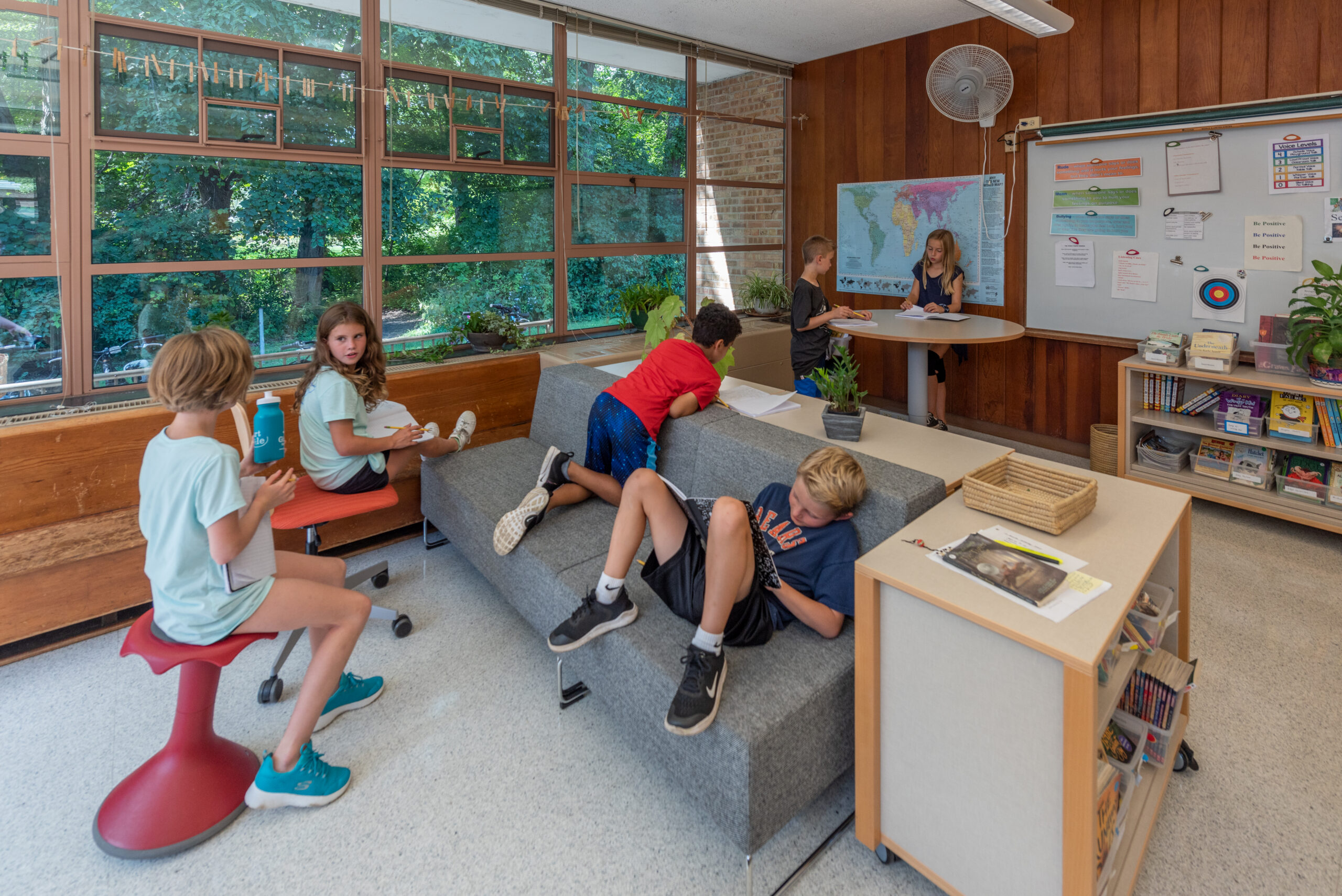
Students at the Crow Island School in Winnetka, Ill., demonstrate ownership in the classroom. | Photo Credit: James Steinkamp Photography
By VS America
In the realm of flexible learning environments, a fundamental shift in ownership is taking place. “Traditionally, teachers have owned 90% of the space, leaving students to share the remaining 10%. However, it is time to challenge this notion and empower students to take ownership of their educational experiences,” Jill Ackers, Director of Education at VS America, explains.
Embracing Innovative Approaches: Students as Active Co-Creators
Embracing flexible learning environments means embracing the idea that students are active co-creators of their educational spaces. It involves redefining ownership to allow students to shape and personalize the learning environment.
By involving students in decisions about classroom design, layout, and organization, educators create a space that reflects the unique identities, interests, and aspirations of the students. This shift empowers students to take ownership, fostering a sense of pride, belonging, and engagement in their learning experiences.
Discovering Identity: Crossing the Threshold into a Reflective Space
Flexible learning spaces serve as more than just physical environments — they become platforms for students to explore and express their identities. As students cross the threshold into these spaces, they encounter an environment that values and celebrates their individuality. The learning space becomes a canvas on which students can personalize and display artifacts, artwork, and projects that represent their interests and achievements. This personalization allows students to see themselves reflected in the environment, promoting a sense of belonging and fostering a positive learning atmosphere.
Reflection: Showcasing Growth and Achievement
In these environments, students can see their own work and growth showcased in the space. The classroom becomes a gallery that celebrates student achievements, displaying projects, artwork and accomplishments. By actively reflecting on their progress, students develop a deeper appreciation for their growth and are motivated to further develop their skills and knowledge. The visual representation of their achievements serves as a constant reminder of their capabilities, instilling confidence and inspiring continued effort.
Empowering Student Agency: Ownership as a Catalyst for Growth
The shift in ownership within flexible learning environments empowers students to take agency over their education. Students become active decisionmakers, collaborators and problem-solvers, driving their learning journeys.
By involving students in the design and organization of the learning space, educators foster a sense of responsibility and ownership for their own growth and success. This increased agency leads to heightened engagement, intrinsic motivation, and a greater sense of purpose in their educational endeavors.
The redefinition of ownership in learning environments signifies a transformative shift in education. Students, as active co-creators, find their identities reflected in the learning space and actively shape their educational journey. “By challenging the 90% ownership held by teachers, students are empowered to own 90% of the learning,” Ackers states. “This ownership fosters a sense of pride, belonging, and agency, as students personalize the space, reflect on their growth and actively participate in their education.”
As flexible learning environments continue to evolve, they become spaces that empower students, nurture their individuality and inspire a lifelong love for learning.
This article was sponsored by VS America, Inc., a leading manufacturer of educational furniture for K-12 schools, colleges, and libraries. Focused on best practices for educational facilities worldwide, VS develops adaptable, ergonomic, and sustainable furniture solutions which allow for the creation of agile learning environments. For more information, visit www.vsamerica.com.
This article was originally published in the 2026 Design & Construction edition of School Construction News.