
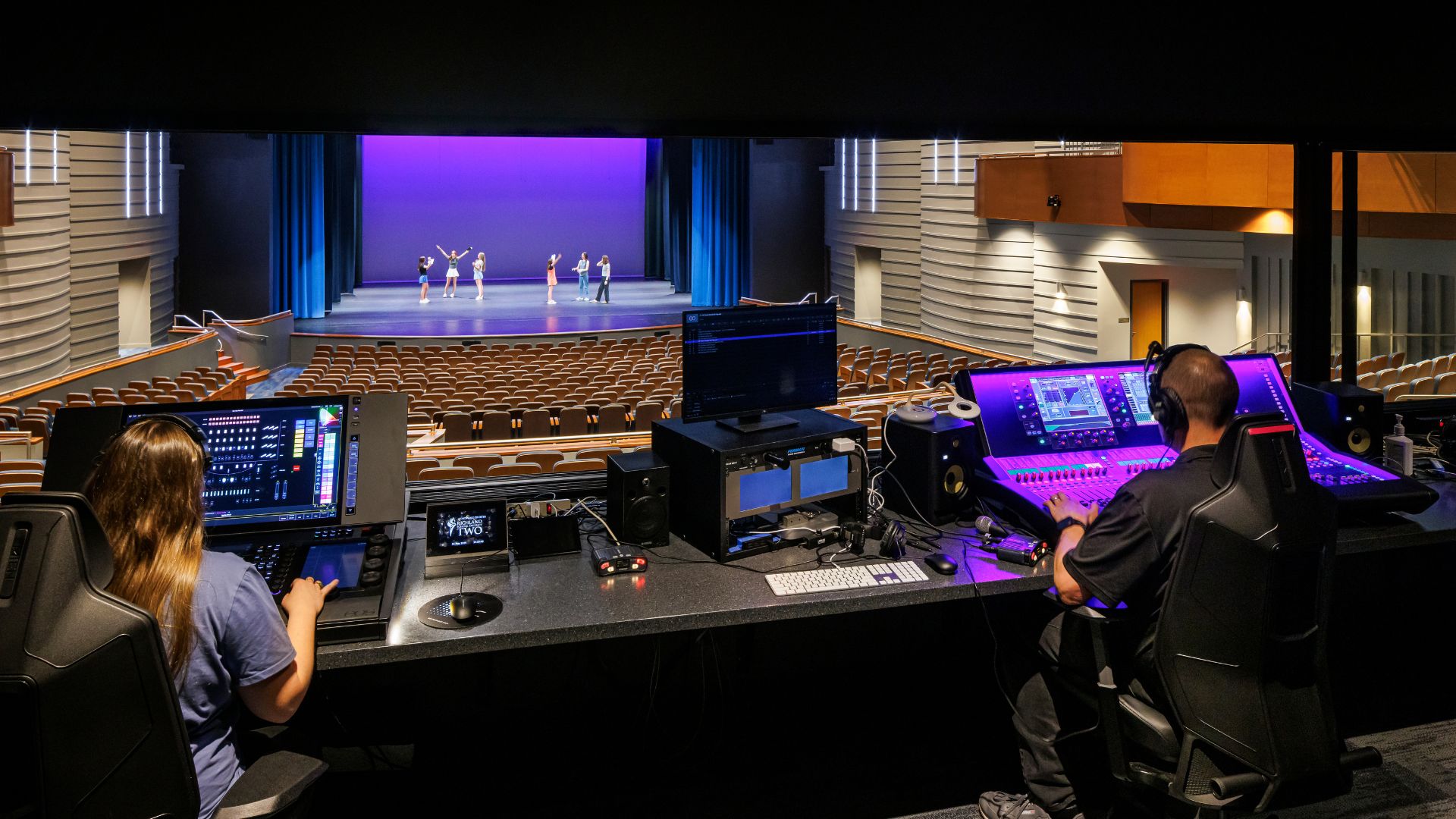
The Richland 2 School District’s approach shows that a performing arts center can be both an academic tool and a civic gathering place — but achieving that balance starts long before design development. | Photo Credit: Kris Decker, Firewater Photography
By Michelle Smyth, AIA, ALEP, LEED AP, NCARB
Performing arts centers are more than performance halls. In the right hands, they become daily learning environments that spark creativity, collaboration and critical thinking. Across the country, school leaders are recognizing that arts education plays a pivotal role in preparing students for the future. In fact, students involved in the arts are four times more likely to earn academic recognition, and arts participation strengthens the skills students will use in every career.
Richland 2 School District in Richland County, S.C., is putting that belief into practice. With more than 27,000 students, 81% of whom are already engaged in arts programs, the district created a campus anchored by a new performing arts center that blends STEM (Science, Technology, Engineering, Math) and the arts into a STEAM (Science, Technology, Engineering, Arts, Math) learning environment.
The 1,175-seat theater hosts events of all types from classical music concerts to modern drama, while black box and dance studios double as instructional spaces. A welcoming, spacious lobby and outdoor performance areas extend the building’s reach into the community, ensuring it stays active well beyond the school day. These spaces may also be used for performances or displays and celebrations of student artwork.
The Richland 2 School District’s approach shows that a performing arts center can be both an academic tool and a civic gathering place — but achieving that balance starts long before design development. The decisions made early in the process determine whether a facility can support student learning while remaining a destination for the community over its lifetime.
Early Decisions That Shape Success
The most successful performing arts centers start with careful planning long before construction begins. Creating a vision for the building that speaks to its action and service to students and the community may be fostered from stakeholder engagement at the beginning of the planning process.
Site placement, adjacencies, circulation, and phasing all influence how well a building will serve students and the public over time. Some of the best designs consider how the space functions during the school day, supports after-hours use and adapts as programs grow.
Schools with strong arts programs typically have higher attendance rates for both students and teachers, a benefit Lexington County, S.C., School District One sought in its White Knoll High School expansion. Initially, the plan was to build the performing arts center beside an existing classroom wing. Early in the process, however, the design team recommended a different approach: placing the facility in the center of campus.
This single decision allowed the performing arts center and a two-story classroom wing to be built simultaneously. The approach collapsed a phased construction plan, saved a full year on the schedule and avoided the cost of relocating portables. The 1,000-seat theater now offers professional-quality performance space, while the adjacent classrooms house science labs, CTE programs and collaboration areas.
Locating the performing arts center at the center of campus shortened travel times for students, improved safety by consolidating access points and kept construction on schedule while adding new academic facilities. It also showcased their new performing arts program in the heart of their campus.
Designing for Flexibility and Community Impact
Location is only one part of the equation. Designing for flexibility ensures the facility serves not just the school, but the wider community. That means creating spaces that can shift between school assemblies, professional productions, conferences and community events. It also means providing students with opportunities to learn both on stage and behind the scenes.
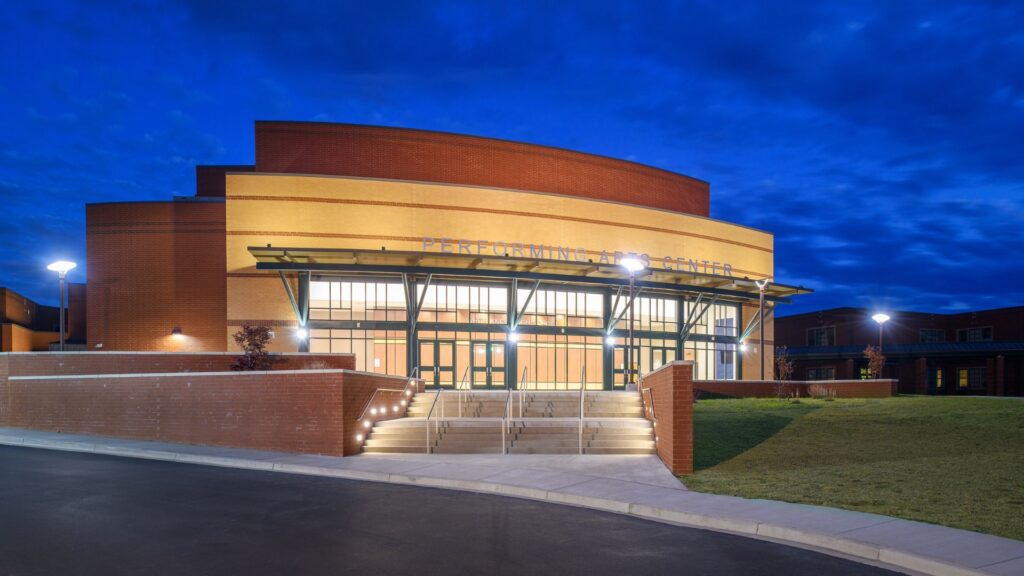
Lexington 2 School District’s new performing arts center builds skills through both performance and technical training. The 1,500-seat theater features a full orchestra pit, manual rigging, overhead catwalks, and backstage support spaces from dressing rooms to a catering kitchen. Students gain practical experience in lighting, rigging and stage management that can carry into college or career pathways.
The two-story grand lobby, lit by customizable color-changing fixtures, welcomes audiences for both school and community events. With spaces designed to host everything from district assemblies to regional performances, the center reinforces the idea that a performing arts center can be both a teaching tool and a cultural anchor.
Michelle Smyth, AIA, ALEP, LEED AP, NCARB, is a Principal at McMillan Pazdan Smith Architecture and a member of the School Construction News Editorial Advisory Board.