
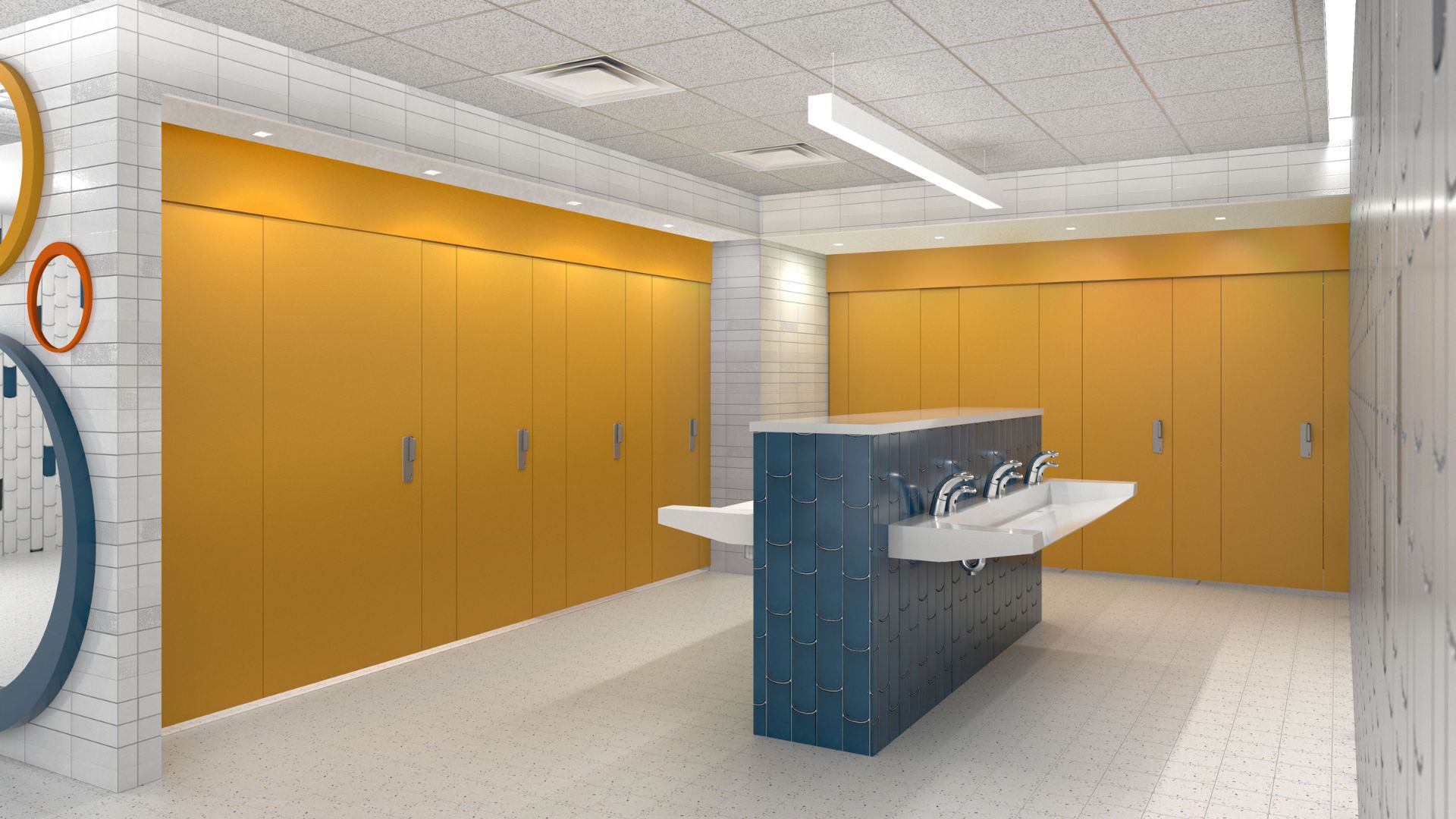
Spaces designed with accessibility in mind from the beginning can better serve students, staff, families, and visitors while helping schools avoid future disruptions and costs. | Photo Credit (all): Courtesy of Sloan
By Kirk Gruben, Sloan Strategic Account Manager
When a new school opens or a major renovation is completed, success is often measured by whether the project was delivered on time, on budget, and ready for occupancy. Those milestones matter. But for facility leaders, another question quickly follows: How will this building perform five, 10, or 20 years from now.
That question is becoming increasingly important across K-12 and higher education. As schools invest in construction and renovation projects, facility teams are paying closer attention to how design decisions affect maintenance demands, operational efficiency, accessibility, and long-term reliability. The goal is not simply to open or reopen a building successfully. It is to ensure that the building continues to perform as intended long after occupancy.
Beyond Opening Day
Many decisions made during design and construction have consequences that may not become apparent until years later. A material that looks appealing on day one may require frequent maintenance to maintain its appearance. A fixture that appears cost-effective during construction may create ongoing service challenges. A space that functions well in theory may perform differently when hundreds or thousands of students move through it every day.
As a result, schools are placing greater emphasis on evaluating how systems, materials, and layouts will hold up under real-world conditions. Design conversations increasingly include questions about maintenance requirements, expected lifespan, ease of service, and long-term operating costs. For facility leaders responsible for managing buildings over decades, these considerations can be just as important as initial construction costs.
The Reality of Daily Use
Few environments experience daily wear and tear quite like schools. Corridors, restrooms, cafeterias, student commons, athletic facilities, and other shared spaces are used continuously throughout the day. These areas must accommodate large numbers of people while remaining safe, functional, and easy to maintain.
In many facilities, these same spaces generate a disproportionate number of maintenance requests. Water on floors, damaged fixtures, worn surfaces, and accessibility challenges can create ongoing operational burdens if they are not addressed during the planning process. Because of this, many facility leaders are looking beyond whether a product or system meets performance expectations on paper. They want to understand how it will perform after years of constant use. That shift is influencing specification decisions throughout the building.
Designing for Maintenance
Historically, maintenance was often viewed as something that happened after construction was complete. Today, many schools are treating maintenance as part of the design conversation itself. This change reflects the realities facing facility departments across the country. Many teams are managing aging buildings, deferred maintenance challenges, and limited staffing. Every additional repair, service call, or replacement requirement adds pressure to already stretched resources.
Design decisions that reduce complexity can have a measurable impact over time. Whether it involves selecting durable materials, simplifying service access, or reducing the number of components that require ongoing attention, these choices can help support more efficient operations throughout the life of the facility. For many schools, the conversation has evolved from simply what can be built to what can be maintained successfully over the long term.
Accessibility That Lasts
Accessibility is another area where long-term thinking is shaping decisions. Incorporating accessibility considerations during planning and design is often more effective than addressing them later through renovations or retrofits. Spaces designed with accessibility in mind from the beginning can better serve students, staff, families, and visitors while helping schools avoid future disruptions and costs.
Facility leaders are increasingly evaluating projects through this longer-term lens. The question is not just whether a space meets today’s requirements, but whether it will continue to support evolving needs in the years ahead. That perspective is helping schools create facilities that are both more resilient and more adaptable.
Built to Perform
One of the most valuable sources of information in school construction comes after a building is occupied. Facility teams quickly learn which spaces perform as expected, which systems require frequent attention, and where operational challenges begin to emerge. Those lessons often influence future projects and help inform new approaches to planning and specification.
As schools continue to invest in modern learning environments, durability is becoming a larger part of the conversation. Long-term performance, maintenance demands, accessibility, and operational efficiency are increasingly interconnected. The most successful projects are not defined solely by how they look when they open. They are defined by how well they continue to support students, staff, and facility teams years later. Simply put, durability has become a fundamental part of how schools evaluate long-term value.
Kirk Gruben is a Strategic Account Manager with Sloan.