
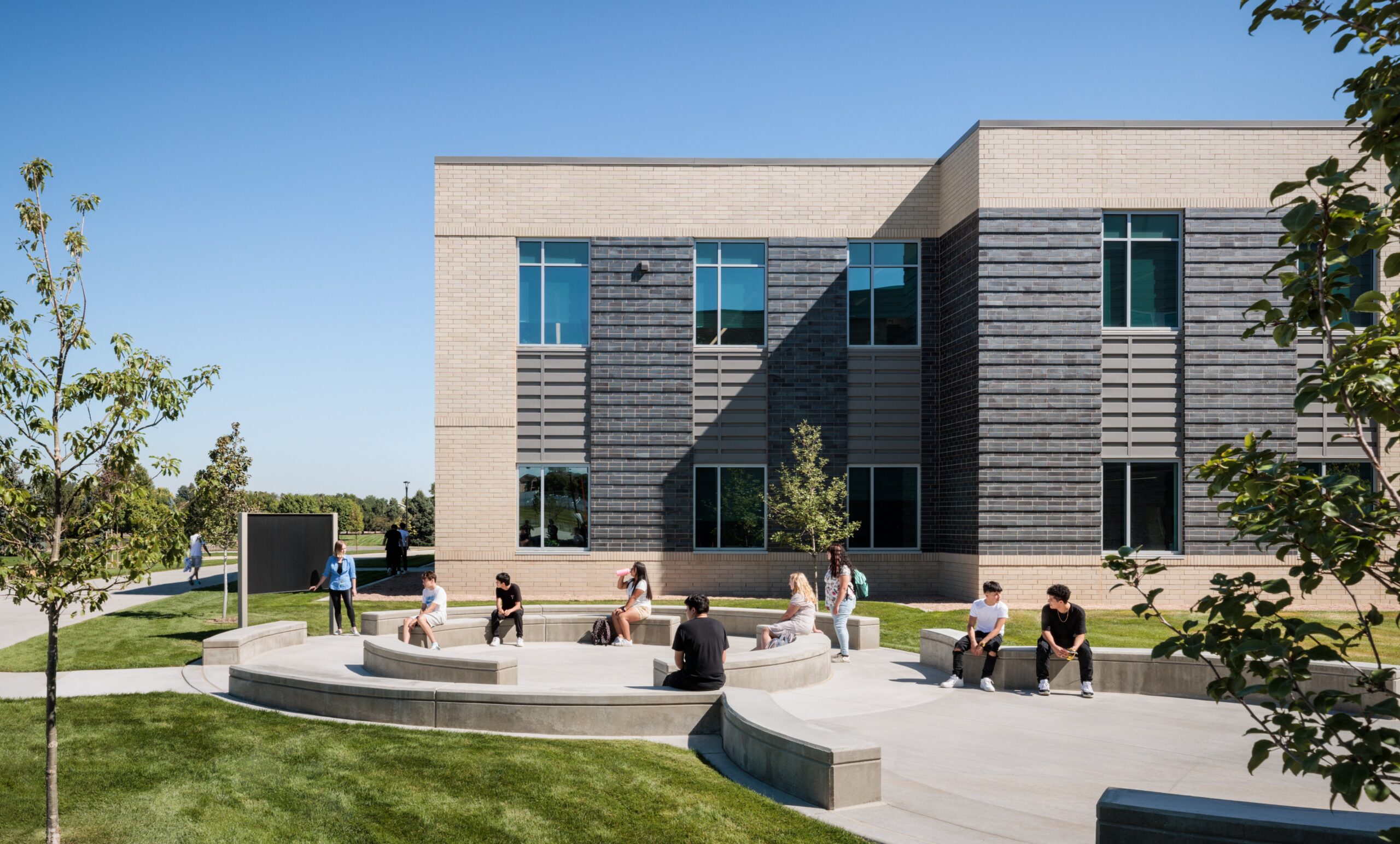
The Greeley West High School replacement facility, designed by HCM, was designed to feel safe, intriguing and inclusive. | Photo Credit (all): Courtesy of HCM Architects
By Lindsey Coulter
School design has entered a new era. While conversations once centered on flexible classrooms, daylighting and collaborative spaces, today’s education planners are asking a more fundamental question: how does the environment itself influence learning?
For Erika Ashauer, ALEP, EDAC, Human Experience Research Lead with the Denver office of HCM, the answer begins with understanding how people of all ages think, feel and move through space. With a background in cognitive science, neuroscience and evidence-based design, Ashauer works alongside architects, educators and other project stakeholders to translate research into practical design strategies that support attention, emotional regulation, belonging and long-term student success.
“I’ve always been fascinated by how children learn and develop,” Ashauer said. “If we can create environments that help students feel safe, supported and ready to grow — and help educators do their best work — that has a lasting impact. Helping create happier kids and healthier learning experiences is something I’m incredibly proud to be part of.”
For districts investing in new schools, renovations and modernization projects, Ashauer believes the greatest opportunity isn’t simply creating more flexible buildings; it’s creating environments that are intentionally designed around the people who use them every day.
“Design and school culture have to work together,” Ashauer added. “We can create movement spaces, sensory rooms or restorative environments, but if school policies don’t support students using them, they won’t achieve their intended purpose.”
Ashauer, who will share more of her research and insights at the School Construction News Design & Construction Symposium in Denver Aug. 5, spoke with the publication about why human experience research is becoming an increasingly common component of PK-12 school design and procurement.
SCN: Your role is still fairly unique within architecture firms. Is this becoming a larger field?
Ashauer: It’s definitely growing. Six or seven years ago, I wasn’t even sure there were other people doing this work. Today there are more professionals working in design research across education, senior living and other sectors. We’re building a community that shares research and best practices while helping move the profession forward.
[Clients] may not know what to call it yet, but they’re absolutely asking the questions. More RFPs include language around student engagement, belonging and human experience. Those ideas are becoming expectations rather than nice-to-have features.
SCN: You describe schools as “active regulatory environments.” What does that mean?
Ashauer: We used to think of schools as containers where learning happened. That’s just not true. From the moment a student arrives on campus, they’re unconsciously assessing whether they feel safe, welcome and ready to learn.
A four-year-old experiences that journey very differently than a high school student or a fifth grader with special needs. Design influences those experiences through spatial sequencing, visibility, acoustics, comfort and countless other factors. Our goal is to reduce unnecessary cognitive stress so students can spend more energy learning, taking academic risks and building relationships instead of simply navigating the environment.
SCN: Does your research apply to renovations as much as new construction?
Ashauer: Absolutely. Renovations often require even greater intentionality because every investment matters. Before deciding what to change, we have to ask why we’re renovating, who we’re serving and how students actually use the building. Understanding those answers helps prioritize where design dollars will have the greatest impact.
SCN: You’ve also talked about the concept of “embodied learning environments.” How is that different from terms like “student-centered” or “flexible learning”?
Ashauer: Embodied learning recognizes that learning happens through the body as much as through the brain. Our brains constantly process sensory information. If students are spending energy dealing with glare, noise, visual clutter or uncomfortable temperatures, they’re using cognitive resources that could otherwise support learning. Essentially, we don’t think with just our brains — we think through our entire bodies. Good design acknowledges that.
SCN: How does that philosophy influence designing for neurodiversity?
Ashauer: One of the biggest lessons from neuroscience is that there really isn’t a “typical” learner. Every person’s cognitive needs change over time through age, stress, injury, illness or life experiences. Rather than designing for one type of student, we should create environments that offer layers of choice and support. Those decisions benefit students who identify as neurodiverse, but they also improve learning for everyone.
SCN: Does that expand the traditional definition of accessibility?
Ashauer: Very much so. Physical accessibility remains incredibly important, but accessibility also includes sensory, cognitive and emotional experiences. The more we understand how people actually move through and experience buildings, the better we can design environments that allow everyone to participate fully.
Read more in the Design & Construction Issue of School Construction News, available now.