

Designing for Safety: The Next Step
Campus safety could not be a timelier topic, from elementary school and high school to college and university campuses.

Campus safety could not be a timelier topic, from elementary school and high school to college and university campuses.
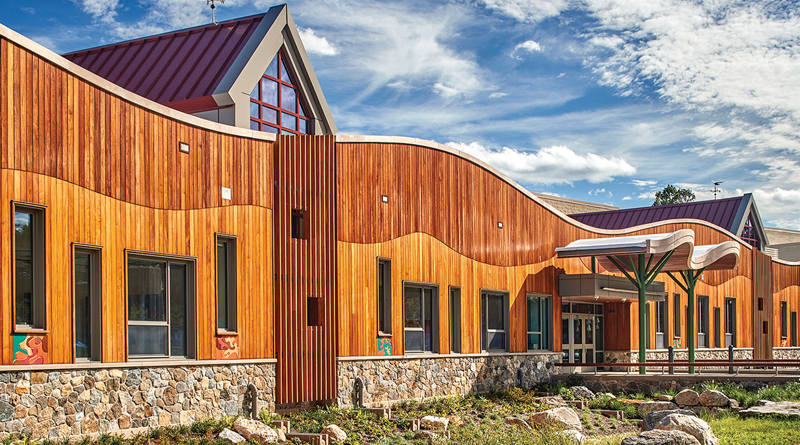
The new, 86,800-square-foot Sandy Hook Elementary School accommodates about 450 students from kindergarten through fourth grade.

In March 2018, President Donald J. Trump appointed DeVos to lead the Federal Commission on School Safety, being charged with swiftly providing substantial and actionable recommendations to reform student safety and security at school.

On Feb. 2, Gov. Dannel P. Malloy announced a new third round of grants approved under the state’s School Security Grant Program to be dispersed to school districts across the state.

Jenifer Loon, R-Minnesota presented her newly sponsored bill before the House Education Finance Committee (HEFC), which would allow school districts to fund and prioritize safety and security upgrades for Minnesota schools.
Given recent news cycles, it might be hard to believe that over the past 20 years, less than three percent of youth-oriented homicides actually occurred on school grounds. This is the among the latest school crime and safety findings of the National Center for Education Statistics and the Bureau of Justice Statistics.
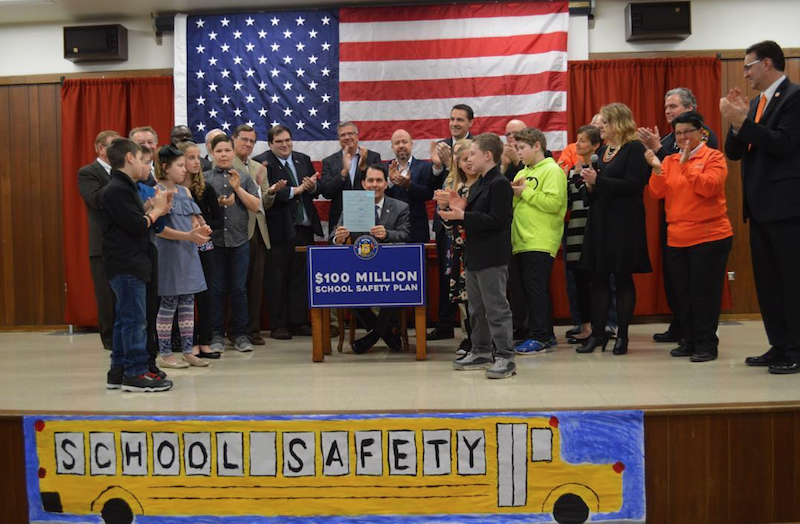
Beginning this week, the Wisconsin Department of Justice (DOJ) started accepting applications for a raft of new school safety grants, which come as part of a bill Gov. Scott Walker inked in March 2018.

To thwart school gun violence, a district in Pennsylvania has turned to Crime Prevention Through Environmental Design.

Sure, it’s funny in the movies, but when a student gets locked into a locker serious health and legal concerns ensue.

Just as school safety and emergency best practices are evolving so, too, is technology.